
Researchers find essential fats for brain growth
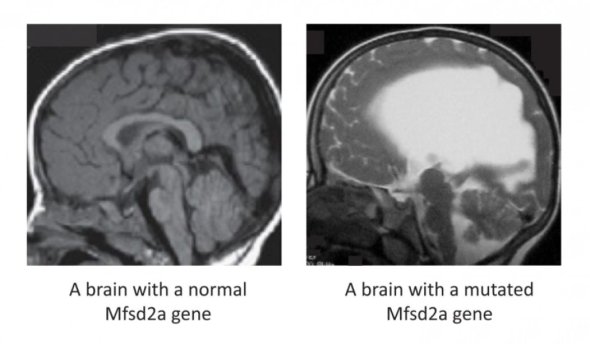
The difference between a brain with a normal Mfsd2a gene and a brain with a mutated Mfsd2a gene.
Image credit goes to: Guemez-Gamboa et al./ Nature Genetics
New research has proved that certain special fats found in blood are essential for human brain growth and function. The two studies showed that mutations in the protein Mfsd2a causes impaired brain development in humans. Mfsd2a is the transporter in the brain for a special type of fat called lysophosphatidylcholines (LPCs) — composed of essential fatty acids like omega-3. These studies show, for the first time, the crucial role of these fats in human brain growth and function.
Tearing down the [Blood Brain Barrier] Wall

The blood brain barrier, it can be very picky about who [or what] can come in.
The blood-brain barrier helps that finicky brain of yours maintain the delicate environment that it needs to thrive. There’s just one problem: The barrier is so good at what it does, it won’t let medicines pass through. Like most things with the brain, we don’t know enough about it to control it for our benefit.


 Lunatic Laboratories