
Brain power: Wirelessly supplying power to the brain
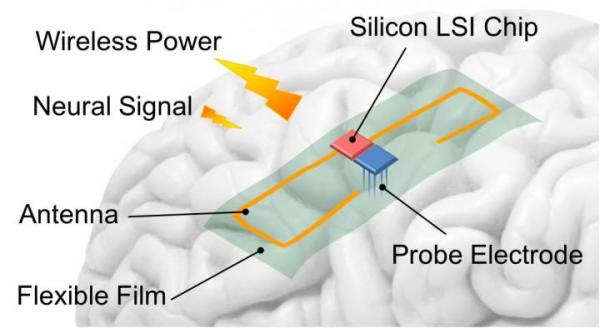
A picture of a proposed architecture of the implantable device composed of flexible antenna and CMOS circuits for wireless-powered neural interface systems.
Image credit goes to: Toyohashi University of Technology
Human and animal movements generate slight neural signals from their brain cells. These signals obtained using a neural interface are essential for realizing brain-machine interfaces (BMI). Such neural recording systems using wires to connect the implanted device to an external device can cause infections through the opening in the skull. One method of solving this issue is to develop a wireless neural interface that is fully implantable on the brain.
Artificial ‘plants’ could fuel the future
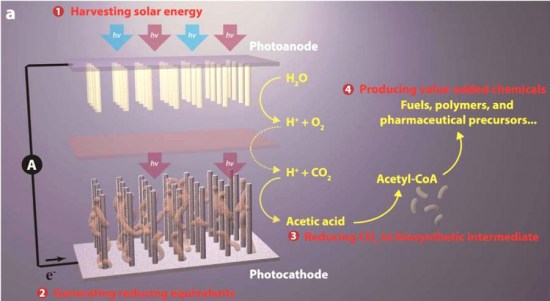
This schematic image of Chang’s artificial photosynthesis systems shows its four general components: (1) harvesting solar energy, (2) generating reducing equivalents, (3) reducing CO2 to biosynthetic intermediates and (4) producing value-added chemicals.
Image credit goes to: Berkeley Lab
Imagine creating artificial plants that make gasoline and natural gas using only sunlight. And imagine using those fuels to heat our homes or run our cars without adding any greenhouse gases to the atmosphere. By combining nanoscience and biology, researchers led by scientists at University of California, Berkeley, have taken a big step in that direction.


 Lunatic Laboratories