Concentrating on the social billions
Using online social media does not lead to long-term problems with our ability to concentrate, according to new research. We are social animals, so it is really no surprise that billions of us now use online tools to communicate, educate and inform each other. The advent of social media and social networking has nevertheless been phenomenally rapid.
What happens in the lab doesn't have to stay in the lab!
- Click to share on Reddit (Opens in new window) Reddit
- Click to share on X (Opens in new window) X
- Click to share on Facebook (Opens in new window) Facebook
- Click to share on LinkedIn (Opens in new window) LinkedIn
- More
- Click to share on Pinterest (Opens in new window) Pinterest
- Click to share on WhatsApp (Opens in new window) WhatsApp
- Click to share on Tumblr (Opens in new window) Tumblr
- Click to share on Pocket (Opens in new window) Pocket
- Click to share on Telegram (Opens in new window) Telegram
- Click to email a link to a friend (Opens in new window) Email
- Click to print (Opens in new window) Print
October 8, 2016 | Categories: Psychology, Technology | Tags: behavioral science, cognitive processes, memory, neurology, peer reviewed, psychology, science, social media | 1 Comment
Social connectedness can increase suicide risk
Community characteristics play an important role in perpetuating teen suicide clusters and thwarting prevention efforts, according to a new study by sociologists who examined clusters in a single town. The study illustrates how the homogeneous culture and high degree of social connectedness of a community can increase suicide risk, particularly among teenagers.
What happens in the lab doesn't have to stay in the lab!
- Click to share on Reddit (Opens in new window) Reddit
- Click to share on X (Opens in new window) X
- Click to share on Facebook (Opens in new window) Facebook
- Click to share on LinkedIn (Opens in new window) LinkedIn
- More
- Click to share on Pinterest (Opens in new window) Pinterest
- Click to share on WhatsApp (Opens in new window) WhatsApp
- Click to share on Tumblr (Opens in new window) Tumblr
- Click to share on Pocket (Opens in new window) Pocket
- Click to share on Telegram (Opens in new window) Telegram
- Click to email a link to a friend (Opens in new window) Email
- Click to print (Opens in new window) Print
September 10, 2016 | Categories: Mental health, Technology | Tags: anxiety, behavioral science, health, lifestyle, peer reviewed, psychology, social media, stress, suicide, suicide prevention | Leave a comment
Your friends have more friends than you do

No matter how smart and funny you think you are, those you follow on Twitter really do have a larger following than you. And the same holds true for Facebook. But there is no reason to feel badly about any of this. According to the research, it is all due to the inherently hierarchical nature of social media networks, where, in the social hierarchy of connections, people mostly either follow up or across; they rarely follow down.
What happens in the lab doesn't have to stay in the lab!
- Click to share on Reddit (Opens in new window) Reddit
- Click to share on X (Opens in new window) X
- Click to share on Facebook (Opens in new window) Facebook
- Click to share on LinkedIn (Opens in new window) LinkedIn
- More
- Click to share on Pinterest (Opens in new window) Pinterest
- Click to share on WhatsApp (Opens in new window) WhatsApp
- Click to share on Tumblr (Opens in new window) Tumblr
- Click to share on Pocket (Opens in new window) Pocket
- Click to share on Telegram (Opens in new window) Telegram
- Click to email a link to a friend (Opens in new window) Email
- Click to print (Opens in new window) Print
May 18, 2016 | Categories: Psychology, Technology | Tags: behavioral science, computer science, facebook, information management, internet, peer reviewed, psychology, science, social media, social science, twitter | Leave a comment
Don’t retweet if you want to remember

The whole of human intelligence, right at your fingertips. Sure it might not make the layman an engineer or physicist, but if we want to learn about a particular topic the internet can give us that information. But you better hold on tight before you lose it. New research finds retweeting or otherwise sharing information creates a “cognitive overload” that interferes with learning and retaining what you’ve just seen.
What happens in the lab doesn't have to stay in the lab!
- Click to share on Reddit (Opens in new window) Reddit
- Click to share on X (Opens in new window) X
- Click to share on Facebook (Opens in new window) Facebook
- Click to share on LinkedIn (Opens in new window) LinkedIn
- More
- Click to share on Pinterest (Opens in new window) Pinterest
- Click to share on WhatsApp (Opens in new window) WhatsApp
- Click to share on Tumblr (Opens in new window) Tumblr
- Click to share on Pocket (Opens in new window) Pocket
- Click to share on Telegram (Opens in new window) Telegram
- Click to email a link to a friend (Opens in new window) Email
- Click to print (Opens in new window) Print
April 29, 2016 | Categories: Neuroscience Research, Technology | Tags: cognitive science, computer science, neurobiology, neurology, peer reviewed, psychology, science, social media | 2 Comments
Oh, to have Dr. Facebook on call!
If it were up to Internet-savvy Americans, more of them would be emailing or sending Facebook messages to their doctors to chat about their health. That’s the result of a national survey led by Joy Lee of Johns Hopkins Bloomberg School of Public Health in the US.
What happens in the lab doesn't have to stay in the lab!
- Click to share on Reddit (Opens in new window) Reddit
- Click to share on X (Opens in new window) X
- Click to share on Facebook (Opens in new window) Facebook
- Click to share on LinkedIn (Opens in new window) LinkedIn
- More
- Click to share on Pinterest (Opens in new window) Pinterest
- Click to share on WhatsApp (Opens in new window) WhatsApp
- Click to share on Tumblr (Opens in new window) Tumblr
- Click to share on Pocket (Opens in new window) Pocket
- Click to share on Telegram (Opens in new window) Telegram
- Click to email a link to a friend (Opens in new window) Email
- Click to print (Opens in new window) Print
June 24, 2015 | Categories: Health and Medicine, Technology | Tags: computer science, health, health care, health care systems, internet, mass media, medicine, peer reviewed, science, social media | Leave a comment
Lots of selfies may suggest you’re a narcissist
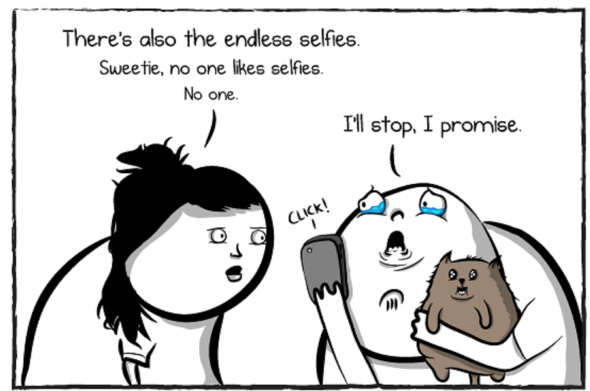
This awesomeness is from The Oatmeal, check out his website for the rest of the comic!
Well I’ve got some bad news to all you selfie fanatics out there, a new study showed that men who posted more online photos of themselves than others scored higher on measures of narcissism and psychopathy. The study looked exclusively at men, however the men out there should have no fear, there is a follow up study being done with women as well.
What happens in the lab doesn't have to stay in the lab!
- Click to share on Reddit (Opens in new window) Reddit
- Click to share on X (Opens in new window) X
- Click to share on Facebook (Opens in new window) Facebook
- Click to share on LinkedIn (Opens in new window) LinkedIn
- More
- Click to share on Pinterest (Opens in new window) Pinterest
- Click to share on WhatsApp (Opens in new window) WhatsApp
- Click to share on Tumblr (Opens in new window) Tumblr
- Click to share on Pocket (Opens in new window) Pocket
- Click to share on Telegram (Opens in new window) Telegram
- Click to email a link to a friend (Opens in new window) Email
- Click to print (Opens in new window) Print
January 6, 2015 | Categories: Neuroscience Research, Psychology | Tags: computer, health, Mental Health Stuff, neurology, peer reviewed, science, selfies, social media | Leave a comment