
Measure once, cut a dozen times


Okay that isn’t really what happened, it was more measure once, realize the piece is directional, measure a second time, realize that the direction doesn’t matter, and after about three times finally making the cut. Then freaking out because you’ve now marked the piece three different times, but you cut the right mark… right?
(more…)Another robot appears!


In the middle of the week we’re expecting some visitors that could lead to funding for our lab! Not that we need more projects, we already have over a dozen different projects we’re trying to power through and only three of us (including hospital-PI) to get them all done. Since we have so many projects, we’ve split them in half, literally. I’m taking all the lower limb projects and my labmate is taking upper limb. What does this have to do with the visit? It turns out, a lot.
(more…)PC build part six, now with more bends!
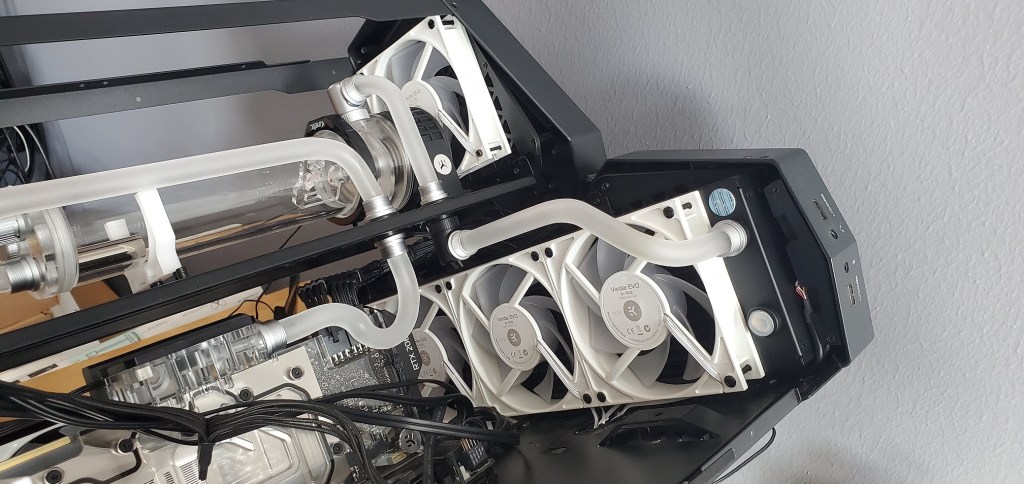
Yep, still working on the hard tube bends. It’s a lot… harder than it looks! Pun fully intended. Today I have good news and bad news. The bad news is there’s still some work to be done before I get to pressure test and finally finish this build. The good news is there’s only one bend I need to make and one or two I would like to redo if I have enough tubing for it.
(more…)Organic computers are coming


Move over silicon, tomorrow’s computers could be made of something completely different. A team of international researchers managed to find a molecule that, to their opinion, could give the impetus to the development of organic electronics.
Brain power: Wirelessly supplying power to the brain
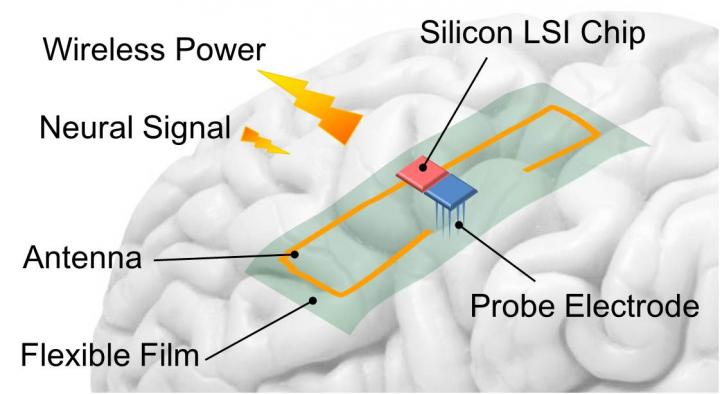
A picture of a proposed architecture of the implantable device composed of flexible antenna and CMOS circuits for wireless-powered neural interface systems.
Image credit goes to: Toyohashi University of Technology
Human and animal movements generate slight neural signals from their brain cells. These signals obtained using a neural interface are essential for realizing brain-machine interfaces (BMI). Such neural recording systems using wires to connect the implanted device to an external device can cause infections through the opening in the skull. One method of solving this issue is to develop a wireless neural interface that is fully implantable on the brain.


 Lunatic Laboratories