In cells, some oxidants are needed
Within our bodies, high levels of reactive forms of oxygen can damage proteins and contribute to diabetic complications and many other diseases. But some studies are showing that these reactive oxygen species (ROS) molecules sometimes can aid in maintaining health–findings now boosted by a surprising discovery by researchers.
What happens in the lab doesn't have to stay in the lab!
- Click to share on Reddit (Opens in new window) Reddit
- Click to share on X (Opens in new window) X
- Click to share on Facebook (Opens in new window) Facebook
- Click to share on LinkedIn (Opens in new window) LinkedIn
- More
- Click to share on Pinterest (Opens in new window) Pinterest
- Click to share on WhatsApp (Opens in new window) WhatsApp
- Click to share on Tumblr (Opens in new window) Tumblr
- Click to share on Pocket (Opens in new window) Pocket
- Click to share on Telegram (Opens in new window) Telegram
- Click to email a link to a friend (Opens in new window) Email
- Click to print (Opens in new window) Print
August 21, 2016 | Categories: Biology, Health and Medicine | Tags: cell biology, diabetes, health, medicine, metabolic diseases, peer reviewed, public health, science | Leave a comment
New tool brings personalized medicine closer

Scientists have developed a powerful tool for exploring and determining the inherent biological differences between individuals, which overcomes a major hurdle for personalized medicine.
What happens in the lab doesn't have to stay in the lab!
- Click to share on Reddit (Opens in new window) Reddit
- Click to share on X (Opens in new window) X
- Click to share on Facebook (Opens in new window) Facebook
- Click to share on LinkedIn (Opens in new window) LinkedIn
- More
- Click to share on Pinterest (Opens in new window) Pinterest
- Click to share on WhatsApp (Opens in new window) WhatsApp
- Click to share on Tumblr (Opens in new window) Tumblr
- Click to share on Pocket (Opens in new window) Pocket
- Click to share on Telegram (Opens in new window) Telegram
- Click to email a link to a friend (Opens in new window) Email
- Click to print (Opens in new window) Print
June 10, 2016 | Categories: Health and Medicine | Tags: bioinformatics, cell biology, Genetics, health, medicine, metabolic diseases, molecular biology, peer reviewed, public health, science | Leave a comment
Converting cells to burn fat, not store it

Researchers have uncovered a new molecular pathway for stimulating the body to burn fat — a discovery that could help fight obesity and cardiovascular disease.By focusing on a protein known as folliculin, and knocking out the gene that produces it in fat cells, the researchers triggered a series of biomolecular signals that switched the cells from storing fat to burning it.
What happens in the lab doesn't have to stay in the lab!
- Click to share on Reddit (Opens in new window) Reddit
- Click to share on X (Opens in new window) X
- Click to share on Facebook (Opens in new window) Facebook
- Click to share on LinkedIn (Opens in new window) LinkedIn
- More
- Click to share on Pinterest (Opens in new window) Pinterest
- Click to share on WhatsApp (Opens in new window) WhatsApp
- Click to share on Tumblr (Opens in new window) Tumblr
- Click to share on Pocket (Opens in new window) Pocket
- Click to share on Telegram (Opens in new window) Telegram
- Click to email a link to a friend (Opens in new window) Email
- Click to print (Opens in new window) Print
May 16, 2016 | Categories: Genetics, Health and Medicine, Weight Loss Science | Tags: biochemistry, cell biology, Genetics, health, medicine, metabolic diseases, peer reviewed, science | Leave a comment
Fish oil-diet benefits may be mediated by gut microbes
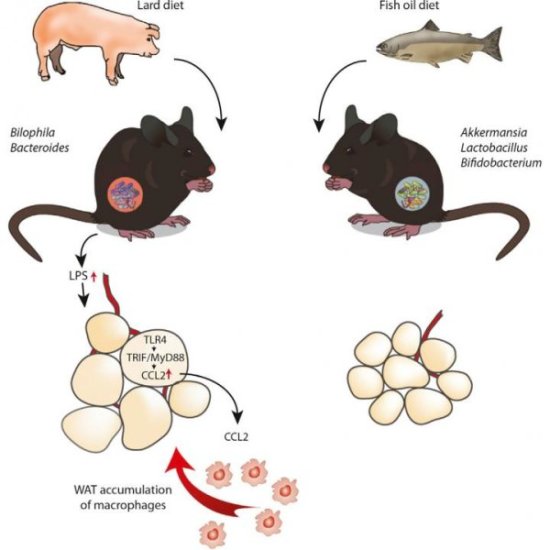
Diets rich in fish oil versus diets rich in lard produce very different bacteria in the guts of mice, reports a study from Sahlgrenska Academy published in Cell Metabolism. The researchers transferred these microbes into other mice to see how they affected health. The results suggest that gut bacteria share some of the responsibility for the beneficial effects of fish oil and the harmful effects of lard. Image credit goes to: University of Gothenburg
Diets rich in fish oil versus diets rich in lard produce very different bacteria in the guts of mice, reports a new study. The researchers transferred these microbes into other mice to see how they affected health. The results suggest that gut bacteria share some of the responsibility for the beneficial effects of fish oil and the harmful effects of lard.
What happens in the lab doesn't have to stay in the lab!
- Click to share on Reddit (Opens in new window) Reddit
- Click to share on X (Opens in new window) X
- Click to share on Facebook (Opens in new window) Facebook
- Click to share on LinkedIn (Opens in new window) LinkedIn
- More
- Click to share on Pinterest (Opens in new window) Pinterest
- Click to share on WhatsApp (Opens in new window) WhatsApp
- Click to share on Tumblr (Opens in new window) Tumblr
- Click to share on Pocket (Opens in new window) Pocket
- Click to share on Telegram (Opens in new window) Telegram
- Click to email a link to a friend (Opens in new window) Email
- Click to print (Opens in new window) Print
August 28, 2015 | Categories: Biology, Health and Medicine, Weight Loss Science | Tags: diet, fat loss, health, lifestyle, medicine, metabolic diseases, peer reviewed, public health, science, weight loss | Leave a comment
Genetic overlaps in autoimmune diseases may suggest common therapies
Scientists who analyzed the genes involved in 10 autoimmune diseases that begin in childhood have discovered 22 genome-wide signals shared by two or more diseases. These shared gene sites may reveal potential new targets for treating many of these diseases, in some cases with existing drugs already available for non-autoimmune disorders.
What happens in the lab doesn't have to stay in the lab!
- Click to share on Reddit (Opens in new window) Reddit
- Click to share on X (Opens in new window) X
- Click to share on Facebook (Opens in new window) Facebook
- Click to share on LinkedIn (Opens in new window) LinkedIn
- More
- Click to share on Pinterest (Opens in new window) Pinterest
- Click to share on WhatsApp (Opens in new window) WhatsApp
- Click to share on Tumblr (Opens in new window) Tumblr
- Click to share on Pocket (Opens in new window) Pocket
- Click to share on Telegram (Opens in new window) Telegram
- Click to email a link to a friend (Opens in new window) Email
- Click to print (Opens in new window) Print
August 24, 2015 | Categories: Genetics, Health and Medicine | Tags: autoimmune disease, cell biology, DNA, Genetics, health, immunology, medicine, metabolic diseases, molecular biology, peer reviewed, pharmaceutical science, science | Leave a comment
Anti-aging tricks from dietary supplement seen in mice

In human cells, shortened telomeres, the protective caps at the ends of chromosomes, are both a sign of aging and contribute to it. Scientists have found that the dietary supplement alpha lipoic acid (ALA) can stimulate telomerase, the enzyme that lengthens telomeres, with positive effects in a mouse model of atherosclerosis.
What happens in the lab doesn't have to stay in the lab!
- Click to share on Reddit (Opens in new window) Reddit
- Click to share on X (Opens in new window) X
- Click to share on Facebook (Opens in new window) Facebook
- Click to share on LinkedIn (Opens in new window) LinkedIn
- More
- Click to share on Pinterest (Opens in new window) Pinterest
- Click to share on WhatsApp (Opens in new window) WhatsApp
- Click to share on Tumblr (Opens in new window) Tumblr
- Click to share on Pocket (Opens in new window) Pocket
- Click to share on Telegram (Opens in new window) Telegram
- Click to email a link to a friend (Opens in new window) Email
- Click to print (Opens in new window) Print
August 21, 2015 | Categories: Biology, Health and Medicine | Tags: aging, cell biology, DNA, Genetics, health, medicine, metabolic diseases, peer reviewed, public health, science | Leave a comment
Body fat can send signals to brain, affecting stress response

The brain’s effect on other parts of the body has been well established. Now, a group of researchers has found that it’s a two-way street: Body fat can send a signal that affects the way the brain deals with stress and metabolism. While the exact nature of those signals remains a mystery, researchers say simply knowing such a pathway exists and learning more about it could help break a vicious cycle: Stress causes a desire to eat more, which can lead to obesity. And too much extra fat can impair the body’s ability to send a signal to the brain to shut off the stress response.
What happens in the lab doesn't have to stay in the lab!
- Click to share on Reddit (Opens in new window) Reddit
- Click to share on X (Opens in new window) X
- Click to share on Facebook (Opens in new window) Facebook
- Click to share on LinkedIn (Opens in new window) LinkedIn
- More
- Click to share on Pinterest (Opens in new window) Pinterest
- Click to share on WhatsApp (Opens in new window) WhatsApp
- Click to share on Tumblr (Opens in new window) Tumblr
- Click to share on Pocket (Opens in new window) Pocket
- Click to share on Telegram (Opens in new window) Telegram
- Click to email a link to a friend (Opens in new window) Email
- Click to print (Opens in new window) Print
July 23, 2015 | Categories: Neuroscience Research, Weight Loss Science | Tags: cell biology, eating disorders, fat loss, health, medicine, metabolic diseases, neurobiology, neurochemistry, neurology, obesity, peer reviewed, science | Leave a comment
New therapy halts artery plaque growth and suppresses inflammation
According to the CDC, 1 in 4 deaths are due to heart attacks. In fact it is the leading cause of death for both men and women. Largely attributed to diet, most medications solely aim at lowering cholesterol. However, a research team showed that a nanotherapeutic medicine can halt the growth of artery plaque cells resulting in the fast reduction of the inflammation that may cause a heart attack, offering a new way to treat people at risk for heart disease.
What happens in the lab doesn't have to stay in the lab!
- Click to share on Reddit (Opens in new window) Reddit
- Click to share on X (Opens in new window) X
- Click to share on Facebook (Opens in new window) Facebook
- Click to share on LinkedIn (Opens in new window) LinkedIn
- More
- Click to share on Pinterest (Opens in new window) Pinterest
- Click to share on WhatsApp (Opens in new window) WhatsApp
- Click to share on Tumblr (Opens in new window) Tumblr
- Click to share on Pocket (Opens in new window) Pocket
- Click to share on Telegram (Opens in new window) Telegram
- Click to email a link to a friend (Opens in new window) Email
- Click to print (Opens in new window) Print
April 3, 2015 | Categories: Health and Medicine | Tags: cardiology, cholesterol, health, internal medicine, medicine, metabolic diseases, metabolism, nanotechnology, peer reviewed, science, stroke | Leave a comment