
Day 23: I was lucky…


This was home, for a while anyway.
Okay, so not every post has to be strictly academic. If my twitter feed is any indication yesterday was world suicide prevention day. So with a heavy heart I have not one, but two very personal stories regarding suicide. Obviously this is a content warning for those wanting to go further, we will be dealing with suicide, death, and suicidal ideation.
Social connectedness can increase suicide risk


Community characteristics play an important role in perpetuating teen suicide clusters and thwarting prevention efforts, according to a new study by sociologists who examined clusters in a single town. The study illustrates how the homogeneous culture and high degree of social connectedness of a community can increase suicide risk, particularly among teenagers.
Trauma’s epigenetic fingerprint observed in children of Holocaust survivors

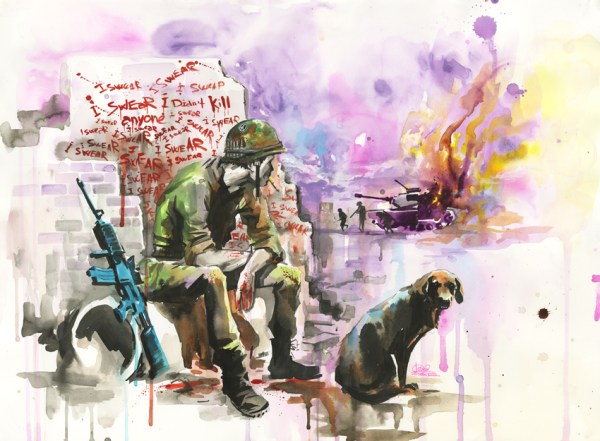
Image credit goes to the one and only — very talented — Lora Zombie
The children of traumatized people have long been known to be at increased risk for posttraumatic stress disorder (PTSD), and mood and anxiety disorders. However, there are very few opportunities to examine biologic alterations in the context of a watershed trauma in exposed people and their adult children born after the event.
The relationship between low physical activity and psychotic symptoms


Physical activity can help reduce cardiovascular disease and premature mortality in people with psychological problems. However, there is limited data on exercise in people with serious mental disorders, especially from low- and middle-income countries. This study explored whether complying with the World Health Organization recommendations of 150 minutes of moderate-vigorous exercise per week is related to psychotic symptoms or the diagnosis of a psychosis.
Specialized neurons in emotional memory play important role in fear

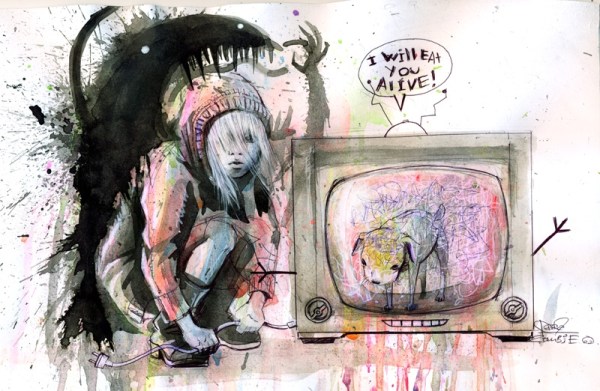
Image credit goes to: The incredibly talented Lora Zombie.
Fear memory encoding, the process responsible for persistent reactions to trauma-associated cues, is influenced by a sparse but potent population of inhibitory cells called parvalbumin-interneurons (PV-INs) in the amygdala, according to a new study.
Fear factor: A new genetic candidate for treating PTSD
Image credit goes to the very talented: Lora Zombie
Researchers have identified a new genetic candidate for testing therapies that might affect fear learning in people with PTSD or other conditions. Individuals with trauma- and stress-related disorders can manifest symptoms of these conditions in a variety of ways. Genetic risk factors for these and other psychiatric disorders have been established but do not explain the diversity of symptoms seen in the clinic – why are some individuals affected more severely than others and why do some respond better than others to the same treatment?
Suicidal thinking and US veterans
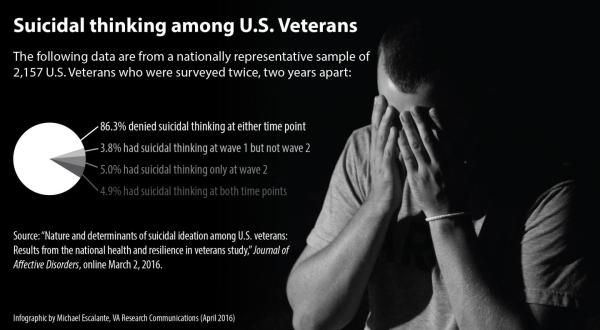
Nearly 14 percent of Veterans reported suicidal thinking at one or both phases of a two-year VA study.
Image credit goes to: Michael Escalante
Something very personal about me, the thought of suicide is never too far behind. It is to the point that I need to qualify it to my counselor when I am asked if I have thoughts of suicide, I always do. A new study shows that I am far from alone Nearly 14 percent of military veterans reported suicidal thinking at one or both phases of a two-year Veterans Affairs (VA) study.
Mental illness, that’s a funny term isn’t it?


If you suffer from depression, PTSD, or anything else please visit: Take this
In today’s lexicon, the term mental illness is used pretty widely. It can be used to describe someone suffering from depression, to PTSD, to even someone suicidal. In fact, today it is sort of a catch all term for anyone who is involved in a mass shooting here in the US. We are getting off point however, why are we (myself included) labeled as mentally ill? You don’t call an amputee someone suffering from body illness, nor would you call someone with cancer “cellularly ill”.
Anxious? Chronic stress and anxiety can damage the brain
Yeah, let me just get over that anxiety since it’s a choice…
A scientific review paper warns that people need to find ways to reduce chronic stress and anxiety in their lives or they may be at increased risk for developing depression and even dementia. Led by the Rotman Research Institute at Baycrest Health Sciences, the review examined brain areas impacted by chronic anxiety, fear and stress in animal and human studies that are already published.
Being anxious could be good for you! If you’re in a crisis…

Well maybe not that anxious…
New findings by French researchers show that the brain devotes more processing resources to social situations that signal threat than those that are benign. The results may help explain the apparent “sixth sense” we have for danger. This is the first time that specific regions of the brain have been identified to be involved in the phenomenon. The human brain is able to detect social threats in these regions in a fast, automatic fashion, within just 200 milliseconds.
Breaking the anxiety cycle

A woman who won’t drive long distances because she has panic attacks in the car. A man who has contamination fears so intense he cannot bring himself to use public bathrooms. A woman who can’t go to church because she fears enclosed spaces. All of these people have two things in common: they have an anxiety disorder. They’re also parents.
What motivates ‘Facebook stalking’ after a romantic breakup?

Social networking makes it easy to monitor the status and activities of a former romantic partner, an often unhealthy use of social media known as interpersonal electronic surveillance (IES) or, more commonly, “Facebook stalking.” Psychological and relationship factors and how individuals cope with the termination of a romantic relationship can help predict their use of online surveillance, according to a new study.
Perfectionism linked to burnout at work, school and sports

Concerns about perfectionism can sabotage success at work, school or on the playing field, leading to stress, burnout and potential health problems, according to new research. In the first meta-analysis of the relationship between perfectionism and burnout, researchers analyzed the findings from 43 previous studies conducted over the past 20 years. It turns out perfectionism isn’t all bad.
Cell phone notifications may be driving you to distraction

Whether you are alerted to an incoming phone call or text by a trendy ringtone, an alarm bell or a quiet vibration, just receiving a notification on your cell phone can cause enough of a distraction to impair your ability to focus on a given task. In fact, the distraction caused by a simple notification — whether it is a sound or a vibration — is comparable to the effects seen when users actively use their cell phones to make calls or send text messages, the researchers found.
Brain scan can predict who responds best to certain treatment for OCD
Tens of millions of Americans — an estimated 1 to 2 percent of the population — will suffer at some point in their lifetimes from obsessive-compulsive disorder, a disorder characterized by recurrent, intrusive, and disturbing thoughts (obsessions), and/or stereotyped recurrent behaviors (compulsions). Left untreated, OCD can be profoundly distressing to the patient and can adversely affect their ability to succeed in school, hold a job or function in society.
This is your brain, on video games

A new study shows that while video game players (VGPs) exhibit more efficient visual attention abilities, they are also much more likely to use navigation strategies that rely on the brain’s reward system (the caudate nucleus) and not the brain’s spatial memory system (the hippocampus). Past research has shown that people who use caudate nucleus-dependent navigation strategies have decreased grey matter and lower functional brain activity in the hippocampus.
Early life stress may result in a serotonin deficiency

If you have experienced — or are experiencing — mood disorders like anxiety or depression, you know about SSRI’s and chances are they didn’t do much for you. In fact studies indicate that the majority of people with mood and anxiety disorders who receive Selective Serotonin Reuptake Inhibitors (SSRI’s) are not helped by these medications. Sadly, they are the most commonly prescribed class of antidepressant medications, this is because SSRIs are designed to increase serotonin levels, a neurotransmitter in the brain that is key to maintenance of mood.


 Lunatic Laboratories