
Day 29: Probability density functions, Part 3
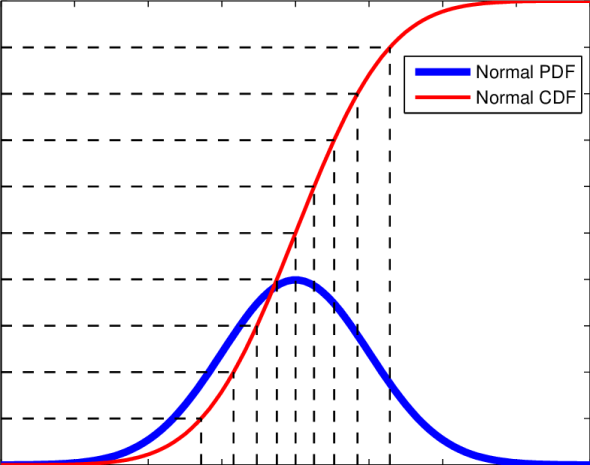
Don’t be scared, we’re going to tackle this guy today!
Well, apparently you guys really appreciated my probability density function posts. It’s good to see people interested in something a little less well-known (at least to me). So for those of you just joining us, you’ll want to start at part 1 here. For those of you who are keeping up with the posts, let’s review and then look at specific functions. Namely let’s start by going back to our gaussian distribution function and talk about what’s going on with that whole mess. It will be fun, so let’s do it!*
Day 28: Cumulative Distribution Functions
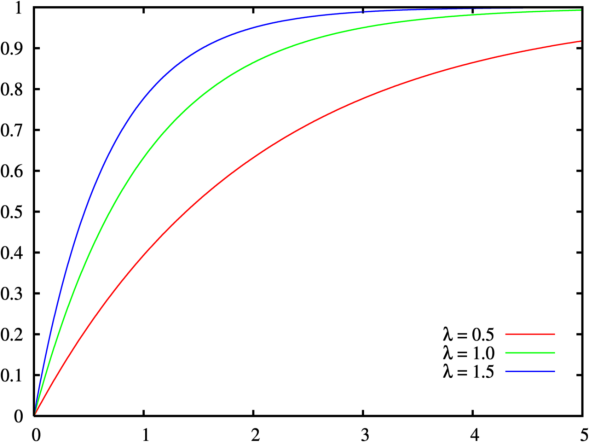
An example C.D.F. of an exponential distribution
Today we were going to do another deep dive into the p.d.f and C.D.F. relationship. Specifically today we were going to talk about specific p.d.f. functions and why we use them, however… I am not doing so hot today, so instead we are going to back track just a bit and talk about what how a C.D.F. differs from our p.d.f. even though we kind of covered it, it would be nice to be clear and I can do this in a (fairly) short post for the day. So that said, let’s get started and we will pick up our p.d.f. discussion next time (maybe).*
Day 27: Probability density functions, Part 2
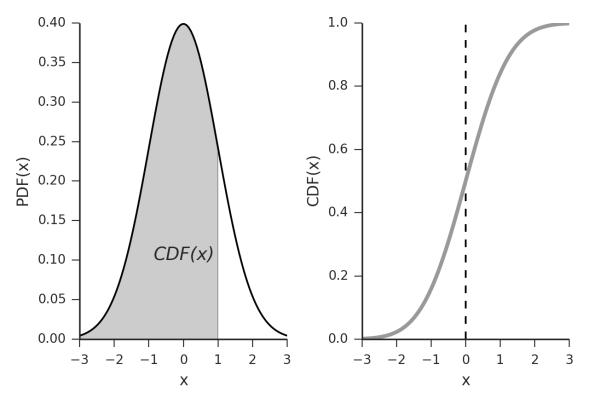
Today we are looking at our p.d.f. (yes this image has p.d.f. written as PDF, please don’t be confused!) and our C.D.F.’s let’s do this!
Oh hi didn’t see you there. Today is part 2 of the probability density functions notes (posts?), whatever we are calling these. You can read part 1 here as you should probably be familiar with the (super confusing) notation we use to describe our p.d.f. and our C.D.F. now that we’ve given that lovely disclaimer, let’s look once again at probability density functions!*
Day 26: Probability density functions, Part 1

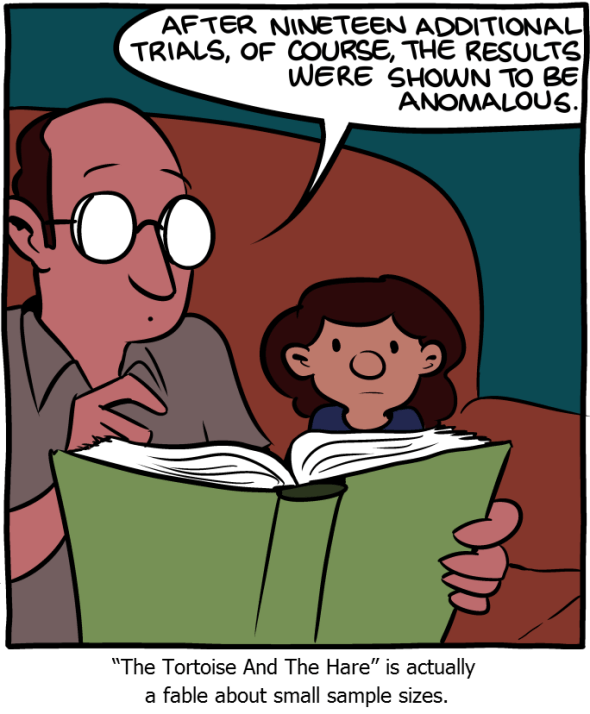
Dashing dreams one comic at a time, via Saturday Morning Breakfast Cereal
We are well on our way to wrapping up week 4, what a ride it’s been! It’s been a long day for me, so today might be short. However, I really, really, really want to break into probability density functions. This topic is going to be a bit more advanced than some of the things we’ve covered (IE more writing) so it will most definitely be broken up. Let’s look at why and discover the wonderful weirdness of probability density functions!*
Day 9: Reading a Spectrogram
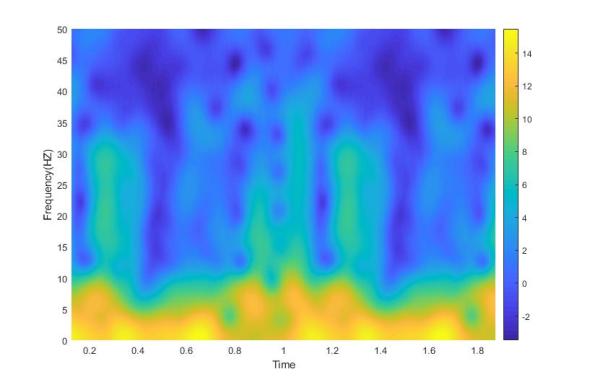
Definitely not the same spectrogram as yesterday, no really look. Now for the part where I tell you how to read this thing…
Last post we introduced a new tool in our arsenal of signal processing analysis, the spectrogram. Without knowing how to read it, it just looks sort of like a colored mess. Don’t get me wrong, it is an interesting looking colored mess, but a mess nonetheless. Well today we are going to talk about how to interpret the plot and why exactly we would ever use this seeming monstrosity.*
Day 8: The Spectrogram Function
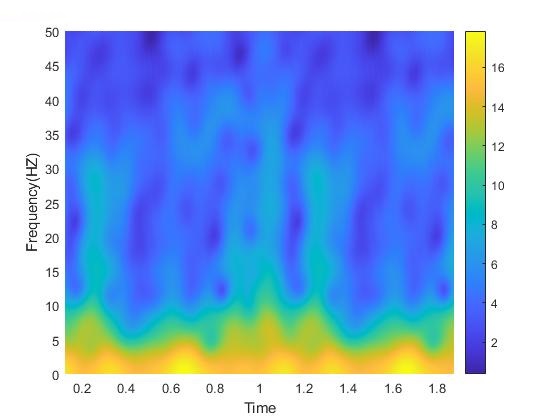
Example spectrogram from some data I had recently processed
To (somewhat) continue with our signal processing theme that we have going on at the moment, over the next few days, let’s look at something called the spectrogram. It’s three dimensions of fun!*
Physicists retrieve ‘lost’ information from quantum measurements


Typically when scientists make a measurement, they know exactly what kind of measurement they’re making, and their purpose is to obtain a measurement outcome. But in an “unrecorded measurement,” both the type of measurement and the measurement outcome are unknown.
The music of the mind: throwing light on human consciousness

UNSW Australia scientists have shown that complex human brain activity is governed by the same simple universal rule of nature that can explain other phenomena such as the beautiful sound of a finely crafted violin or the spots on a leopard. The UNSW team has identified a link between the distinctive patterns of brain function that occur at rest and the physical structure of people’s brains.
Beam me up! Teleporting the memory of an organism


LLAP, Leonard Nimoy
In “Star Trek”, a transporter can teleport a person from one location to a remote location without actually making the journey along the way. Such a transporter has fascinated many people. Quantum teleportation shares several features of the transporter and is one of the most important protocols in quantum information.
Computing with time travel


Why send a message back in time, but lock it so that no one can ever read the contents? Because it may be the key to solving currently intractable problems. It turns out that an unopened message can be exceedingly useful. This is true if the experimenter entangles the message with some other system in the laboratory before sending it.
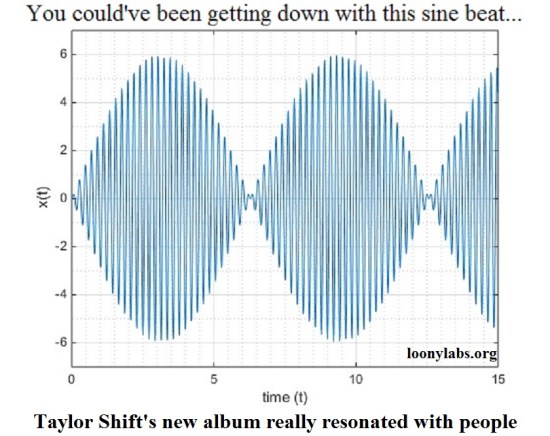
Suicide and skin color, or how being black is killing you

The great racial divide, despite all the evidence showing that racism, hate and frankly plain stupidity is alive and well, there are people who cannot accept it. This probably will not change anything for those people, but for the first time a new study shows that while suicide rates in children younger than 12 have remained steady for the past 20 years, there are significantly higher suicide rates among black children.
Black hole hunters tackle a cosmic conundrum
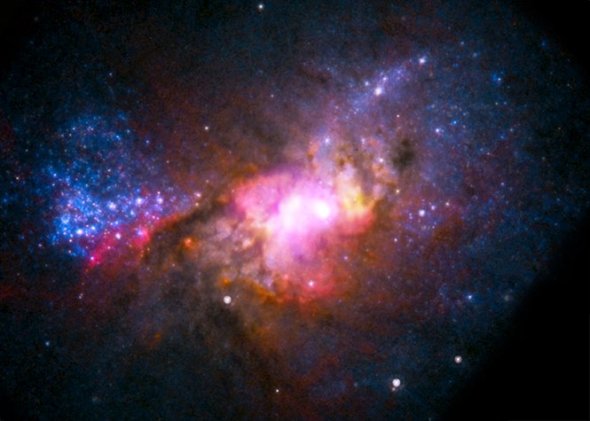
Image credit goes to : NASA
While mass media was busy misquoting Stephen Hawking and arguing about black holes, astrophysicists have been hard at work trying to solve still unanswered questions about them. Now a team has not only proven that a supermassive black hole exists in a place where it isn’t supposed to be, but in doing so have opened a new door to what things were like in the early universe.


 Lunatic Laboratories