We're a little crazy, about science!

Latest

Feeling sick? It’s evolution’s way of telling you to stay home

Your symptoms? Evolution's way of telling you to stay home

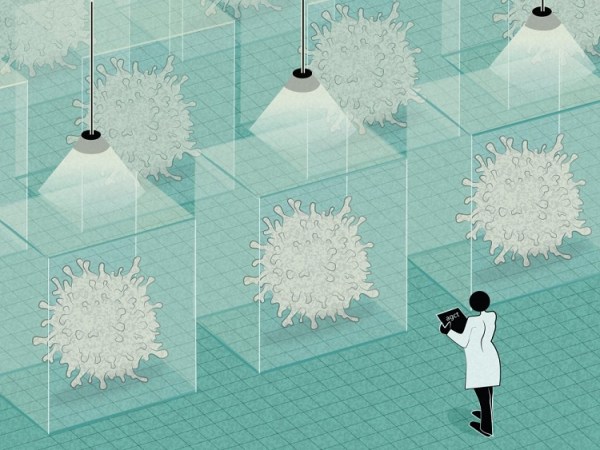
When you have a fever, your nose is stuffed and your headache is spreading to your toes, your body is telling you to stay home in bed. Feeling sick is an evolutionary adaptation according to a hypothesis put forward by Prof. Guy Shakhar of the Weizmann Institute’s Immunology Department and Dr. Keren Shakhar of the Psychology Department of the College of Management Academic Studies.
Read the rest of this page »
Stem cells regulate their own proliferation and their microenvironment

Stem cells regulate their own proliferation and their microenvironment

A study by researchers at the Centro Nacional de Investigaciones Cardiovasculares Carlos III (CNIC) has identified a new mechanism through which hematopoietic stem cells (HSCs) control both their own proliferation and the characteristics of the niche that houses them. This control is exercised by the protein E-Selectin Ligand-1 (ESL-1).

Read the rest of this page »

Are you multicellular? Thank a random mutation that created a new protein

Evolution of an ancient protein function involved in organized multicellularity in animals - See more at: http://elifesciences.org/content/5/e10147#sthash.yue93BBd.dpuf

Get it? Cell division, well long division anyway…

All it took was one mutation more than 600 million years ago. With that random act, a new protein function was born that helped our single-celled ancestor transition into an organized multicellular organism. That’s the scenario — done with some molecular time travel — that emerged from basic research in the lab of University of Oregon biochemist Ken Prehoda.

Read the rest of this page »

Schizophrenia linked to loss of cells in the brain’s memory center

Lora zombie art

Art by the one and only Lora Zombie

Scientists at Columbia University’s Mortimer B. Zuckerman Mind Brain Behavior Institute, Columbia University Medical Center (CUMC), and the Université Paris Descartes have found that deficits in social memory–a crucial yet poorly understood feature of psychiatric disorders such as schizophrenia–may be due to a decrease in the number of a particular class of brain cells, called inhibitory neurons, in a little-explored region within the brain’s memory center.

Read the rest of this page »

If our brain is a computer, do we really have free will?

The brain-computer duel: Do we have free will?

The background to this new set of experiments lies in the debate regarding conscious will and determinism in human decision-making, which has attracted researchers, psychologists, philosophers and the general public, and which has been ongoing since at least the 1980s. Back then, the American researcher Benjamin Libet studied the nature of cerebral processes of study participants during conscious decision-making.

Read the rest of this page »

A faster way to evaluate synthetic metabolic pathways

High-throughput evaluation of synthetic metabolic pathways

A central challenge in the field of metabolic engineering is the efficient identification of a metabolic pathway genotype that maximizes specific productivity over a robust range of process conditions. A review from researchers at Michigan State University in East Lansing, MI covers the challenges of optimizing specific productivity of metabolic pathways in cells and new advances in pathway creation and screening.

Read the rest of this page »

3-D footage of nematode brains links neurons with motion and behavior

3-D footage of nematode brains links neurons with motion and behavior

Animation from glass brain. Yea it isn’t what this post is about exactly,  but it is still cool

Princeton University researchers have captured among the first recordings of neural activity in nearly the entire brain of a free-moving animal. The three-dimensional recordings could provide scientists with a better understanding of how neurons coordinate action and perception in animals. The researchers reported a technique that allowed them to record 3-D footage of neural activity in the nematode Caenorhabditis elegans, a worm species 1 millimeter long with a nervous system containing a mere 302 neurons.

Read the rest of this page »

Being anxious could be good for you! If you’re in a crisis…

Brain prioritizes threats, especially in anxious people

Well maybe not that anxious…

New findings by French researchers show that the brain devotes more processing resources to social situations that signal threat than those that are benign. The results may help explain the apparent “sixth sense” we have for danger. This is the first time that specific regions of the brain have been identified to be involved in the phenomenon. The human brain is able to detect social threats in these regions in a fast, automatic fashion, within just 200 milliseconds.

Read the rest of this page »

Want to keep your new year’s resolution? Ask, don’t tell.

To bolster a new year's resolution, ask, don't tell

Results may vary…

“Will you exercise this year?” That simple question can be a game-changing technique for people who want to influence their own or others’ behavior, according to a recent study spanning 40 years of research. The research is the first comprehensive look at more than 100 studies examining the ‘question-behavior effect,’ a phenomenon in which asking people about performing a certain behavior influences whether they do it in the future. The effect has been shown to last more than six months after questioning.

Read the rest of this page »

The development of the cerebellar circuitry is driven by epigenetic “music”

Study links epigenetic processes to the development of the cerebellar circuitry

From before birth through childhood, connections form between neurons in the brain, ultimately making us who we are. So far, scientists have gained a relatively good understanding of how neural circuits become established, but they know less about the genetic control at play during this crucial developmental process. Now, a team of researchers has described for the first time the so-called epigenetic mechanisms underlying the development of the cerebellum, the portion of the brain that allows us to learn and execute complex movements.

Read the rest of this page »

Are you a ‘harbinger of failure’?

Some consumers have an unerring knack for buying unpopular products

Has a point, he does.

Diet Crystal Pepsi. Frito Lay Lemonade. Watermelon-flavored Oreos. Through the years, the shelves of stores have been filled with products that turned out to be flops, failures, duds, and losers. But only briefly filled with them, of course, because products like these tend to get yanked from stores quickly, leaving most consumers to wonder: Who exactly buys these things, anyway?

Read the rest of this page »

Intelligence, it’s in your genes… and we can change that.

Intelligence 'networks' discovered in brain for the first time

Ever feel like everyone around you has their brain running much faster than your own? Well, the good news is that it may not be you, it may be your genes. The other good news, we might be able to change that. Scientists from Imperial College London have identified for the first time two clusters of genes linked to human intelligence. Called M1 and M3, these so-called gene networks appear to influence cognitive function – which includes memory, attention, processing speed and reasoning.

Read the rest of this page »

Women, do you want to be a leader at a teaching hospital? Grow a mustache!

Analysis of top medical school and teaching hospitals highlights gender disparities among physician leaders

Thirteen percent of department leader positions at top academic medical institutions in the United States are held by women, while nearly 20 percent are held by men with mustaches. The findings of the tongue-in-cheek study, an analysis of more than 1,000 headshots of department leaders at top National Institutes of Health-funded academic medical institutions, provide a new context for examining gender disparities in the field.

Read the rest of this page »

Depression is more than a “mental health” problem and we can now measure its risk

An objective measurement to identify individuals at risk of developing depression?

These feels drawn by the one, the only, and the oatmeal, or is it just one of those?

A network of interacting brain regions known as the default mode network (DMN) was found to have stronger connections in adults and children with a high risk of depression compared to those with a low risk. These findings suggest that increased DMN connectivity is a potential precursor, or biomarker, indicating a risk of developing major depressive disorder (MDD).

Read the rest of this page »

Emotion processing in the brain changes with tinnitus severity

Emotion processing in the brain changes with tinnitus severity

Tinnitus, otherwise known as ringing in the ears, affects nearly one-third of adults over age 65. The condition can develop as part of age-related hearing loss or from a traumatic injury. In either case, the resulting persistent noise causes varying amounts of disruption to everyday life. While some tinnitus patients adapt to the condition, many others are forced to limit daily activities as a direct result of their symptoms. A new study reveals that people who are less bothered by their tinnitus use different brain regions when processing emotional information.

Read the rest of this page »

The world’s smallest terrorist: Virus hijacks protein machine and then kills the host

The world's smallest terrorist: Virus hijacks protein machine and then kills the host

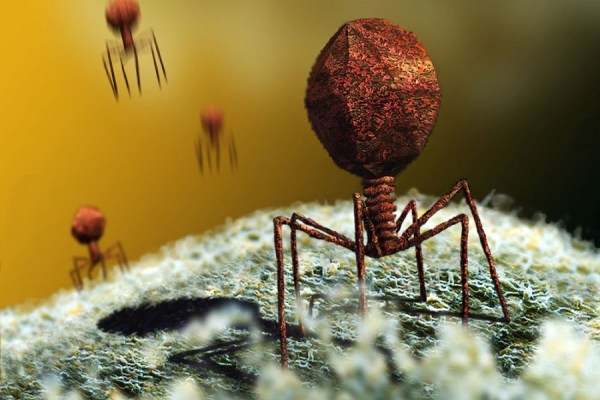
Bacteriophages are viruses that infect and kill bacteria. The name originates from the Greek ‘phagos’ which means ‘to devour’. Bacteriophages were discovered 100 years ago because of their ability to replicate in a pathogenic bacterium, kill it and thereby cure the patient. As a small spaceship landing on the moon, the microscopic particles land on the surface of the bacteria where they inject their deadly genetic material.

Read the rest of this page »

Discovery puts designer dopamine neurons within reach

Discovery puts designer dopamine neurons within reach Parkinson's disease researchers discover a way to reprogram the genome

For decades, the elusive holy grail in Parkinson’s disease research has been finding a way to repair faulty dopamine neurons and put them back into patients, where they will start producing dopamine again. Researchers have used fetal material, which is difficult to obtain and of variable quality. Embryonic stem cells represented a tremendous innovation, but making dopamine neurons from stem cells is a long process with a low yield.

Read the rest of this page »

Self-consciousness: Beyond the looking-glass and what dogs found there

Dogs (and probably many other animals) have a conscience too!

That man’s best friend has a conscience is what every owner would be willing to bet, without even thinking about it for a moment. This means that dogs have self-consciousness. But the problem in science is that ideas and assumptions must be demonstrated. It is not enough for someone to have an inkling of something for it to be considered a scientific fact. Self-awareness, or self-consciousness, has been studied mainly by examining the responses of animals and children to their reflection in the mirror.

Read the rest of this page »

Seeing viruses in a new light

Seeing viruses in a new light

Want to make a virus? It’s easy: combine one molecule of genomic nucleic acid, either DNA or RNA, and a handful of proteins, shake, and in a fraction of a second you’ll have a fully-formed virus. While that may sound like the worst infomercial ever, in many cases making a virus really is that simple. Viruses such as influenza spread so effectively, and as a result can be so deadly to their hosts, because of their ability to spontaneously self-assemble in large numbers.

Read the rest of this page »

Certain herpes viruses can infect human neurons

Certain herpes viruses can infect human neurons

For years, researchers have noted a tantalizing link between some neurologic conditions and certain species of the herpes virus. In patients with Alzheimer’s disease, multiple sclerosis, and cerebellar ataxia, among other neuropathies, the cerebrospinal fluid teems with Epstein-Barr virus (EBV). Yet, the nature of that link has remained unclear, as it has been assumed that EBV, as well as other viruses in the same sub-family, called gammaherpesviruses, cannot infect neurons.

Read the rest of this page »

No two faces are the same

No two faces are the same Important details revealed in the search for the causes of face blindness

For the very first time, researchers have been able to show that the causes of congenital face blindness can be traced back to an early stage in the perceptual process. These findings are crucial, not just for our understanding of face recognition, but also because they allow us to understand the processes behind the recognition of any visually presented object.

Read the rest of this page »

Exposure to violence makes you more likely to lie, cheat

Violence, Aggression, and Ethics: The Link Between Exposure to Human Violence and Unethical Behavior

Maybe it’s not what it looks like…

Can watching a violent movie make you more likely to lie, cheat or steal? What about reading a violent book? While that may seem like a stretch, a new research study shows it may be the case. The study finds that exposure to human violence is strongly linked to an increase in cheating for monetary gain. In other words, violence may be making us less ethical.

Read the rest of this page »

Novel insights into genetic cause of autoimmune diseases

Novel insights into genetic cause of autoimmune diseases

A collaboration between researchers at the Babraham Institute and the University of Manchester has mapped the physical connections occurring in the genome to shed light on the parts of the genome involved in autoimmune diseases. Using a new technique, called Capture Hi-C, the team revealed novel insights into how changes in the genetic sequence have a biological effect and increase the risk of disease.

Read the rest of this page »

Mental health risk for new dads

Mental health risk for new dads

Researchers have found anxiety around the arrival of a new baby is just as common as postnatal depression, and the risks for men are nearly as high as for women. Mental health researcher Dr Liana Leach reviewed 43 separate studies and found anxiety before and after a child arrives is just as prevalent as depression, affecting around one in ten men, around half the rate for women.

Read the rest of this page »

Stem cell study paves the way for patient therapies

Stem cell study paves the way for patient therapies

Stem cells that have been specifically developed for use as clinical therapies are fit for use in patients, an independent study of their genetic make-up suggests. The research – which focused on human embryonic stem cells – paves the way for clinical trials of cell therapies to treat conditions such as Parkinson’s disease, age-related degeneration of the eyes and spinal cord injury.

Read the rest of this page »

Dopamine measurements reveal insights into how we learn

First-of-kind dopamine measurements in human brain reveal insights into how we learn

Virginia Tech Carilion Research Institute scientists have reported measurements of dopamine release with unprecedented temporal precision in the brains of people with Parkinson’s disease. The measurements, collected during brain surgery as the conscious patients played an investment game, demonstrate how rapid dopamine release encodes information crucial for human choice.

Read the rest of this page »

Yin and yang of serotonin neurons in mood regulation

Yin and yang of serotonin neurons in mood regulation

Low levels of serotonin in the brain are known to play a role in depression and anxiety, and it is customary to treat these disorders with medications that increase the amount of this neurotransmitter. However, a new study carried out by researchers suggests that this approach may be too simple. It appears that neighboring serotonin-producing brainstem regions exert different and sometimes opposing effects on behavior.

Read the rest of this page »