We're a little crazy, about science!

Latest

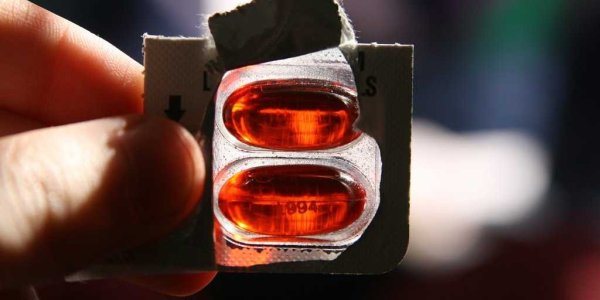
Cold medicine could stop cancer spread

cold medicine

Bladder cancer is the seventh most common cancer in males worldwide. Every year, about 20,000 people in Japan are diagnosed with bladder cancer, of whom around 8,000–mostly men–succumb to the disease. Bladder cancers can be grouped into two types: non-muscle-invasive cancers, which have a five-year survival rate of 90 percent, and muscle-invasive cancers, which have poor prognoses.

Read the rest of this page »

New sensor material could enable more sensitive readings of biological signals

transhuman

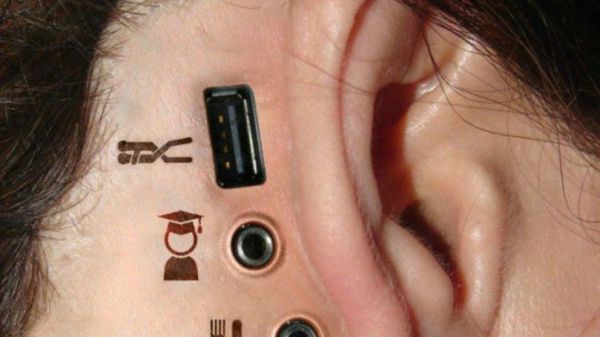
High-tech prosthetics, computers that are controlled by thought, the ability to walk or even move again, these are just a few of the promises of technology. Unfortunately, while the tech is — mostly — up to the challenge, getting the biology side of things to cooperate has been difficult at best, but that could change. Now, scientists have created a material that could make reading biological signals, from heartbeats to brainwaves, much more sensitive.

Read the rest of this page »

Concentrating on the social billions

social media

Using online social media does not lead to long-term problems with our ability to concentrate, according to new research. We are social animals, so it is really no surprise that billions of us now use online tools to communicate, educate and inform each other. The advent of social media and social networking has nevertheless been phenomenally rapid.

Read the rest of this page »

Mental illness genetically linked to drug use and misuse

anxiety depression

There are many reports of drug use leading to mental health problems, and we all know of someone having a few too many drinks to cope with a bad day. Many people who are diagnosed with a mental health disorder indulge in drugs, and vice versa. As severity of both increase, problems arise and they become more difficult to treat. But why substance involvement and psychiatric disorders often co-occur is not well understood.

Read the rest of this page »

Scientists find new path in brain to ease depression

peter pan come rescue me

Scientists have discovered a new pathway in the brain that can be manipulated to alleviate depression. The pathway offers a promising new target for developing a drug that could be effective in individuals for whom other antidepressants have failed. New antidepressant options are important because a significant number of patients don’t adequately improve with currently available antidepressant drugs.

Read the rest of this page »

Revising the meaning of ‘prion’

mad cow

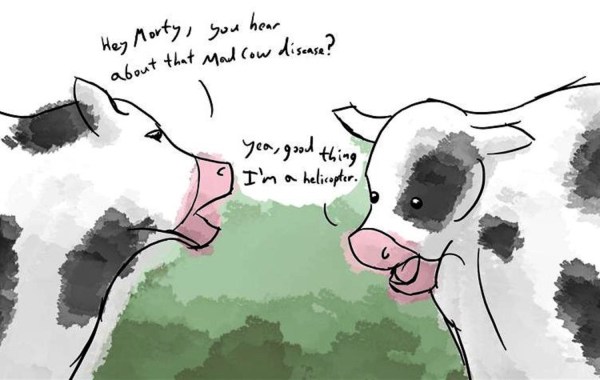
A team of scientists are redefining what it means to be a prion–a type of protein that can pass heritable traits from cell to cell by its structure instead of by DNA. Although prions are infamous for causing Creutzfeldt-Jakob disease, fatal familial insomnia, and bovine spongiform encephalopathy, commonly known as mad cow’s disease, the present study indicates that prions identified in yeast, and possibly in plants, and other organisms may be beneficial.

Read the rest of this page »

Sugar gives bees a happy buzz

simpson sugar mound

An unexpected sugary snack can give bees a little buzz and appears to lift their mood, even making them optimistic, according to research that suggests pollinators have feelings, too. Since emotions are subjective and difficult to measure—particularly in animals—researchers looked at how bees’ behavior changed after they were given a sip of sucrose solution.

Read the rest of this page »

Nature or nurture: is violence in our genes?

dna violence

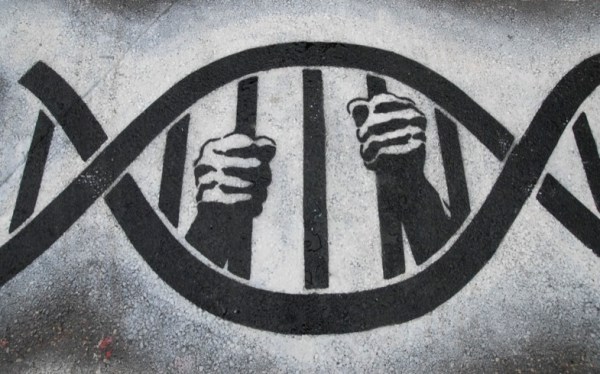
Nature or nurture? The quest to understand why humans kill one another has occupied the minds of philosophers, sociologists and psychologists for centuries. Are we innately violent, as Englishman Thomas Hobbes postulated in the 1650s, or is our behaviour influenced more by the environment we grow up in, as Jean-Jacques Rousseau theorised a century later?

Read the rest of this page »

Omega-3 fatty acid stops known trigger of lupus

fish oil

A team of researchers has found that consuming an omega-3 fatty acid called DHA, or docosahexaenoic acid, can stop a known trigger of lupus and potentially other autoimmune disorders. DHA can be found in fatty, cold-water fish and is produced by the algae that fish eat and store in their bodies. It can be found in fish oil supplements as well, used by more than 30 million Americans.

Read the rest of this page »

The unintended consequences of almond milk on California

almond milk

A new study using aerial imagery across the state of California has found that converting land to grow almonds between 2007 and 2014 has led to a 27% annual increase in irrigation demands—despite the state’s historic drought. The expansion of almonds has also consumed 16,000 acres of wetlands and will likely put additional pressure on already stressed honeybee populations.

Read the rest of this page »

Why do more men than women commit suicide?

Depression

Why do more men die when they attempt suicide than women? The answer could lie in four traits, finds scientists. There are over 6,000 British lives lost to suicide each year, and nearly 75 per cent of those are male. However, research has found women are more likely to suffer from depression, and to attempt to take their own life.

Read the rest of this page »

The new findings heart repair research

broken heart

Scientists trying to find ways to regenerate a damaged heart have shed more light on the molecular mechanisms that could one day make this a reality.  Whilst other organs such as the liver can regenerate, the heart muscle has very little ability to do so after suffering damage, such as a heart attack.
In the womb the body is able to produce heart muscle cells but soon after birth it effectively stops producing them.

Read the rest of this page »

Largest-ever study reveals environmental impact of genetically modified crops

gmo crops

According to new research, widespread adoption of genetically modified crops has decreased the use of insecticides, but increased the use of weed-killing herbicides as weeds become more resistant. This is the largest study of genetically modified crops and pesticide use to date. The team of economists studied annual data from more than 5,000 soybean and 5,000 maize farmers in the U.S. from 1998 to 2011, far exceeding previous studies that have been limited to one or two years of data.

Read the rest of this page »

Food waste could store solar and wind energy, or there’s the obvious…

sugar alchohols

Saving up excess solar and wind energy for times when the sun is down or the air is still requires a storage device. Batteries get the most attention as a promising solution although pumped hydroelectric storage is currently used most often. Now researchers are advancing another potential approach using sugar alcohols—an abundant waste product of the food industry—mixed with carbon nanotubes.

Read the rest of this page »

Entitlement — a damning recipe for happiness

I want it now

Entitlement–a personality trait driven by exaggerated feelings of deservingness and superiority–may lead to chronic disappointment, unmet expectations and a habitual, self-reinforcing cycle of behavior with dire psychological and social costs, according to new research. In a new theoretical model, researchers have mapped how entitled personality traits may lead to a perpetual loop of distress.

Read the rest of this page »

Learning to turn down your amygdala can modify your emotions

amygdala depression

Training the brain to treat itself is a promising therapy for traumatic stress. The training uses an auditory or visual signal that corresponds to the activity of a particular brain region, called neurofeedback, which can guide people to regulate their own brain activity. However, treating stress-related disorders requires accessing the brain’s emotional hub, the amygdala, which is located deep in the brain and difficult to reach with typical neurofeedback methods.

Read the rest of this page »

Social connectedness can increase suicide risk

social media

Community characteristics play an important role in perpetuating teen suicide clusters and thwarting prevention efforts, according to a new study by sociologists who examined clusters in a single town. The study illustrates how the homogeneous culture and high degree of social connectedness of a community can increase suicide risk, particularly among teenagers.

Read the rest of this page »

Body heat as a power source

morpheus battery scene

Electronics integrated into textiles are gaining in popularity: Systems like smartphone displays in a sleeve or sensors to detect physical performance in athletic wear have already been produced. The main problem with these systems tends to be the lack of a comfortable, equally wearable source of power. Chinese scientists are now aiming to obtain the necessary energy from body heat by introducing a flexible, wearable thermocell based on two different gel electrolytes.

Read the rest of this page »

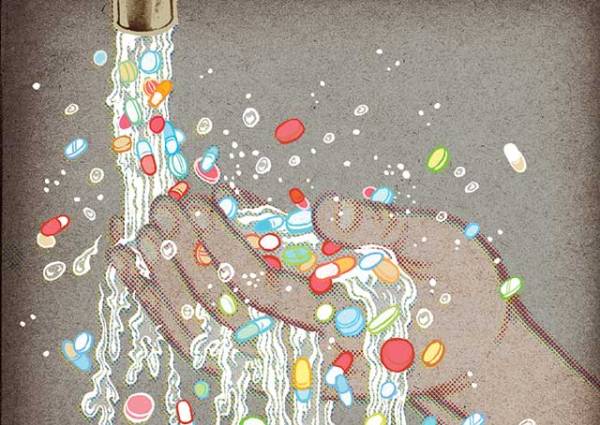
Drugs in the water? Don’t blame the students

drugs on tap

With nearly sixty percent of American adults now taking prescription medications–from antidepressants to cholesterol treatments–there is growing concern about how many drugs are flowing through wastewater treatment facilities and into rivers and lakes. Research confirms that pharmaceutical pollution can cause damage to fish and other ecological problems–and may pose risks to human health too.

Read the rest of this page »

Parents’ math skills ‘rub off’ on their children

children in math

Parents who excel at math produce children who excel at math. This is according to a recently released study, which shows a distinct transfer of math skills from parent to child. The study specifically explored intergenerational transmission–the concept of parental influence on an offspring’s behavior or psychology–in mathematical capabilities.

Read the rest of this page »

The Genesis Project: New life on exoplanets

exoplanets

Can life be brought to celestial bodies outside our solar system, which are not permanently inhabitable? A new essay that has been published is trying to deal with this question. Over the last several years, the search for exoplanets has shown that very different types exist leading to new questions and a variety of possible answers.

Read the rest of this page »

Trauma’s epigenetic fingerprint observed in children of Holocaust survivors

I swear I didn't kill anyone

Image credit goes to the one and only — very talented — Lora Zombie

The children of traumatized people have long been known to be at increased risk for posttraumatic stress disorder (PTSD), and mood and anxiety disorders. However, there are very few opportunities to examine biologic alterations in the context of a watershed trauma in exposed people and their adult children born after the event.

Read the rest of this page »

A visual nudge can disrupt recall of what things look like

learning colors

Interfering with your vision makes it harder to describe what you know about the appearance of even common objects, according to researchers. This connection between visual knowledge and visual perception challenges widely held theories that visual information about the world — that alligators are green and have long tails, for example — is stored abstractly, as a list of facts, divorced from the visual experience of seeing an alligator.

Read the rest of this page »