We're a little crazy, about science!

Latest

Strongest evidence yet of a link between breakfast and educational outcomes

Study provides strongest evidence yet of a link between breakfast quality and educational outcomes

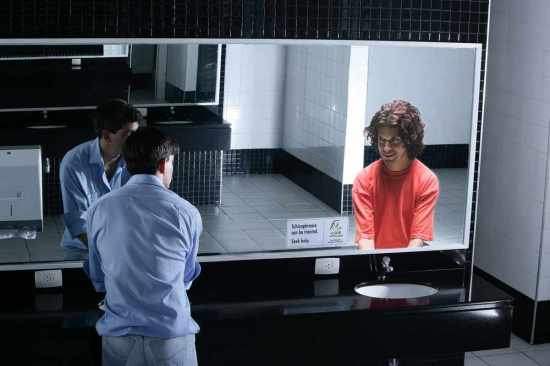
A direct and positive link between pupils’ breakfast quality and consumption, and their educational attainment, has for the first time been demonstrated in a ground-breaking new study carried out by public health experts at Cardiff University. The study of 5000 9-11 year-olds from more than 100 primary schools sought to examine the link between breakfast consumption and quality and subsequent attainment in Key Stage 2 Teacher Assessments* 6-18 months later.
Read the rest of this page »

3-D printing aids in understanding food enjoyment
3-D printing aids in understanding food enjoyment

Tasting food relies on food volatiles moving from the back of the mouth to the nasal cavity, but researchers have wondered why airflow doesn’t carry them in the other direction, into the lungs. Now a team of engineers, using a 3D printed model of the human airway from nostril to trachea, has determined that the shape of the airway preferentially transfers volatiles to the nasal cavity and allows humans to enjoy the smell of good food.

Read the rest of this page »

Not so happy old age?

Not so happy old age?

The notion that older people are happier than younger people is being challenged following a recent study led by a University of Bradford lecturer. In fact it suggests that people get more depressed from age 65 onwards. The study, led by psychology lecturer Dr Helena Chui, builds on a 15-year project observing over 2,000 older Australians living in the Adelaide area.

Read the rest of this page »

It’s music to my eyes

It's music to my eyes

Swan lake
Image credit goes to: The one and only Lora Zombie (Yes again).

When people are listening to music, their emotional reactions to the music are reflected in changes in their pupil size. Researchers from the University of Vienna and the University of Innsbruck, Austria, are the first to show that both the emotional content of the music and the listeners’ personal involvement with music influence pupil dilation. This study demonstrates that pupil size measurement can be effectively used to probe listeners’ reactions to music.

Read the rest of this page »

A protein-RNA structure hints at how viruses commandeer human proteins

A protein-RNA structure hints at how viruses commandeer human proteins

Researchers at Case Western Reserve University and the University of Michigan have produced the first image of an important human protein as it binds with ribonucleic acid (RNA), a discovery that could offer clues to how some viruses, including HIV, control expression of their genetic material. That information could lead to new strategies to block viruses from replicating, thereby limiting or halting infection.

Read the rest of this page »

New vaccine could prevent high cholesterol

New vaccine could prevent high cholesterol

Time to pug out…
Image credit goes to: (Once again) the talented and creative Lora Zombie

A new cholesterol-lowering vaccine leads to reductions in ‘bad’ LDL cholesterol in mice and macaques, according to research. The authors of the study, from the University of New Mexico and the National Institutes of health in the United States, say the vaccine has the potential to be a more powerful treatment than statins alone.

Read the rest of this page »

The connection between masculinity, energy drink use, and sleep problems

Connections discovered between masculinity, energy drink use, and sleep problems

Energy drinks have grown in popularity for many Americans, but there is growing concern about the health risks of consuming them in large quantities. Because men are the main consumers of energy drinks, a research team lead by Dr. Ronald F. Levant, a professor of psychology at The University of Akron, set out to study a possible link between masculinity, expectations about the benefits of consuming energy drinks, how those expectations affect energy drink use, and the impact on sleep.

Read the rest of this page »

The first line of defense? Think Mucus

Mucus -- the first line of defense

By licking a wound it heals faster — this is not simply popular belief, but scientifically proven. Our saliva consists of water and mucus, among other things, and the mucus plays an important role. It stimulates white blood cells to build a good defense against invaders, according to a group of researchers at Lund University in Sweden together with colleagues from Copenhagen and Odense in Denmark.

Read the rest of this page »

Adults’ happiness on the decline

Adults' happiness on the decline

Are you less happy than your parents were at the same age? It may not be all in your head. Researchers led by San Diego State University professor Jean M. Twenge found adults over age 30 are not as happy as they used to be, but teens and young adults are happier than ever. Researchers analyzed data from four nationally representative samples of 1.3 million Americans ages 13 to 96 taken from 1972 to 2014.

Read the rest of this page »

Predicting what side effects you’ll experience from a drug

Researchers are on their way to predicting what side effects you'll experience from a drug

Researchers at the University of California, San Diego have developed a model that could be used to predict a drug’s side effects on different patients. The proof of concept study is aimed at determining how different individuals will respond to a drug treatment and could help assess whether a drug is suitable for a particular patient based on measurements taken from the patient’s blood.

Read the rest of this page »

Kids meals, toys, and TV advertising: A triple threat to child health

Kids meals, toys, and TV advertising: A triple threat to child health

Image credit goes to the one and only: Laura Zombie

Fast food companies advertise children’s meals on TV with ads that feature toy premiums, and it has been suggested that the use of these toy premiums may prompt children to request eating at fast food restaurants. In a new study, researchers found that the more children watched television channels that aired ads for children’s fast food meals, the more frequently their families visited those fast food restaurants.

Read the rest of this page »

Lack of ZZZZs may zap cell growth, brain activity

Lack of ZZZZs may zap cell growth, brain activity

Lack of adequate sleep can do more than just make you tired. It can short-circuit your system and interfere with a fundamental cellular process that drives physical growth, physiological adaptation and even brain activity, according to a new study. Albrecht von Arnim, a molecular biologist based in the Department of Biochemistry and Cellular and Molecular Biology, studied plants but said the concepts may well translate to humans.

Read the rest of this page »

What blocks pro-vaccine beliefs?

What blocks pro-vaccine beliefs?

Despite rhetoric that pits “anti-vaxxers” versus “pro-vaxxers,” most new parents probably qualify as vaccine-neutral–that is, they passively accept rather than actively demand vaccination. Unless there is an active threat of polio or whooping cough, they have to remind themselves that injecting their crying infant with disease antigens is a good thing.

Read the rest of this page »

How common is sexting among married couples?

How common is sexting among married couples?

Earlier this year, we looked at a study that suggested sexting can be healthy in a relationship, but that study primarily looked at non-married couples and the average age for the behavior was, as you may expect, young adult. Which may lead you to think that married couples don’t sext. In fact, married couples do report sexting, but it is much less common than in young adult relationships and consists more of intimate talk with their partners than sending nude or nearly nude photos via mobile phones, according to a new study.

Read the rest of this page »

Intestinal worms ‘talk’ to gut bacteria to boost immune system

Intestinal worms 'talk' to gut bacteria to boost immune system

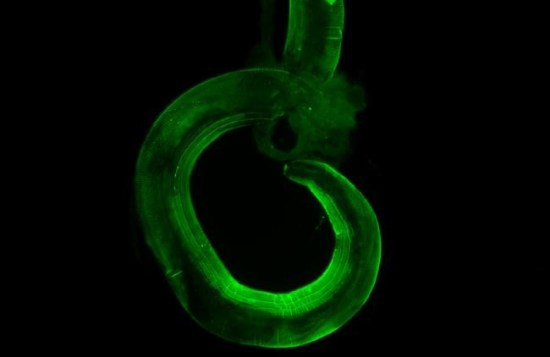
This is the helminth Heligmosomoides polygyrus bakeri (Hpb), which infects rodents. Here seen under fluorescent staining. Hpb was used in the mouse part of this study.
Image credit goes to: Nicola Harris/EPFL

When you think parasites you probably don’t think of anything helpful. However, this isn’t the case and certain parasites inadvertently help the host by helping themselves. In fact, researchers have discovered how intestinal worm infections cross-talk with gut bacteria to help the immune system.

Read the rest of this page »

Researchers create technology to produce lighter, long-lasting batteries from silicon

Researchers create technology to produce lighter, long-lasting batteries from silicon

Substantially smaller and longer-lasting batteries for everything from portable electronic devices to electric cars could become a reality thanks to an innovative technology developed by University of Waterloo researchers. Zhongwei Chen, a chemical engineering professor at Waterloo, and a team of graduate students have created a low-cost battery using silicon that boosts the performance and life of lithium-ion batteries.

Read the rest of this page »

Decontaminating infant formula with the bacteriophage

bacteriophage decontaminates baby formula

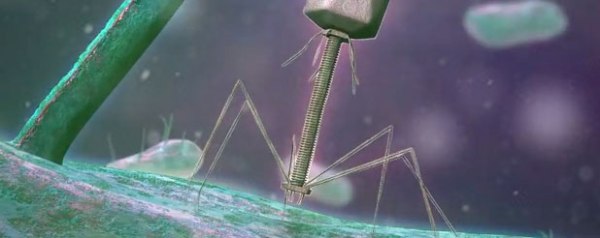
When dealing with bacteria, antibiotics are usually the frontrunner, but there are cases where antibiotics are a big no. Take baby formula for instance, we cannot use antibiotics to keep bacteria at bay. This has posed a safety problem in recent years, but researchers have shown that we can use a natural enemy of bacteria to fight back without risk to infants’ health.

Read the rest of this page »

The science behind real life zombies

zombies ahead

In the spirit of Halloween we bring you the science fact and fiction behind the undead. Zombies, those brain loving little guys, (and girls) are everywhere. We are all familiar (if you are horror fans, or  at least not living on an Amish compound) with the classic  zombie. But did you know that we aren’t the only zombie lovers out there? It turns out that nature has its own special types of zombies, but this isn’t a science fiction movie, this is science fact!

Read the rest of this page »

Depression too often reduced to a checklist of symptoms

Depression too often reduced to a checklist of symptoms

How can you tell if someone is depressed? The Diagnostic and Statistical Manual of Mental Disorders (DSM) – the ‘bible’ of psychiatry – diagnoses depression when patients tick off a certain number of symptoms on the DSM checklist. A large-scale quantitative study coordinated at KU Leuven, Belgium, now shows that some symptoms play a much bigger role than others in driving depression, and that the symptoms listed in DSM may not be the most useful ones.

Read the rest of this page »

Gene therapy treats all muscles in the body in muscular dystrophy dogs

Gene therapy treats all muscles in the body in muscular dystrophy dogs

Muscular dystrophy, which affects approximately 250,000 people in the U.S., occurs when damaged muscle tissue is replaced with fibrous, fatty or bony tissue and loses function. For years, scientists have searched for a way to successfully treat the most common form of the disease, Duchenne Muscular Dystrophy (DMD), which primarily affects boys. Now, a team of University of Missouri researchers have successfully treated dogs with DMD and say that human clinical trials are being planned in the next few years.

Read the rest of this page »

Bacteria communicate like neurons in the brain

Ion channels enable electrical communication in bacterial communities

Biologists discovered that bacteria–often viewed as lowly, solitary creatures–are actually quite sophisticated in their social interactions and communicate with one another through similar electrical signaling mechanisms as neurons in the human brain. In the study, scientists detail the manner by which bacteria living in communities communicate with one another electrically through proteins called “ion channels.”

Read the rest of this page »

You too can learn to farm on Mars!

You too can learn to farm on Mars!

Image credit goes to: SpaceX

Scientists at Washington State University and the University of Idaho are helping students figure out how to farm on Mars, much like astronaut Mark Watney, played by Matt Damon, attempts in the critically acclaimed movie “The Martian.” Washington State University physicist Michael Allen and University of Idaho food scientist Helen Joyner teamed up to explore the challenge. Their five-page study guide was published the day the movie premiered earlier this month.

Read the rest of this page »

How plants turn into zombies

How plants turn into zombies

It begins as a fairy tale which later turns into a horror story: Lusciously flowering plants, surrounded by a large number of insects. Usually, both sides profit from the encounter: Feasting on the plant juice and pollen, the insects pollinate the flowers and thus secure the survival of the plants. However, sometimes the insects – in this case a certain species of leafhoppers – can bring disaster to the plants, which they are not able to overcome.

Read the rest of this page »

‘Paleo’ style sleep? Think again…

'Paleo' sleep? Sorry, pre-modern people don't get more Zzzzs than we do

It’s tempting to believe that people these days aren’t getting enough sleep, living as we do in our well-lit houses with TVs blaring, cell phones buzzing, and a well-used coffee maker in every kitchen. But new evidence reported in the Cell Press journal Current Biology on October 15 shows that three ancient groups of hunter-gatherers–living in different parts of the world without any of those trappings of modern life–don’t get any more sleep than we do.

Read the rest of this page »

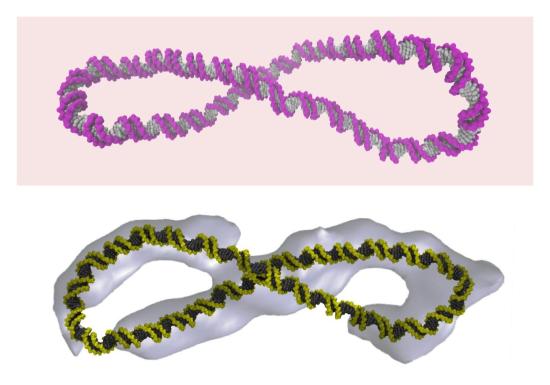
Supercoiled DNA is far more dynamic than the ‘Watson-Crick’ double helix

Supercoiled DNA is far more dynamic than the 'Watson-Crick' double helix

The image shows the structure of the DNA calculated with the supercomputer simulations (in colour) superimposed upon the cryo-electron tomography data (in white or yellow). (There is no superimposition onto cryo-electron tomography data for the purple figure-8 shape.) You can see that the familiar double helix has been either simply bent into a circle or twisted into a figure-8. Image credit goes to: Thana Sutthlbutpong

Researchers have imaged in unprecedented detail the three-dimensional structure of supercoiled DNA, revealing that its shape is much more dynamic than the well-known double helix.

Read the rest of this page »

Pain is in the brain

Pain is in the brain

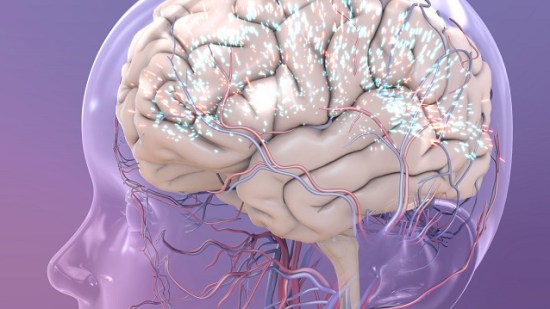
Chronic pain results from disease or trauma to the nervous system. Damaged nerve fibres with heightened responses to normal stimuli send incorrect messages to pain centres in the brain. This phenomenon, called “peripheral and central sensitization” is one of the key mechanisms involved in the condition which touches people with diabetes, cancer, and those suffering from multiple sclerosis, among others.

Read the rest of this page »

Parents influence children’s play of violent video games

Parents influence children’s play of violent video games, according to Iowa State study

Parents who are more anxious and emotional can impact the amount of violent video games their children play, according to new consumer research from Iowa State University. Russell Laczniak, a professor of marketing and the John and Connie Stafford Professor in Business, says given the harmful effects of violent video games, he and his colleagues wanted to better understand how parents influence children’s behavior.

Read the rest of this page »

American placebo – An increase in the placebo response, but only in America?

American placebo New analysis of chronic pain drug trials shows increasing placebo responses over time, in the US only

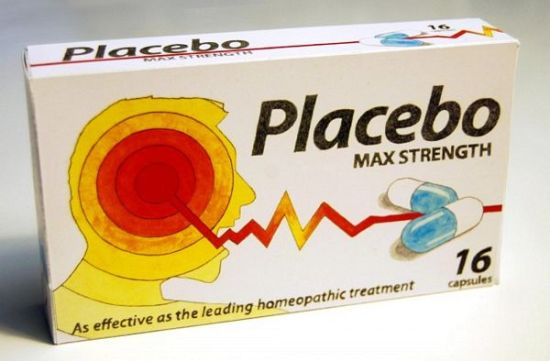
A new study finds that rising placebo responses may play a part in the increasingly high failure rate for clinical trials of drugs designed to control chronic pain caused by nerve damage. Surprisingly, however, the analysis of clinical trials conducted since 1990 found that the increase in placebo responses occurred only in trials conducted wholly in the U.S.; trials conducted in Europe or Asia showed no changes in placebo responses over that period.

Read the rest of this page »

Brain networking: behind the cognitive control of thoughts

Brain networking

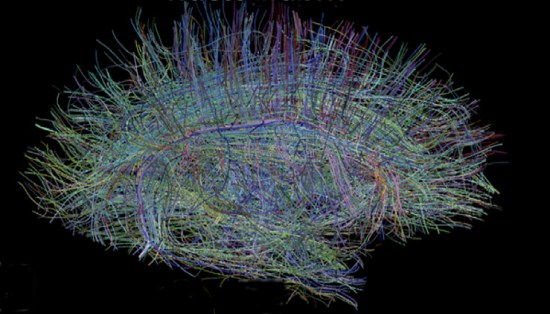
The human brain does not come with an operating manual. However, a group of scientists have developed a way to convert structural brain imaging techniques into “wiring diagrams” of connections between brain regions. Three researchers from UCSB’s Department of Psychological & Brain Sciences — Michael Miller, Scott Grafton and Matt Cieslak — used the structure of neural networks to reveal the fundamental rules that govern which parts of the brain are most able to exert cognitive control over thoughts and actions.

Read the rest of this page »

Can exercise be replaced with a pill?

Can exercise be replaced with a pill?

Everyone knows that exercise improves health, and ongoing research continues to uncover increasingly detailed information on its benefits for metabolism, circulation, and improved functioning of organs such as the heart, brain, and liver. With this knowledge in hand, scientists may be better equipped to develop “exercise pills” that could mimic at least some of the beneficial effects of physical exercise on the body. But a review of current development efforts ponders whether such pills will achieve their potential therapeutic impact, at least in the near future.

Read the rest of this page »

Coincidence or conspiracy? Studies investigate conspiracist thinking

Coincidence or conspiracy? Studies investigate conspiracist thinking

In pop culture, conspiracy believers — like FBI agent Fox Mulder on The X Files or professor Robert Langdon in The Da Vinci Code — tend to reject the notion of coincidence or chance; even the most random-seeming events are thought to result from some sort of intention or design. And researchers have suggested that such a bias against randomness may explain real-world conspiracy beliefs. But new research from psychological scientists shows no evidence for a link between conspiracist thinking and perceptions of order, design, or intent.

Read the rest of this page »

Scientists identify key receptor as potential target for treatment of autism

Scientists identify key receptor as potential target for treatment of autism

Scientists from the Florida campus of The Scripps Research Institute (TSRI) have uncovered a significant–and potentially treatable–relationship between a chemical that helps transmit signals in the brain and genetic mutations present in a subset of individuals with autism spectrum disorder. The new research findings focus on the role that the neurotransmitter serotonin plays in the development of social behavior.

Read the rest of this page »

Connecting Alzheimer’s disease and the immune system

Connecting Alzheimer's disease and the immune system

The role of the immune system in Alzheimer’s disease is a hot topic, but exactly how the two are connected and what interventions could help lower risk remain a mystery. In a new study, researchers in the Ann Romney Center for Neurologic Diseases at Brigham and Women’s Hospital (BWH) investigate how genetic risk factors for Alzheimer’s disease may influence a key type of immune cell. Their results lay the groundwork for designing better therapeutic strategies and better prediction tools for risk of developing Alzheimer’s disease.

Read the rest of this page »