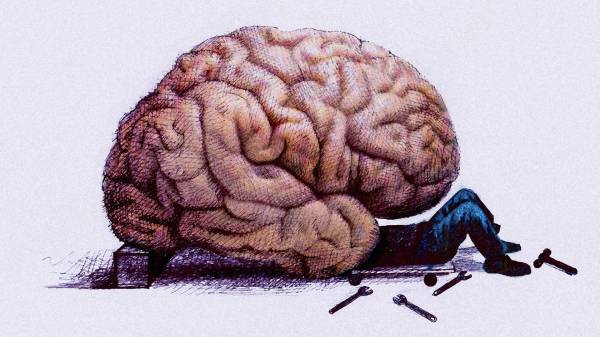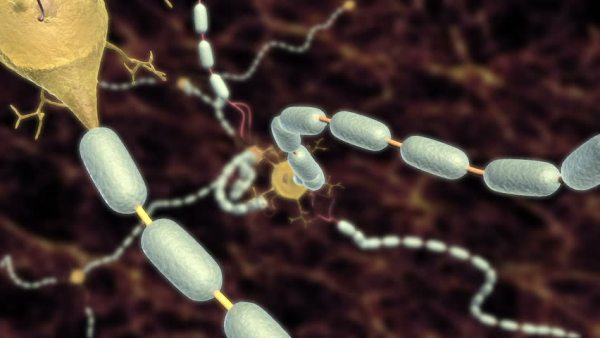
There are three kinds of glial cells in the brain, oligodendrocyte, astrocyte and microglia. Oligodendrocytes myelinate neuronal axons to increase conduction velocity of neuronal impulses. A Japanese research team found a characteristic feature of oligodendrocytes that selectively myelinate a particular set of neuronal axons.
Latest
Cold medicine could stop cancer spread
Bladder cancer is the seventh most common cancer in males worldwide. Every year, about 20,000 people in Japan are diagnosed with bladder cancer, of whom around 8,000–mostly men–succumb to the disease. Bladder cancers can be grouped into two types: non-muscle-invasive cancers, which have a five-year survival rate of 90 percent, and muscle-invasive cancers, which have poor prognoses.
Female brains change in sync with hormones
Although it has already been known for some time that the brain does not remain rigid in its structure even in adulthood, scientists have recently made a surprising discovery. The brain is not only able to adapt to changing conditions in long-term processes, but it can do this every month.
Untangling a cause of memory loss in neurodegenerative diseases
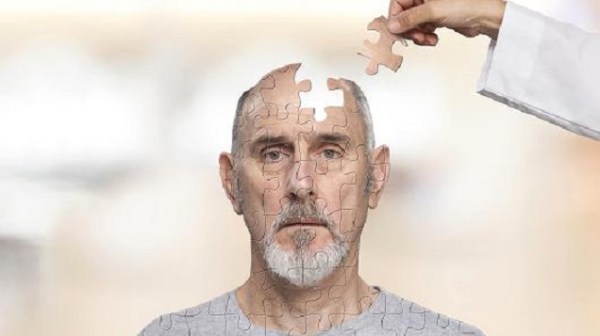
Tauopathies are a group of neurodegenerative disorders, including Alzheimer’s disease that are characterized by the deposition of aggregates of the tau protein inside brain cells. A new study reveals that the cutting of tau by an enzyme called caspase-2 may play a critical role in the disordered brain circuit function that occurs in these diseases.
High cholesterol triggers mitochondrial oxidative stress leading to osteoarthritis
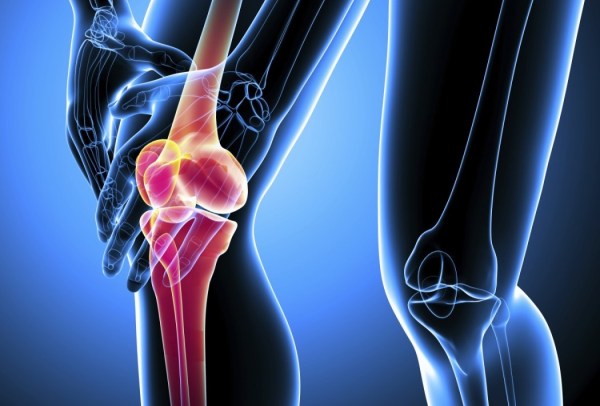
High cholesterol might harm more than our cardiovascular systems. New research using animal models suggests that high cholesterol levels trigger mitochondrial oxidative stress on cartilage cells, causing them to die, and ultimately leading to the development of osteoarthritis.
Vitamins A and C help erase cell memory
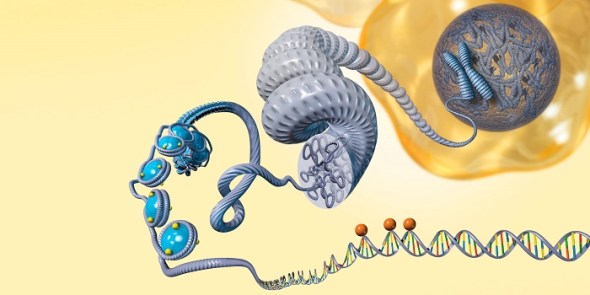
Vitamins A and C aren’t just good for your health, they affect your DNA too. Researchers have discovered how vitamins A and C act to modify the epigenetic ‘memory’ held by cells; insight which is significant for regenerative medicine and our ability to reprogramme cells from one identity to another.
Doc versus machine
Increasingly powerful computers using ever-more sophisticated programs are challenging human supremacy in areas as diverse as playing chess and making emotionally compelling music. But can digital diagnosticians match, or even outperform, human physicians? The answer, according to a new study, is “not quite.”
New sensor material could enable more sensitive readings of biological signals
High-tech prosthetics, computers that are controlled by thought, the ability to walk or even move again, these are just a few of the promises of technology. Unfortunately, while the tech is — mostly — up to the challenge, getting the biology side of things to cooperate has been difficult at best, but that could change. Now, scientists have created a material that could make reading biological signals, from heartbeats to brainwaves, much more sensitive.
First demonstration of brain-inspired device to power artificial systems
New research has demonstrated that a nanoscale device, called a memristor, could be used to power artificial systems that can mimic the human brain. Artificial neural networks (ANNs) exhibit learning abilities and can perform tasks which are difficult for conventional computing systems, such as pattern recognition, on-line learning and classification.
Mental illness genetically linked to drug use and misuse
There are many reports of drug use leading to mental health problems, and we all know of someone having a few too many drinks to cope with a bad day. Many people who are diagnosed with a mental health disorder indulge in drugs, and vice versa. As severity of both increase, problems arise and they become more difficult to treat. But why substance involvement and psychiatric disorders often co-occur is not well understood.
Scientists find new path in brain to ease depression
Scientists have discovered a new pathway in the brain that can be manipulated to alleviate depression. The pathway offers a promising new target for developing a drug that could be effective in individuals for whom other antidepressants have failed. New antidepressant options are important because a significant number of patients don’t adequately improve with currently available antidepressant drugs.
Revising the meaning of ‘prion’
A team of scientists are redefining what it means to be a prion–a type of protein that can pass heritable traits from cell to cell by its structure instead of by DNA. Although prions are infamous for causing Creutzfeldt-Jakob disease, fatal familial insomnia, and bovine spongiform encephalopathy, commonly known as mad cow’s disease, the present study indicates that prions identified in yeast, and possibly in plants, and other organisms may be beneficial.
For women, caffeine could be ally in warding off dementia
Among a group of older women, self-reported caffeine consumption of more than 261 mg per day was associated with a 36 percent reduction in the risk of incident dementia over 10 years of follow-up. This level is equivalent to two to three 8-oz cups of coffee per day, five to six 8-oz cups of black tea, or seven to eight 12-ounce cans of cola.
Sugar gives bees a happy buzz
An unexpected sugary snack can give bees a little buzz and appears to lift their mood, even making them optimistic, according to research that suggests pollinators have feelings, too. Since emotions are subjective and difficult to measure—particularly in animals—researchers looked at how bees’ behavior changed after they were given a sip of sucrose solution.
Omega-3 fatty acid stops known trigger of lupus
A team of researchers has found that consuming an omega-3 fatty acid called DHA, or docosahexaenoic acid, can stop a known trigger of lupus and potentially other autoimmune disorders. DHA can be found in fatty, cold-water fish and is produced by the algae that fish eat and store in their bodies. It can be found in fish oil supplements as well, used by more than 30 million Americans.
Children could point the way to new HIV treatments
Children with HIV who can resist the disease progressing could point the way to new treatments for HIV infection that are more widely applicable to infected adults and children alike, an international team of researchers has found.
Research team may have observed building blocks of memories in the brain
A team of researchers has observed what they believe are the building blocks of memories in a mouse brain. In their paper, the researchers describe how they caused certain neurons to become illuminated when they fired, allowing them to watch in real time as memories were made and then later as they were replayed while the mouse was sitting idle.
Why do more men than women commit suicide?
Why do more men die when they attempt suicide than women? The answer could lie in four traits, finds scientists. There are over 6,000 British lives lost to suicide each year, and nearly 75 per cent of those are male. However, research has found women are more likely to suffer from depression, and to attempt to take their own life.

Linking perception to action
Researchers studying how the brain uses perception of the environment to guide action offer a new understanding of the neural circuits responsible for transforming sensation into movement.
Historical analysis examines sugar industry role in heart disease research
Using archival documents, a new report examines the sugar industry’s role in coronary heart disease research and suggests the industry sponsored research to influence the scientific debate to cast doubt on the hazards of sugar and to promote dietary fat as the culprit in heart disease.
Protect kids from toxic secondhand smoke, experts urge
It’s advice most smokers with children probably take lightly, but they shouldn’t. Parents and policy advocates should take a “zero tolerance” approach to exposing children to secondhand cigarette smoke, which can be responsible for lifelong cardiovascular consequences in addition to respiratory and other health issues.
Potentially harmful chemicals widespread in household dust
Household dust exposes people to a wide range of toxic chemicals from everyday products, according to a new study. A multi-institutional team conducted a first-of-a-kind meta-analysis, compiling data from dust samples collected throughout the United States to identify the top ten toxic chemicals commonly found in dust.
Physicists retrieve ‘lost’ information from quantum measurements
Typically when scientists make a measurement, they know exactly what kind of measurement they’re making, and their purpose is to obtain a measurement outcome. But in an “unrecorded measurement,” both the type of measurement and the measurement outcome are unknown.
The new findings heart repair research
Scientists trying to find ways to regenerate a damaged heart have shed more light on the molecular mechanisms that could one day make this a reality. Whilst other organs such as the liver can regenerate, the heart muscle has very little ability to do so after suffering damage, such as a heart attack.
In the womb the body is able to produce heart muscle cells but soon after birth it effectively stops producing them.
Largest-ever study reveals environmental impact of genetically modified crops
According to new research, widespread adoption of genetically modified crops has decreased the use of insecticides, but increased the use of weed-killing herbicides as weeds become more resistant. This is the largest study of genetically modified crops and pesticide use to date. The team of economists studied annual data from more than 5,000 soybean and 5,000 maize farmers in the U.S. from 1998 to 2011, far exceeding previous studies that have been limited to one or two years of data.
The blur doesn’t cut it: AI can identify people in blurred images
A trio of researchers has found off-the-shelf AI software can be used to identify people in blurred or pixilated images. The researchers have uploaded a paper describing the experiments they carried out with AI software identification of people or other items in blurred out images, what they found and reveal just how accurate they found it could be.
MRI scanner sees emotions flickering across an idle mind
As you relax and let your mind drift aimlessly, you might remember a pleasant vacation, an angry confrontation in traffic or maybe the loss of a loved one. And now a team of researchers say they can see those various emotional states flickering across the human brain.
Food waste could store solar and wind energy, or there’s the obvious…
Saving up excess solar and wind energy for times when the sun is down or the air is still requires a storage device. Batteries get the most attention as a promising solution although pumped hydroelectric storage is currently used most often. Now researchers are advancing another potential approach using sugar alcohols—an abundant waste product of the food industry—mixed with carbon nanotubes.
Learning to turn down your amygdala can modify your emotions
Training the brain to treat itself is a promising therapy for traumatic stress. The training uses an auditory or visual signal that corresponds to the activity of a particular brain region, called neurofeedback, which can guide people to regulate their own brain activity. However, treating stress-related disorders requires accessing the brain’s emotional hub, the amygdala, which is located deep in the brain and difficult to reach with typical neurofeedback methods.
A microRNA plays role in major depression
A tiny RNA appears to play a role in producing major depression, the mental disorder that affects as many as 250 million people a year worldwide. Major depression, formally known as major depressive disorder, or MDD, brings increased risk of suicide and is reported to cause the second-most years of disability after low-back pain.
Study could herald new treatment for muscular dystrophy
New research has shown that the corticosteroid deflazacort is a safe and effective treatment for Duchenne muscular dystrophy. The findings could pave the way for first U.S.-approved treatment for the disease.
How new experiences boost memory formation
Most people remember where they were when the twin towers collapsed in New York … new research reveals why that may be the case. The study has shed new light on the biological mechanisms that drive the process, known as flashbulb memory.
Antimicrobial chemicals found with antibiotic-resistance genes in indoor dust
Researchers have found links between the levels of antimicrobial chemicals and antibiotic-resistance genes in the dust of an aging building used for athletics and academics. One of the antimicrobials seen in the study is triclosan, a commonly used antibacterial ingredient in many personal care products.
Body heat as a power source
Electronics integrated into textiles are gaining in popularity: Systems like smartphone displays in a sleeve or sensors to detect physical performance in athletic wear have already been produced. The main problem with these systems tends to be the lack of a comfortable, equally wearable source of power. Chinese scientists are now aiming to obtain the necessary energy from body heat by introducing a flexible, wearable thermocell based on two different gel electrolytes.
Drugs in the water? Don’t blame the students
With nearly sixty percent of American adults now taking prescription medications–from antidepressants to cholesterol treatments–there is growing concern about how many drugs are flowing through wastewater treatment facilities and into rivers and lakes. Research confirms that pharmaceutical pollution can cause damage to fish and other ecological problems–and may pose risks to human health too.
Parents’ math skills ‘rub off’ on their children
Parents who excel at math produce children who excel at math. This is according to a recently released study, which shows a distinct transfer of math skills from parent to child. The study specifically explored intergenerational transmission–the concept of parental influence on an offspring’s behavior or psychology–in mathematical capabilities.
The Genesis Project: New life on exoplanets
Can life be brought to celestial bodies outside our solar system, which are not permanently inhabitable? A new essay that has been published is trying to deal with this question. Over the last several years, the search for exoplanets has shown that very different types exist leading to new questions and a variety of possible answers.
Babies chew on subtle social, cultural cues at mealtime
At the dinner table, babies do a lot more than play with their sippy cups, new research suggests. Babies pay close attention to what food is being eaten around them – and especially who is eating it. The study adds evidence to a growing body of research suggesting even very young children think in sophisticated ways about subtle social cues.
Trauma’s epigenetic fingerprint observed in children of Holocaust survivors

Image credit goes to the one and only — very talented — Lora Zombie
The children of traumatized people have long been known to be at increased risk for posttraumatic stress disorder (PTSD), and mood and anxiety disorders. However, there are very few opportunities to examine biologic alterations in the context of a watershed trauma in exposed people and their adult children born after the event.
Caffeine reverts memory deficits by normalizing stress responses in the brain
A new study describes the mechanism by which caffeine counteracts age-related cognitive deficits in animals. The international teams showed that the abnormal expression of a particular receptor – the adenosine A2A, target for caffeine – in the brain of rats induces an aging-like profile namely memory impairments linked to the loss of stress controlling mechanisms.
Use it or lose it: Stopping exercise decreases brain blood flow
We all know that we can quickly lose cardiovascular endurance if we stop exercising for a few weeks, but what impact does the cessation of exercise have on our brains? New research examined cerebral blood flow in healthy, physically fit older adults (ages 50-80 years) before and after a 10-day period during which they stopped all exercise.
A visual nudge can disrupt recall of what things look like
Interfering with your vision makes it harder to describe what you know about the appearance of even common objects, according to researchers. This connection between visual knowledge and visual perception challenges widely held theories that visual information about the world — that alligators are green and have long tails, for example — is stored abstractly, as a list of facts, divorced from the visual experience of seeing an alligator.
Researchers report new Zika complication
If zika didn’t seem scary enough in the media, there is new data showing that there could be a new neurological complication of infection with the Zika virus.
Next steps in understanding brain function
The most complex piece of matter in the known universe is the brain. Neuroscientists have recently taken on the challenge to understand brain function from its intricate anatomy and structure. There is no sure way to go about it, and researchers in Madrid proposed a solution to the problem.