We're a little crazy, about science!

Latest

Know your spinal cord – The Vestibulospinal tract

cranial nerves

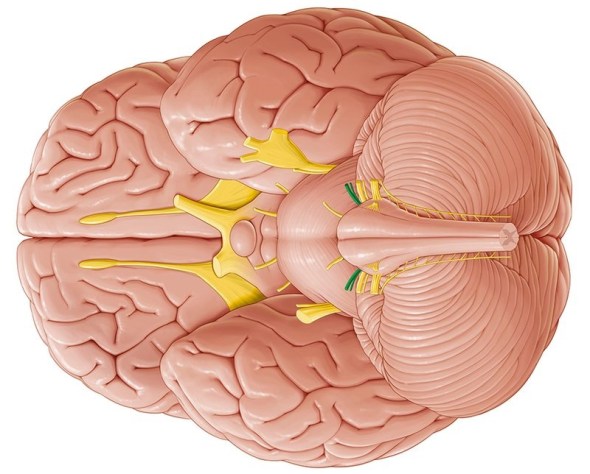
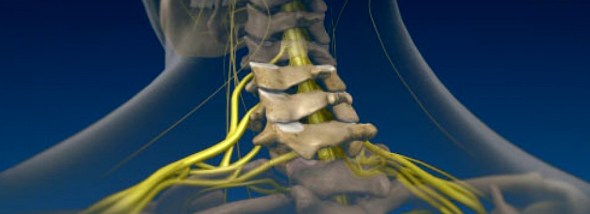
No, we’re not moving away from the spine, but we are talking about the cranial nerves.

It’s day thirty-four in our spinal cord series. As usual, if you’re new here welcome and you can find each and every post in our series in the handy neuroanatomy category! All the posts are in reverse chronological order and while we don’t technically have a specific order, you should probably start with the medullary pyramids and work your way forward. If you’re here, then you probably are interested in the vestibulospinal tract, something we haven’t covered yet, but fear not, we are going to do that now.

Read the rest of this page »

Know your spinal cord – The landmarks

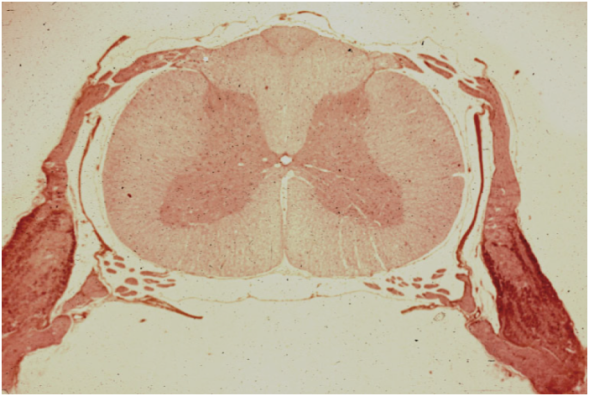
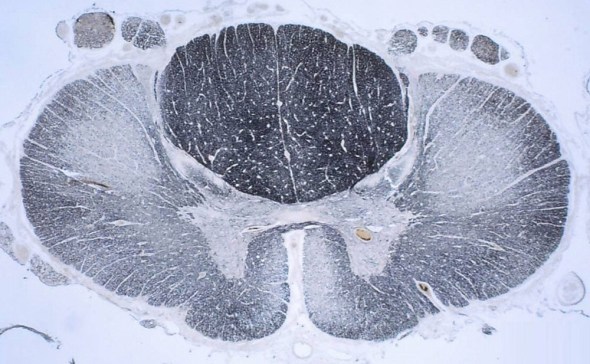
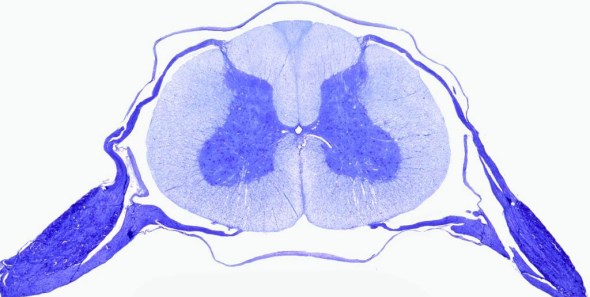
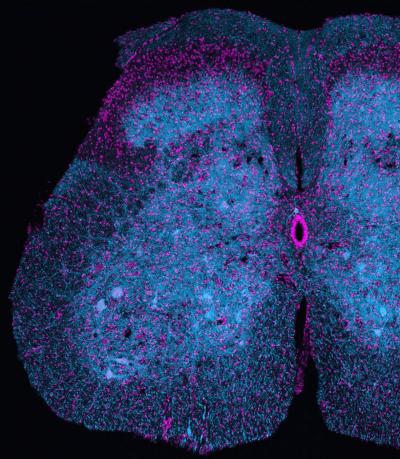
human cervical spinal cord cross section

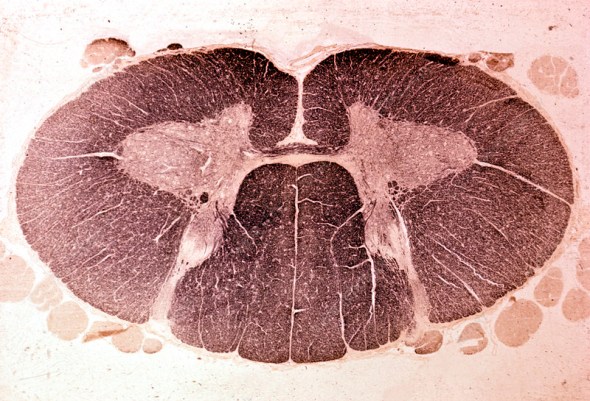
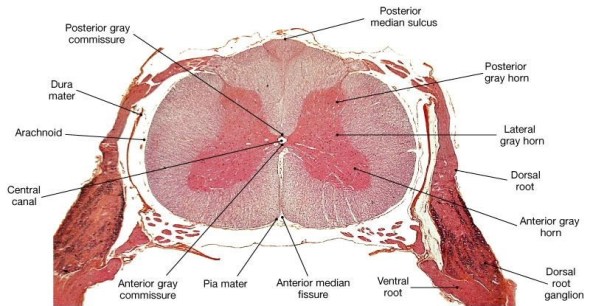
A human cervical spinal cord slice. Once you’ve read this post, you should be able to identify the major parts and tell which side is the front of the cord.

Welcome to day thirty-three in our series. For those of you who are just finding us, we have every one of these posts in our neuroanatomy category in reverse chronological order. Today we’re going to backtract (get it?) a little and go over something basic, but something we’ve skipped over to this point. We never really talked about the landmarks of a spinal cord slice. So today, we are going to take a detour and go over spinal cord features.

Read the rest of this page »

Know your spinal cord – The spinal nerves (revisited)

spinal roots

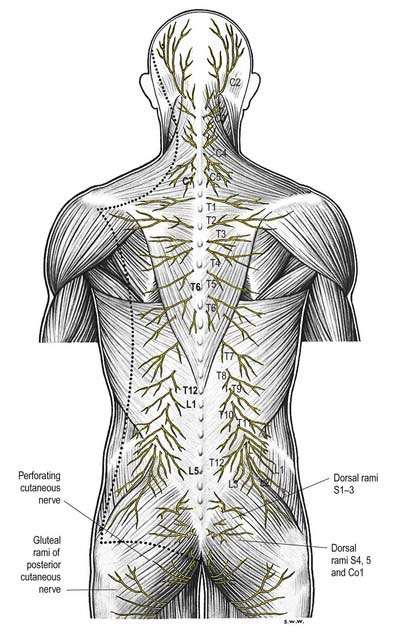
Here we are at day thirty one of knowing your spinal cord and we’re still going strong. I’m very happy that I cataloged all of these posts in the super handy neuroanatomy category, which should make it easy for you to find each and every one of them! Today we’re talking about something we’ve touched on in the past, but deserves its own post, the spinal nerves. We need to cover this for the next couple of posts, where things get a little… odd. So let’s get started!

Read the rest of this page »

Know your spinal cord – The anterior white commissure

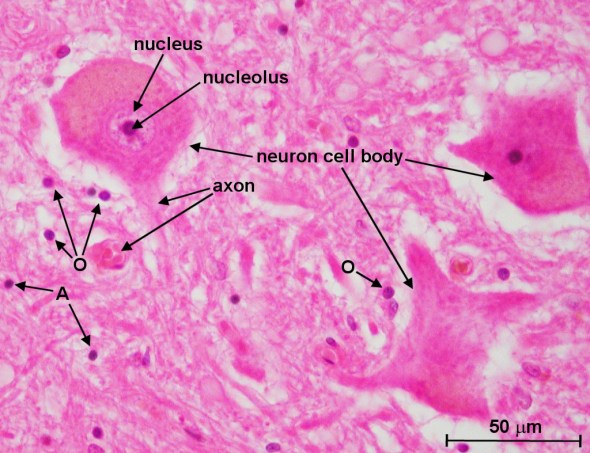
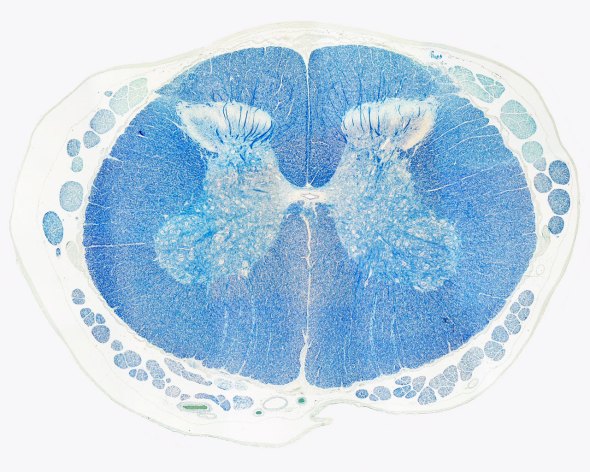
Cross section of human spinal cord

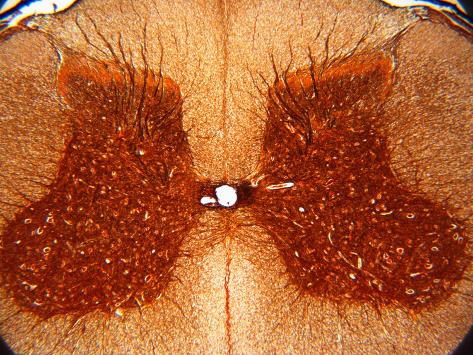
Cross section through human spinal cord (lumbar region, L1) showing motor neurons. Astrocytes and oligodendrocytes are labeled ‘A’ and ‘O’, respectively. The objective magnification used is 40x.

Welcome to day thirty of knowing your spinal cord. I feel like that is a lot of spinal cord knowledge for just covering the basics. In any case, if you’re just finding us, welcome! I’ve created a whole new neuroanatomy category just for these posts so you can find them easy and they are in reverse chronological order. Is the anterior white commissure a tract of the spinal cord? Well not really, but it does have an important job and we keep referencing it, so let’s talk about what it does exactly.

Read the rest of this page »

Know your spinal cord – Cauda equina syndrome

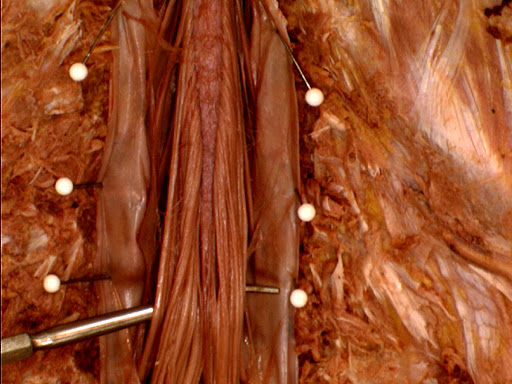
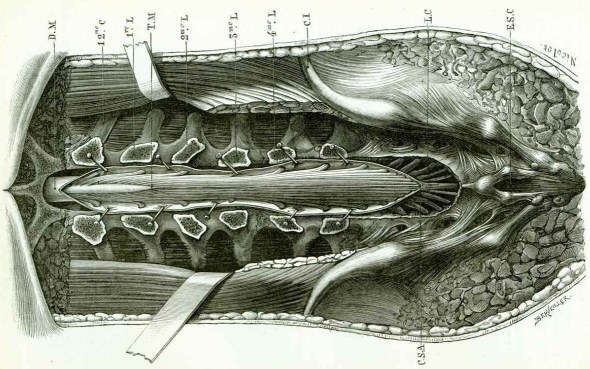
Cuada equina disection

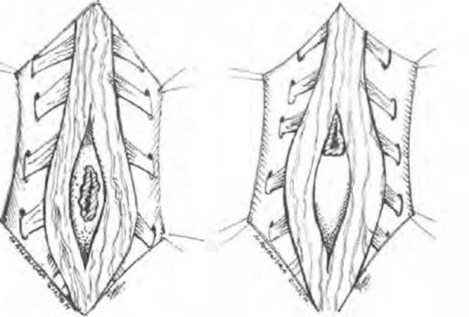
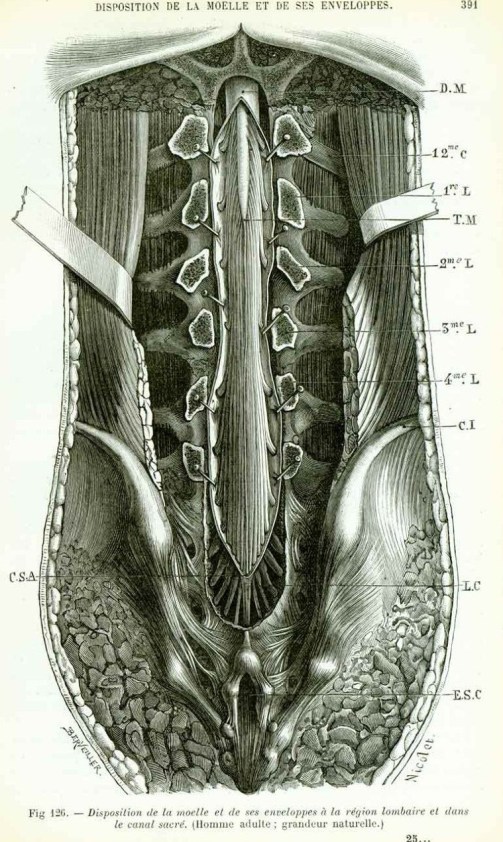
Here we are on day twenty-eight of knowing your spinal cord. A friendly reminder, the entire series has its own neuroanatomy category where you can catch up on any posts you missed or if you just want a reminder on something we already covered. We’ve already covered quite a bit of spinal disorders, but there is one more that I want to talk about and like our series where we started at the top of the cord and worked our way down, we are now going to cover damage to the bottom of the cord, specifically the cauda equina.

Read the rest of this page »

Know your spinal cord – Motor neuron disease

ALS2

Kultschitzky staining was used here and shows marked symmetrical demyelination (whitening regions) in the anteriolateral roots (especially pyramidal tract) of the spinal cord

It’s day twenty-six already! For those of you who are just finding us, you can find all of the posts in our super cool neuroanatomy category. We’ve already covered a lot of spinal disorders, but one of the larger diseases that we have yet to cover is motor neuron disease. Technically a family of diseases, we will look at the commonalities and causes, so with that introduction, let’s get going.

Read the rest of this page »

Know your spinal cord – The H-reflex

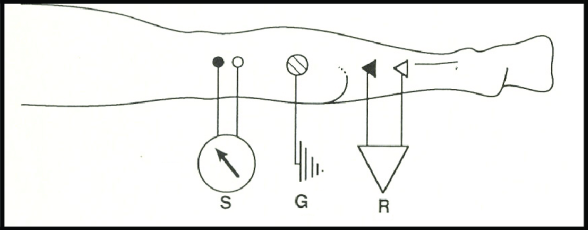
Diagram showing how we measure the H-reflex

We measure the H-reflex by applying an electrical stimulus (S) behind the knee, the ground (G) gets placed around the soleus and the recording electrode (R) is placed inline below, this is the route the nerve takes.

Yesterday we had a bit of a break so I could share a critical review paper. That means this is day twenty-five of the know your spinal cord series! We’ve also hit the halfway mark in our 365 days of academia challenge! If you’re new here, you can find all of the fun spinal cord knowledge we’ve amassed by checking out our neuroanatomy category! We are going to take a step away from spinal cord disorders to talk about something we kind of covered, but deserves a more in-depth exploration. This is all you wanted to know about the H-reflex, so let’s dive in.

Read the rest of this page »

Day 182: Review – Modulation of soleus stretch reflexes during walking in people with chronic incomplete spinal cord injury

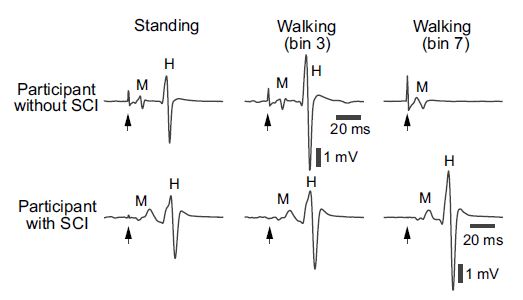
Fig2

Figure 2 of the paper showing examples of the soleus H-reflex (labeled H) during standing  and during different phases of walking in a participant without known neurological injuries (top) and in a participant with chronic incomplete SCI (bottom).

Today is my third attempt at a critical review paper. Since my PI gets a copy, so do all of you! You can read my first looking at elbow spinal stretch reflexes here. Or my second where I review modulating spinal cord excitability with a static magnetic field here. Today is an interesting paper on soleus stretch reflex and H-reflex. I really appreciate the methodology the researchers used and they did an excellent job of highlighting the limitations to the study, which is always important. Per the usual disclaimer, this is my third critical review, so you can take my opinion n the methodology and findings how you will. Read the rest of this page »

Know your spinal cord – Tabes dorsalis

vintage anatomy

We’ve made it to day twenty-four of fun spinal cord knowledge! If you’re just joining us, we have a whole new neuroanatomy category for you to find all the posts in this series in reverse chronological order. If you want to know everything, then you’ll want to start at the beginning with the medullary pyramids. Over the past week in our series we’ve been talking about spinal cord disorders and today we are looking at something called tabes dorsalis, let’s begin!

Read the rest of this page »

Know your spinal cord – Lichtheim’s disease

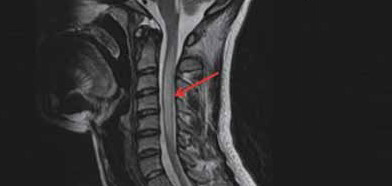
Nitrous-Oxide-Induced-Subacute-Combined-Degeneration

MRI showing Lichtheim’s disease caused from nitrous oxide (we show another case below)

It’s day twenty-three in our little series called know your spinal cord. For those just finding us, you can read the rest of the posts in our special neuroanatomy category created just for these posts! If I’ve counted correctly, this will be the seventh post on different spinal cord disorders and today we are covering something called Lichtheim’s disease, so let’s take a look.

Read the rest of this page »

Know your spinal cord – Anterior spinal artery syndrome

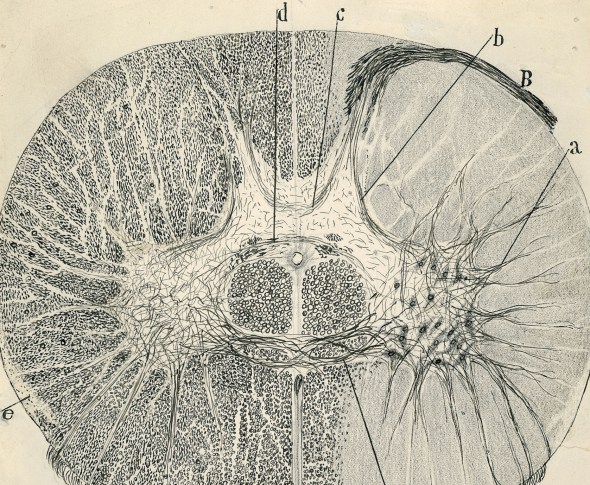
Spinal_cord_histology

Today we hit the three week mark in knowing your spinal cord! I’m hoping we can do a full four weeks, that would be quite the collection of knowledge. For those of you just joining in, you can find all of our posts in the neuroanatomy category ordered in reverse chronological order.  As per the last few posts, we’ve covered the majority of the anatomy and now we are looking at different disorders of the spinal cord. Today we’re going to cover another type of injury, this one called anterior spinal artery syndrome, so let’s get started!

Read the rest of this page »

Know your spinal cord – The cauda equina

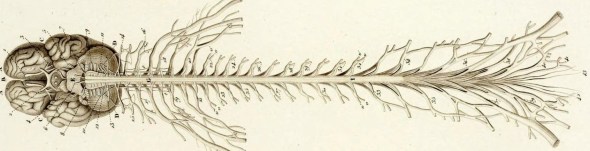
spinal cord and brain

Here we are at day fourteen of knowing your spinal cord. By now you’re all experts on the spinal cord and I’m not even sure what I’m doing here. For those just joining us, we have a neuroanatomy category with all the posts so you don’t have to dig for them. If you want to start at the beginning, that would be the medullary pyramids. For the rest of you this is the end, not the end of the posts because we have a lot more to cover, but the end of the spinal cord. Let’s talk the cauda equina!

Read the rest of this page »

Know your spinal cord – The central pattern generator

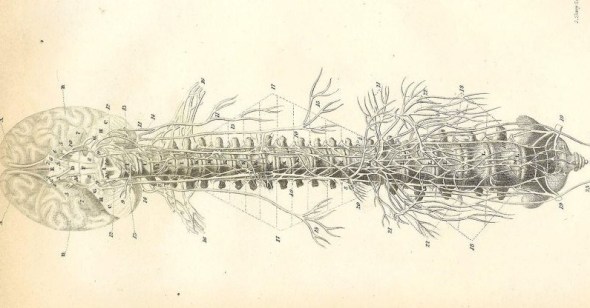
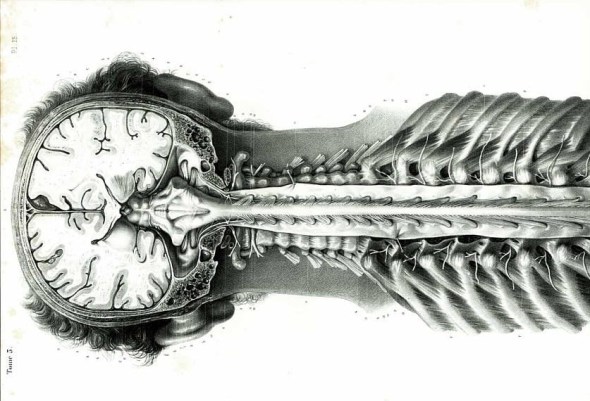
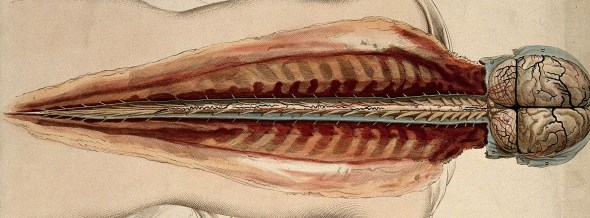
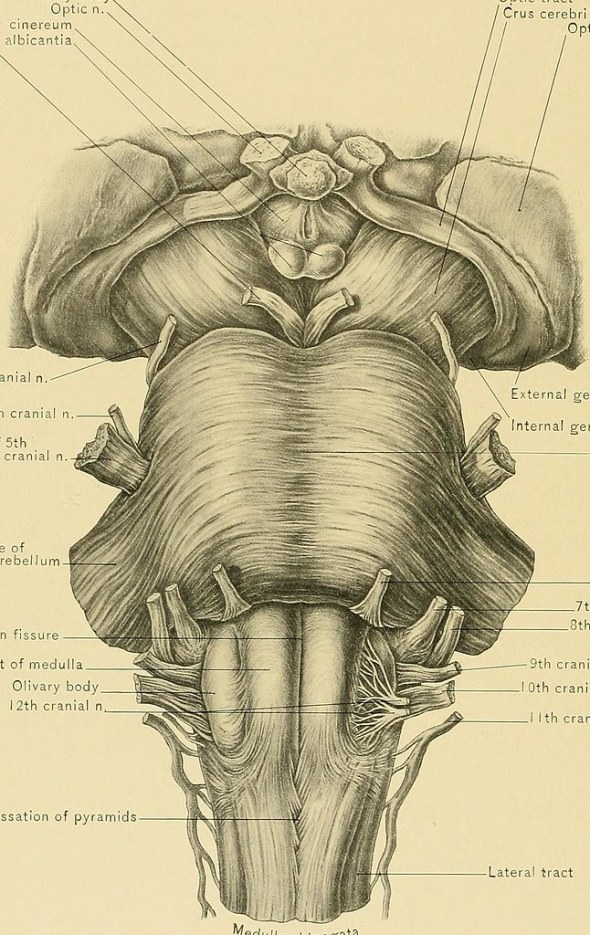
V0008396 Brain and spinal cord: dissection, back view. Coloured line

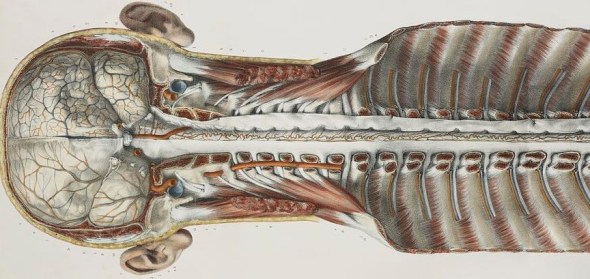
Day (or really post) twelve on knowing your spinal cord. We have a whole category for the posts, neuroanatomy. Today we are going to talk about the curious case of the central pattern generators (CPG’s). Unfortunately, we cannot talk about them without talking about the experiments that found them, meaning we will be covering animal studies. In particular, some animal studies that might not sit well with some people. I attempted to be general where I can, just know that it is coming.

Read the rest of this page »

Day 168: Review – Static magnetic field stimulation applied over the cervical spinal cord can decrease corticospinal excitability in finger muscle

Fig1

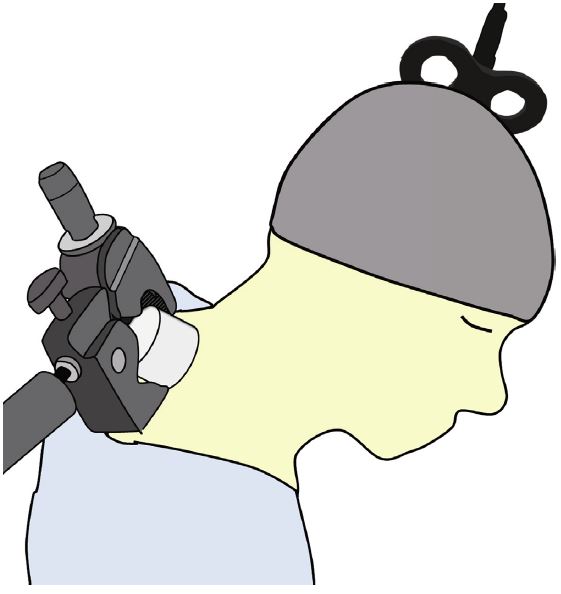
Figure 1 of the paper showing how the intervention was applied to the spinal cord

As mentioned in yesterday’s post, this is my second critical review paper. You can read my first looking at spinal reflexes here. Today we are looking at a novel way to modulate spinal cord excitability. Overall I find the paper very interesting. Although the authors performed a limited experiment and no follow up (as of now) has been done, it still looks very promising and would provide a new way to explore the circuitry of the spinal cord. This is my second attempt at a “critical review” so you can take my opinion on the methodology and findings how you will.
Read the rest of this page »

Know your spinal cord – The reflex pathways

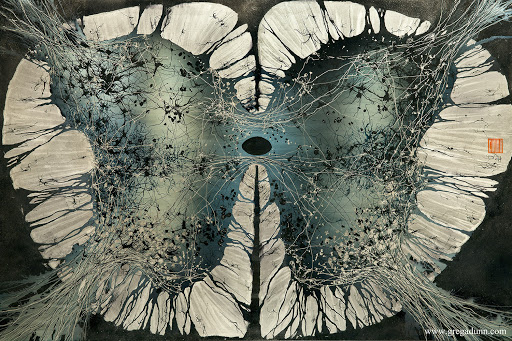
Gold leaf spinal cord art by Greg Dunn design

Beautiful spinal cord art, used with permission by Greg Dunn design.

Day eleven, we’ve almost spent two weeks covering your spinal cord! Tomorrow we will take a brief break as every two weeks I have a review paper due to my PI in the spinal cord feild, so tomorrow I will share it with all of you as well. For today, remember we have a neuroanatomy category with all of the posts we’ve done. If you’re new I would suggest you start with the medullary pyramids post and work forward, for the rest of you or those of you who are only interested in reflexes, let’s talk about some legos.
Read the rest of this page »

Know your spinal cord – The spinocerebellar tract

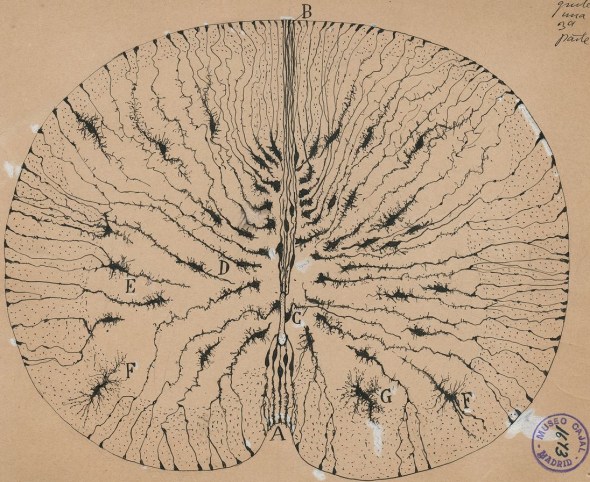
Spinal cord section by Ramon y Cajal

Drawing of a spinal cord cross section by Ramon y Cajal, a famous Spanish neuroscientist.

Here we are on day ten of knowing your spinal cord. As always, you can find the aggregated posts in my totally new, fresh off the line category, neuroanatomy. There posts are organized in reverse chronological order, so the first post on the medullary pyramids would be at the bottom, which is where I recommend you start if you’re new. For everyone who’s followed along or those of you who are just interested in this one tract, let’s talk about the spinocerebellar tract!

Read the rest of this page »

Know your spinal cord – The grey matter

vintage spinal neurons

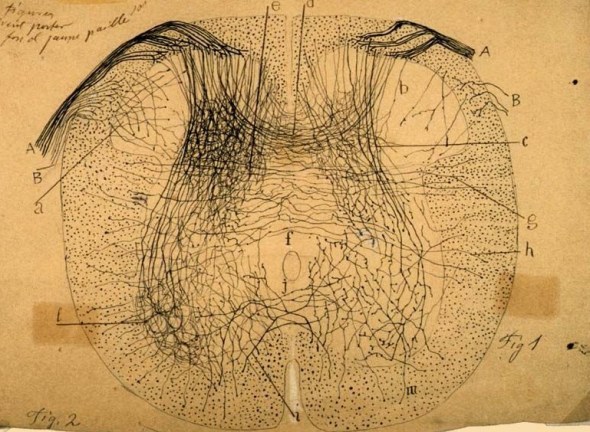
Drawing by Ramon y Cajal, a famous Spanish neuroscientist.

Today is day eight! I can hardly believe it, but here we are, day eight of spinal anatomy. For those of you who are just joining us, we have a whole new category just for these posts and they are in order from newest to oldest, so start at the bottom and work your way up. For those of you who have been following along, today we are tackling the grey matter of the spinal cord, a somewhat complex region where all the action takes place.

Read the rest of this page »

Know your spinal cord – The spinal nerves

Spinal cord

Here we are, a week into knowing your spinal cord (remember we have a new category for you to find these posts). If you’re just starting out, you may want to look at our new neuroanatomy category and start with the first post. For those of you who have been following along, we covered some of the major tracts of the spinal cord, so let’s dive into the structure some! First up, let’s talk about spinal nerves and what exactly these guys do.
Read the rest of this page »

Day 155: Experiments!!

So it turns out when you have 12 hours of experiments to do there isn’t much time for other things. Yesterday we had 3 experiments, today we have another 3 experiments (technically I’m writing this yesterday night, confusing I know). So basically I don’t have a whole lot of time to write. I’m going off to get some sleep and tomorrow (today, again confusing I know) I get to do this all over again. I hope wednesday I will have a bit more time and we can get into why the spinal cord is so cool! In any case, stay tuned!

Day 154: Review – Spinal stretch reflexes support efficient hand control

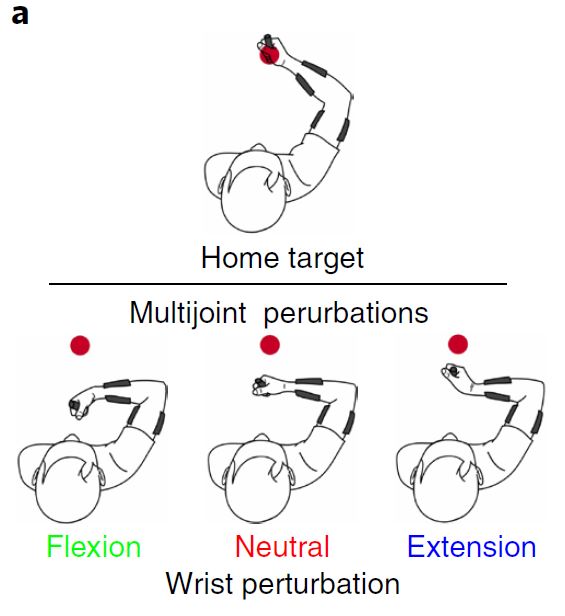
Fig1(A)

Fig 1 (a) from the paper, showing the multijoint perturbation away from target (red) with simultaneous flexion at the elbow and either flexion, extension, or no perturbation at the wrist joint.

Today is that critical review paper I promised. Everything following this introduction explains how the experiment was done, what they found, and why I think it is particularly interesting. To me the experiment was so well thought out I couldn’t think of anything I would change. Instead I focused on the methodology they used and why it highlights the importance of a well thought out experiment. This is really my first attempt at a “critical review” so take it how you will.

Read the rest of this page »

Day 153: The week ahead

plan for the week

Tomorrow is more experiments! We’re doing all the experiments tomorrow. Okay, not all of them, but we have an ambitious three experiments lined up for tomorrow so it will definately be a long, long day. Still recovering from surgery too… so yeah it’s going to be a time. There are a few other things going on this week, so let’s look ahead and maybe talk about what I’m thinking of doing for the next round of themed posts (educational topic posts).

Read the rest of this page »

Day 152: Improving my writing

writing

One of the outcomes of my recent meeting with my PI (my main one), is that I am going to be actively working on my writing. While I do this to improve my writing, this is far more informal than the writing I would be doing for a confrence or journal paper (both of which I’ve written). That isn’t to say that I cannot improve, there’s always room for improvement and I could use a LOT of improvement.

Read the rest of this page »

Day 151: Surgery at the VA, a runthrough

VA hospital

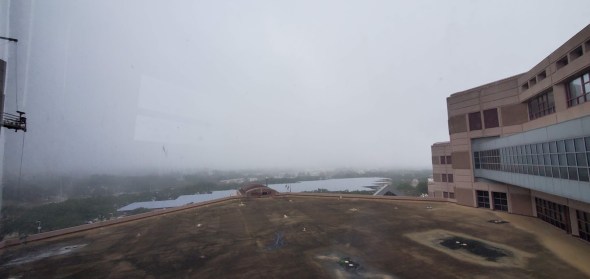
Nice and foggy today, look at that nasty roof! Got to love the VA (even though it looks more like a prison, which I guess it sort of is.

Now that I’m somewhat out of my anesthesia sickness (seriously not fun), I figured I would give a rundown on what having surgery through the VA looks like and some of the things you have to do pre-surgery to get ready. Since I’ve never had a surgery outside of the VA, it would be interesting to see how much of this applies to other hospitals, but I suspect that the answer would be not much.

Read the rest of this page »

Day 150: Surgery update

Well I’m alive, despite the VA’s best efforts. I’m struggling with some serious nausea to the point of vomiting, which has never happened to me before. I’m also in a lot of pain, but that was expected. In any case, start to finish (start as in the operating room and finish as in getting home so +30 minutes or so to the actual finish time) it took ~9 hours total good times for everyone. Anywho, I feel like death so I’ll write more later.

Day 148: Experimental design


EEGCap

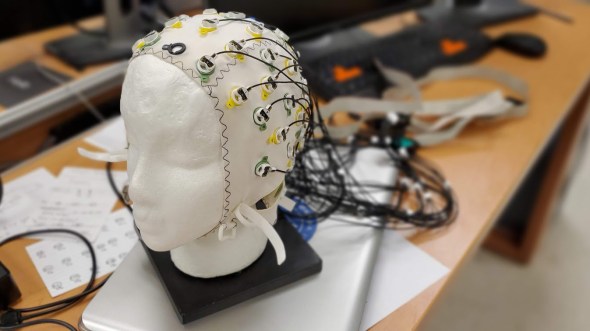
Today is day one of ten for the time that I have to do some experiments. It’s an awkward time for sure, I mean surgery, school, etc. However, that’s just the way things work in academia, I actually had a break, so I’m ready to go to be honest. Which really means this isn’t horrible timing. I’ve already discussed the million things going on these weeks, but let’s talk about what goes into experiments, really.

Read the rest of this page »

Day 146: Back to school!

Back2School

My photo, but not my school, just one I visited.

Tomorrow is the big day, back to school, back to classes. This means that any and all house projects will inevitably come to a screeching halt until spring break (most likely) and it marks the shift in blog posts from life outside the lab to life in the lab. There are a few things I like to do to get ready for classes the day before, so let’s talk school.

Read the rest of this page »

Day 144: Another day spent at the VA

VA hallway

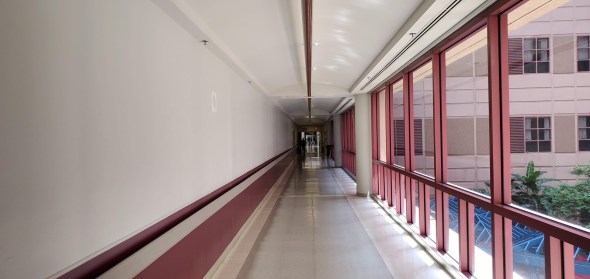
An endless VA hallway, it feels like a metaphor for something… can’t quite put my finger on it.

It’s been an interesting few days, I’ve had several meetings with my PI and my Co-PI, I’ve got classes starting again, and I have a surprise experiment. However, I have something else coming up that I failed to mention, I’m also having surgery! Which means the inevitable jumping through hoops to get ready. Each VA seems to do things differently, so this will be a fun attempt at explaining how it works.

Read the rest of this page »