We're a little crazy, about science!

Latest

A New Way to Read the Brain [in 3D!!]

neuro3

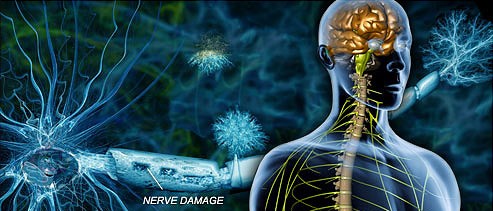
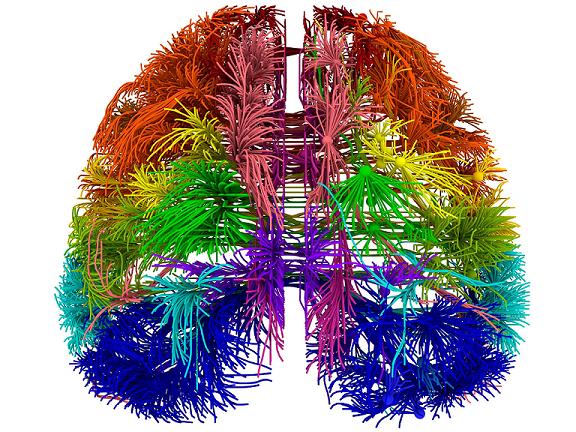
What if you were trying to learn language, but you could only see one letter at a time. Nothing before that letter, nothing after that letter, just a single letter. You can imagine how frustrating something like that might be, that is exactly what scientists have been dealing with when it comes to the brain. But a new innovation is changing that and with it, opening a whole new realm of possibilities.

Read the rest of this page »

Snail Venom and Pain Relief

sea snail venom

There is no pain like nerve pain. Unfortunately my sister and me both know all too well how bad pain can actually get, her especially. After desperately trying everything from morphine derivatives to a combination of calcium and sodium channel blockers we had exhausted all attempts at keeping her pain at bay. That is where the story would’ve ended too, if it wasn’t for the sea snails.

Read the rest of this page »

Herpes and Brain Tumors: Or What happens in Vegas?

tumor

Herpes, it isn’t just a pest that follows you home from Vegas, not anymore anyway. New research has found a [not so] new use for the virus. Harvard Stem Cell Institute [HSCI] scientists at Massachusetts General Hospital have repurposed the herpes virus to help fight brain tumors. 

The investigators reported that by trapping virus-loaded stem cells in a gel and applying them to tumors they significantly improved survival in mice with glioblastoma multiforme, which is not only the most common brain tumor in human adults, it also happens to be the most difficult to treat.

Read the rest of this page »

MORE Science Fact and Fiction Behind Fat Loss

More Fact and Fiction

I was shocked by the huge response to my first post on the science behind weight loss, so much so that I wanted to do a second post in the series if you will. With all the fad diets, weight loss schemes, and superfoods I will have plenty to write about that is for sure.

Just like part one in the series, I’m first going to go over some of the science fiction in fat loss. I hate pseudoscience and so before I go on a rant about that let’s just jump right in.

Read the rest of this page »

Tearing down the [Blood Brain Barrier] Wall

The blood brain barrier, it can be very picky about who [or what] can come in.

Ever wonder why you don’t see too many illnesses that affect the brain directly? You can give your head a nice pat and congratulate the blood brain barrier for keeping the bad out and letting the good in. Unfortunately the blood brain barrier can be, well a barrier, or more like a bouncer– especially when it comes to new drugs that could potentially help treat issues with the brain.

The blood-brain barrier helps that finicky brain of yours maintain the delicate environment that it needs to thrive. There’s just one problem: The barrier is so good at what it does, it won’t let medicines pass through. Like most things with the brain, we don’t know enough about it to control it for our benefit.

Read the rest of this page »

Science Fact and Fiction behind Fat Loss

weight loss

Do you have some of that unwanted belly fat? Do you get nervous that you will exceed the weight limit in an elevator? Do you want to eat everything in sight, but still lose the weight? Too bad, that is marketing, not science and if you want to lose the weight science can help, not so much the guy talking on the screen.

Read the rest of this page »

Climate Talks and Game Theory: A better Approach

climate change

Pretty much this…

Climate change talks, it’s like yelling at a wall and hoping it becomes a window. For over two decades, members of the United Nations have tried to forge an agreement to reduce global greenhouse gas emissions. Thankfully a new paper published offers a different approach to the problem using game theoretical modeling. Read the rest of this page »

Cheaper, Cleaner Biofuel: A Temporary Fix to a Big Problem

biomaterials

Algae, the other, other biofuel

Biofuels seem to be all the rage these days, not a bad thing since that whole global warming thing [that people are scared to admit is real] is going on. It is then, very unfortunate that every biofuel or even “green alternative” has an achilles heel the size of Texas keeping it from becoming our fossil fuel replacement.

[Useless Loony Fact: I shudder every time I have to use the word “Green” referring to anything other than the color. Oh and Jesus roundhouse kicks a panda in the face, so save the pandas and stop using the word green for anything but the color]

Read the rest of this page »

Deepwater Horizon Oil spill: The Environmental Impact

It was a disaster that ended up as one of the worst oil spills in modern history, the Deepwater Horizon didn’t just leak, it gushed. The depth of the well made the spill extremely difficult to repair and it required an incredible engineering feat to solve the problem.

Unfortunately, the problem was not immediately resolved when the leak was stopped. Between 492,000 – 627,000 tonnes of oil were dumped into the ocean, but it wasn’t just oil that was dumped, 500,000 tons of natural gas was also dumped into the Gulf of Mexico offshore waters over during the period of 84 days.

With the seemingly insurmountable cleanup effort, many were probably breathing a sigh of relief over the reports following the disaster that naturally-occurring microbes had consumed much of the gas and oil.

Read the rest of this page »

Genetically Modified Food: Myth and Legend

genetically-modified-food

Vermont, not quite the armpit of the United States, but not a place I would live [personally speaking of course]. Still, looking at history Vermont was the first to ban slavery [good], but now they are the first to do something else too, they are looking to ban all food that is genetically modified if it is not properly labeled [bad].

This bill is set to start a wildfire across the US with food scares, like any science scare, is easy to start and hard to stop [if at all]. Genetically modified food has helped cushion the ever growing population and the need to feed that population. People will [undoubtedly] argue otherwise, but all food is genetically modified one way or another.

Read the rest of this page »

Using Genes to Boost Brain Power: Live Longer, Think Better

Memory

Does your family have a history of living to a ripe old age? That may bode well for you! Not only does a gene linked to longevity seem to help you live longer, it also makes you smarter. The study I am referring to was partly funded by the National Institutes of Health and offers a new way to boost brain power.

So what genes are we talking about– well right now it seems that people with the gene KLOTHO have improved brain skills such as thinking, learning and memory regardless of their age, sex, or whether they have a genetic risk factor for Alzheimer’s disease. Here is where it gets even more interesting though, increasing KLOTHO gene levels in mice made them smarter, possibly by increasing the strength of connections between nerve cells in the brain.

Read the rest of this page »

Colony Collapse Disorder and Pesticides, Or Save the Bees!

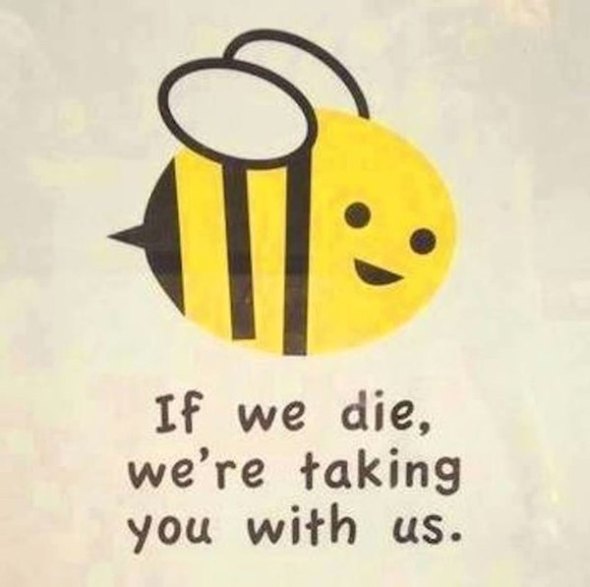
Die hard, the bee version.

Bees, who needs them? They are scary, they sting and they seem to find magical ways into your securely locked home. I’m not bias, even though I run screaming like a little girl when I see one… okay maybe a little. But as it turns out we need the bees!! Who knew, right? After the colony collapse that came out of nowhere and could not be explained [at the time] everything from global warming to government conspiracy was being blamed. But now a new study helps strengthen the cause of the collapse.

Two widely used insecticides– in the class called neonicotinoids [for those of you who think you will be tested on this at the end]– appear to do significant damage to honey bee colonies over the winter, particularly in bad winters [hello global warming, I’m looking at you].

Read the rest of this page »

New Study Explains why MS Affects more Women

MS

MS affects women almost four times more often than it affects men.  The reasons are unclear, but a new study is the first to associate a sex difference in the brain with MS. The newly identified difference between the brains of women and men with multiple sclerosis (MS) offer not only insight into why, but also may offer a course of treatment.

Looking at mice and people that have MS, the researchers found that females susceptible to MS produce higher levels of a blood vessel receptor protein  [S1PR2]. than males and that the protein is present at even higher levels in the brain areas that MS typically damages.

Read the rest of this page »

A [Real life] Doomsday Prediction

end-of-the-world

Fire, brimstone, four horsemen, doomsday seems pretty bleak in the biblical context. From a scientific perspective, global warming and the need for fresh water will probably plunge people into chaos, which seems like a more likely doomsday model. Unfortunately there are other ways in which the world could come crashing down around us, today I wanted to shed light on just one of those ways.

The most plausible [in my opinion] doomsday scenario comes not from an external force but from our imagination. Let me explain, most money that we deal with is just a placeholder, a social construct, a number on a screen and when dealing with the stock market, it gets even fuzzier, you can essentially make bets for money on [you guessed it] money.

Read the rest of this page »

We can build it better: The First Semi-Synthetic Organism

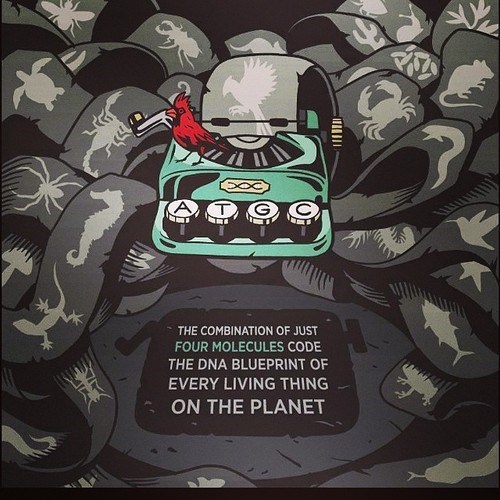
DNA typewriter

Not anymore…

Normally I do one post a day, but I could NOT wait to share this. Scientists at The Scripps Research Institute (TSRI) have engineered a bacterium whose genetic material includes an added pair of DNA “letters,”  not found in nature. The cells of this new bacterium can even replicate the unnatural DNA bases more or less normally, for as long as the molecular building blocks are supplied to the bacterium.

I don’t even really know where to start with this, so let’s start with the basics, normally in nature, everything, everywhere [that we know of] has four different letters in it’s DNA, A-T, G-C, that is is and they only go together in that order A with T and G with C, never will you see a T with a G for example.

Read the rest of this page »

Is that Good Science? A Guide to Cutting through BS

WeirdScience

Part of getting an education isn’t about learning what to think, it is about learning how to find good information. When it comes to scientific literature [especially on-line], it’s hard to separate the good from the bad if you don’t know what to look for. With the emergence of pseudoscience in the mainstream I think it’s important to go over a few red flags when it comes to claims being made.

Read the rest of this page »

Turning Back the Clock: Arteries

Fountain of youth

In what appears to be Fountain of Youth month here at Lunatic Laboratories, we have yet another way to turn back the clock, this time specifically for your arteries — at least that’s what University of Colorado Boulder are hoping with the new study they recently released. 

When researchers gave mice [the human age equivalent of 70 to 80 year olds] water containing a specific antioxidant [MitoQ] for four weeks, they found that the arteries of those mice performed like arteries from mice with an equivalent human age of just 25 to 35 years.

Read the rest of this page »

Testosterone and your Heart: Don’t believe the hype

Senior couple cycling along bike path in woods

Testosterone, the “big T”, you can’t turn on the TV without someone talking about it. In fact, despite the bad [and almost completely false] press about the effects of testosterone, the amount of prescriptions in the US has tripled since 2001. Rightfully so, anyone on testosterone therapy will tell you how incredible the effects can be on day to day life.

Unfortunately testosterone therapy has it’s own smear campaign [analogous to the anti vaccination movement], surprising considering the number of people on TRT [Testosterone Replacement Therapy] I know. People throw around terms like roid rage [which is not real] when TRT is brought up, or depression, which as the evidence shows is the exact opposite of what TRT does [can you see my frustration yet?].

Read the rest of this page »

Another Road to the Fountain of Youth

Photo credit goes to: Robert F. Bukaty, AP

Recently on Lunatic Laboratories we reported on a new path to the fountain of youth that had been found [at least for mice]. Well today, we are happy to announce that another road to the fountain of youth has been potentially discovered. This time the discovery was made by Harvard Stem Cell Institute [HSCI] and Stanford researchers. 

Being the over achievers they are, they released not one, not two, but three studies showing that substances in the blood of young mice rejuvenate the brain and muscles of aging mice. Two of those three studies, by Harvard researchers were released early online just yesterday, but won’t be published until later this week in the journal Science. The two are similar to the third [albeit not connected], Stanford study that suggests the same reversal of aging also happens to their hearts.

Read the rest of this page »

5 Reasons Why Science is Losing the War

Science is losing an unseen war and like any war it isn’t without its casualties. The true body count won’t be evident, not at first. This isn’t a war over land, or freedoms, it is a war on ignorance, a fight for the future. Science has brought us a level of comfort and connectivity we have never really seen. Unfortunately that connectivity is being used against us, allowing people with dubious motives to shout from the rooftops bold faced lies and a call for people to follow.

Read the rest of this page »

The Fountain of Youth [Coming to a store near you]

mouse

The fountain of youth, as it turns out, isn’t so much a fountain, it’s a new drug. There has been countless dollars thrown at anti-aging research, some producing better results than others. So when scientists at northwestern medicine in collaboration with Tohoku University in Japan, released a new study I am sure there was more than one happy person seeing the results.

The team, building on previous research, have managed to extend the life of accelerated aging mice more than four times longer than the control group. All thanks to an experimental drug — not only did it extend the life, it also protected the lungs and cardiovascular system from aging.

Read the rest of this page »

How a Mother’s Diet Shapes a Child

cravings-run

Peanut butter and pickles, yummy… well maybe if you are pregnant, speaking of which, [see how that works?] researchers from the MRC International Nutrition Group, based at the London School of Hygiene & Tropical Medicine have shown a link between a mother’s diet before conception and the effect it has on a babies genes. 

The study, which was done in rural Gambia, where the population’s dependence on locally grown foods and a very different seasonal climate impose a large difference in the eating habits between rainy and dry seasons, gave researchers the ability to look specifically at the how diet would affect the genes in an unborn child.

Read the rest of this page »

Silicon Brains: Not as Cuddly as the Real Thing.

Well played brain, well played.

Well played brain, well played.

Are you real? What is ‘real’, more of a philosophy question than a scientific one, but what if a computer worked like your brain? What if, one day the line between computer and human were blurred? That day might be coming sooner than you think.

Currently there are two major problems with designing a robotic brain. The first is hardware, the brain is an incredibly complex thing that we don’t even fully understand, even if we could theoretically produce something close to that work of art there is that second problem– The software, designing software to take advantage of that type of power would take something short of genius to do, especially if it were going to be something easy enough that you or I could use.

Read the rest of this page »

Radiation is for the Birds… at least at Chernobyl

The control room of the Chernobyl nuclear power plant at Pripyat. Photo credit goes to: RIA Novosti

The control room of the Chernobyl nuclear power plant at Pripyat. Photo credit goes to: RIA Novosti

Twenty eight years ago yesterday brought about the worst nuclear disaster to date, I am [of course] talking about Chernobyl. Chernobyl was supposed to be the flagship of a peaceful atomic energy program by the USSR. It’s easy to think with everything going on in the Ukraine now, that the incident is far in the past and is never coming back, neither of those is the case.

Read the rest of this page »

Could a Vaccine for Cancer be a Reality?

child_vaccination

How do you take out an unstoppable enemy? You don’t take the enemy head on, you take out the supply lines and the rest will take care of itself. This is not a new idea, but this not so new approach to war is being taken to an enemy on a new battlefield, your body.

Cancer in most cases can be an unstoppable force, collateral damage from chemotherapy can be, and in most cases is unacceptable. That was the thinking from a group of researchers from the Abramson Cancer Center and the Perelman School of Medicine at the University of Pennsylvania. Their idea, to attack the supply lines instead of the enemy directly. 

Read the rest of this page »

Dear Science, I’m so sorry…

child-scientists

Dear America,

It’s a sad fact that being intelligent is now the “uncool” thing to do. Wanting to participate in learning and actually knowing how the world works can mean being bullied or worse. The backlash of this movement [I assumed] would be felt strongly starting with my generation [as an 80’s child]. I was unfortunately incorrect with this assumption, maybe it started a lot earlier. Read the rest of this page »

Quantum Gravity Coming Soon… Maybe.

einstein

Don’t like quantum mechanics? Don’t worry Einstein didn’t either. In fact, not only did Einstein not like quantum mechanics, neither did his general theory of relativity. Which was okay… sort of. Quantum mechanics involves things that are really small, while relativity dealt with things that are really large and never the two shall meet, that is, until they do.

It’s not Einsteins fault that the two theories don’t play well together. They are both mathematical formulas, there is no malice involved. Einsteins world was beautiful and solid, he wanted to use math to form a world made of granite, smooth, shiny and perfect. Quantum mechanics on the other hand is uncertain, that is a fundamental principle, it’s more like wood, it’s not pretty, rough and textured.

Read the rest of this page »

Mantis Shrimp, is there anything you can’t teach us?

Image from a webcomic [yes there is more!] by- TheOatmeal

Image from a webcomic [yes there is more!] by- TheOatmeal

A big tenant for starting Loony Labs was an idea that nature provides us with answers to some of the biggest technical problems. So I am proud to announce some work done outside of the lab based on a true warrior of the animal kingdom, the one and only mantis shrimp.

The mantis shrimp for those of you who did not read the awesomely done comic by TheOatmeal has some of the most unique talents in the animal kingdom. Namely it’s tenacity for killing things with it’s powerful clubs.

Read the rest of this page »

Is being a human conservationist selfish?

Earth-Day-2014

Earth day, it’s a lot like new years. You make resolutions that you will never follow, promise yourself you will attempt to do things you really don’t want to, and try to do without that thing you know you can live without, but can’t seem to do it.

Yesterday was Earth day, so happy belated earth day, I guess… So how about the state of the planet then? It’s the only one we have, it is the place we call home, and unless you want to deal with chest bursting aliens [hey, I’ve seen the movies] then we are stuck here.

Read the rest of this page »

Alzheimer’s? Forget about it!

Just one of many horrible diseases of the brain.

Just one of many horrible diseases of the brain.

Let’s face it, diseases that affect the brain are some of the hardest to deal with. Anyone who’s lost someone to alzheimer’s knows exactly what I am talking about. Looking at someone you love and watching them slip away without any visible difference can be heart wrenching!

However, there is a new hope! Physicists [of all things] from Michigan State University published an article in the Journal of Biological Chemistry, that might make alzheimers and associated diseases a thing of the past.

Read the rest of this page »

Biofuels better for Nature? Maybe not!

Food or Fuel? The great debate, but ethanol from corn is not the savior it was thought to be.

Food or Fuel? The great debate, but ethanol from corn is not the savior it was thought to be.

Depending where you are in the world you might notice signs touting the 5% ethanol in the gasoline you are buying. The idea is that biofuels [currently primarily made from corn] are better for the environment. As it turns out that might not be the case.

A new study in the journal Nature Climate Change suggests that one particular source of biofuel, corn residue [the stuff left over from corn production], should not and cannot be used to meet the new US federal mandate to ramp up ethanol production and [ideally] lower greenhouse gas emissions.

Read the rest of this page »

New Discovery turns Neuroscience Upsidedown

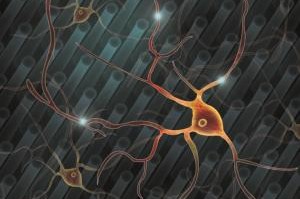
This is a computer image of three neurons showing differences in myelin. Credit: Daniel Berger and Giulio Tomassy/Harvard University

This is a computer image of three neurons showing differences in myelin. Image credit goes to: Daniel Berger and Giulio Tomassy/Harvard University

Sometimes finding out that something established isn’t true is more groundbreaking than finding something new. That is exactly what happened this week when it was found out that the covering that is on all nerves, isn’t really on all the axons in the brain.

Myelin, a fatty covering on nerves, protect the signals being sent and keeps the signals from “getting their wires crossed”. Much like the plastic coating on electrical cords, without it you wouldn’t get very far before you had a serious problem.

Read the rest of this page »

Brains Anti-Distraction System Found

ADHD

So once my Grandmother… oh wait sorry, I was distracted while typing. As it turns out I’m not the only one. But there is hope, two Psychologists at Simon Fraser University discovered an active suppression mechanism to help you focus on what you want and avoid being distracted by irrelevant background information. 

McDonald, a Canada Research Chair in Cognitive Neuroscience, and other scientists first found this system back in 2009. The problem is that little was understood about what they found and how it worked to help us ignore visual distractions. 

Read the rest of this page »

Self-Healing Composites- The Trick is Biology

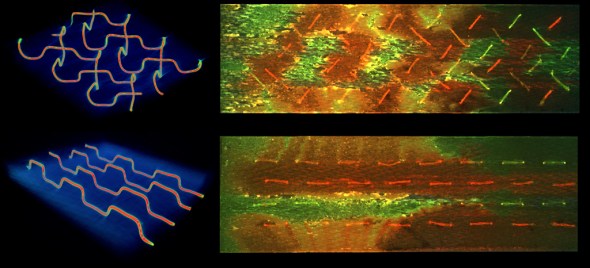
3D microvascular networks for self-healing composites: Researchers were able to achieve more effective self-healing with the herringbone vascular network (top) over a parallel design (bottom), evidenced by the increased mixing (orange-yellow) of individual healing agents (red and green) across a fracture surface. Photo Credit: University of Illinois

3D microvascular networks for self-healing composites: Researchers were able to achieve more effective self-healing with the herringbone vascular network (top) over a parallel design (bottom), evidenced by the increased mixing (orange-yellow) of individual healing agents (red and green) across a fracture surface. Photo Credit: University of Illinois

Let’s face it, things wear out. Car tires go bye-bye, seals get worn, and Jets need constant upkeep to make sure that cracks in the fuselage [the main body of an aircraft] don’t become points of failure. Thanks to a new technique right out of the labs at the University of Illinois, things may still wear out, but they will also self heal.

Read the rest of this page »

Penicillin 2.0 – Reviving an Old Winner

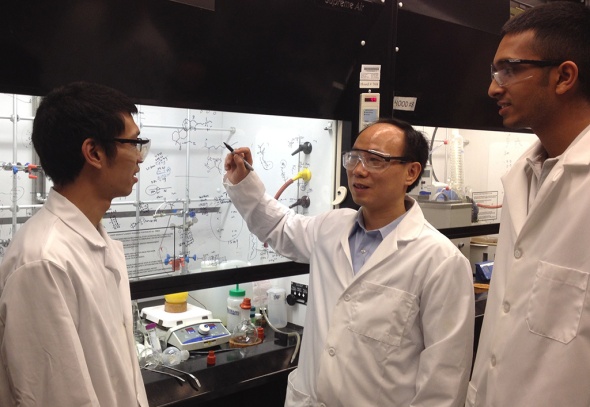
Chuanbing Tang (center) led the research team, which included graduate students Jiuyang Zhang (left) and Mitra Ganewatta. Photo credit goes to: University of South Carolina

Chuanbing Tang (center) led the research team, which included graduate students Jiuyang Zhang (left) and Mitra Ganewatta. Photo credit goes to: University of South Carolina

Penicillin, it was one of the great feats of science and has saved countless lives. Antibiotics have been fighting the war on infections since before most of us were even alive. But since the 1960’s they have been fighting a losing battle, with the rise of new ‘super’ bugs penicillin and friends just doesn’t seem to cut it.

Read the rest of this page »

Trauma Follows Generations

The consequences of traumatic experiences can be passed on from one generation to the next. (Credit: Isabelle Mansuy / UZH / ETH Zurich)

The consequences of traumatic experiences can be passed on from one generation to the next. (Credit: Isabelle Mansuy / UZH / ETH Zurich)

Did you serve in the military? Maybe you witnessed something traumatic at home, or you had a bad accident. It turns out that if it is extremely traumatic and sticks with you, chances are it will get passed on to your children. The findings come from a new study from the University of Zurich and ETH Zurich and they even have some ideas as to why it gets passed on. 

Read the rest of this page »

Silly Putty and Stem cells? What a combo!

Cultured the stem cells on ultra-fine carpets made of microscopic posts. All from a key ingredient in Silly Putty. Credit: Ye Tao, Rose Anderson, Yubing Sun, and Jianping Fu.

Working with stem cells can be a little unruly, it’s sort of like asking a five year old what they want to be when they grow up– then making them stick to that plan. However, researchers have found a key piece of the puzzle needed to help coax stem cells into the adult cells they want and the key, silly putty.

Read the rest of this page »

Global Warming Natural? Don’t bet on it.

global warming

Analyzing the temperature data as far back as 1500 almost completely rules out the idea that global warming is a natural phenomena and that human intervention plays no role. That is the punch line to a new study that was recently released.

The study, published April 6th in the journal Climate Dynamics, offers a new approach to finding a solution to the question of whether global warming is natural, or if it is caused by man. Instead of looking complex computer models of greenhouse gases in order to estimate the effect, McGill University physics professor, Shaun Lovejoy examined historical data as a statistical model to assess the competing hypothesis: that warming over the past century is due to natural long-term variations in temperature.

Read the rest of this page »

The Future of Fusion Funding

fusion

Photograph Courtesy of EFDA-JET

Fusion, the promise of clean, renewable energy has been so powerful that scientists have been chasing the dream for roughly 50 years now. Since the birth of atomic energy and the realization of the immense power hidden hidden in the atom, commercial fusion energy has always been 20 years away.

In one of the most ambitious fusion projects global leaders came together to construct the world’s largest fusion plant– ITER [International Thermonuclear Experimental Reactor], in the hopes that scaling the technology to a larger size will be key in producing a fusion reaction that creates more energy than it takes to sustain the reaction.

Read the rest of this page »

DNA nanobots perform in living cockroach

cockroach

Cockroaches, not the cutest thing on the planet.

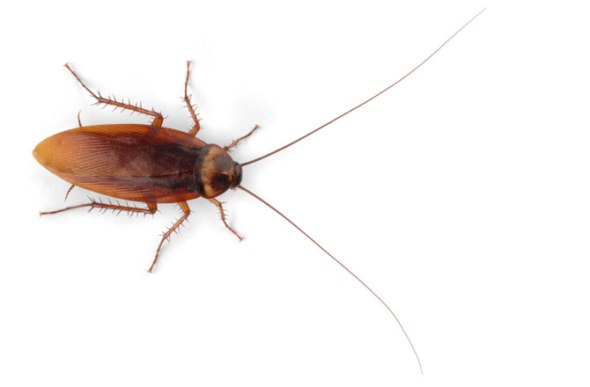
The six million dollar man has nothing on these cockroaches. We can rebuild them, better than they were before. We have the technology, and as it turns out, we do! While DNA robots may not, in itself be a new thing,a study published in Nature Nanotechnology is definitely not only new, but it’s something to talk about.

Read the rest of this page »

More BIG News for Spinal Cord Injuries

Photo credit goes to: University of Louisville. This photo shows the four participants in the study.

Photo credit goes to: University of Louisville. This photo shows the four participants in the study.

It seems like lately we have been reporting left and right about people suffering from paralysis, and for good reason! Today I’m happy to report even more new research that offers hope for people suffering from spinal cord injury.

In a new study published in Brain [a journal of neurology] researchers used adult patients who suffered different spinal cord injuries. Two had feeling in the extremities, but could not move them, while the other two had neither feeling nor could they move their extremities.

Read the rest of this page »

Grew up disadvantaged? Your genes show it.


telomere

Are you constantly stressed? Did you grow up disadvantaged [no judgement here, I did], or maybe you had a nurturing household as a child? As it turns out, we can see it in your genes.

A new study out published in the Proceedings of the National Academy of Sciences, shows a strong link between the way you are raised and your genes. The study used telomere length as a marker of stress, then compared it to genetic and environmental cues.

Read the rest of this page »

Zombie Cancer Cells Return from the Dead

cancer cell

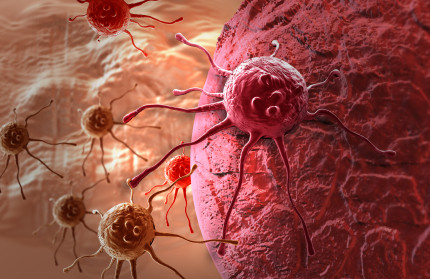
Zombies, they are the stuff of movies. But an interesting new study by the University of Colorado Cancer Center shows that sometimes reality mirrors fantasy. The study shows that cancer cells will partially eat themselves in times of distress just to come back to life and divide later on.

Autophagy [from the Greek “to eat oneself”] is a process in which proteins, or other surplus materials in the cell that are not explicitly needed for cellular function are cannibalized in times of stress. What was surprising, in this study we see this process used as a method to survive chemotherapy.

Read the rest of this page »

A New Hope for Spinal Injury Patients

spinal-injury

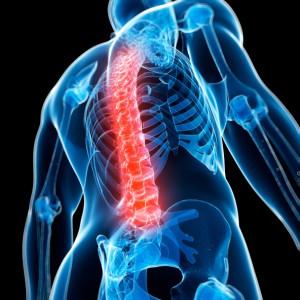
Why is it that when you break a bone, it heals, but when something happens to your spinal cord, the nerves don’t repair themselves? A new study in the Journal of Nature Communications now helps shed some light on just why that is.

But first a little background, the nervous system is made up of two separate parts, your central nervous system [CNS] which is made up of your brain and spinal cord, everything else is called the peripheral nervous system [PNS].

Read the rest of this page »

New [Free!] Tool Offers Insight into Diseases like Autism

web-3d-brain

Researchers at the Allen Institute for Brain Science have just released a high resolution blueprint of the human brain. What makes this particular mapping unique? It shows which genes are turned on and off during brain development at mid-pregnancy, all at an unprecedented resolution.

That isn’t even the best part, the Allen Institute for Brain Science is sharing it’s work with the public for further research by anyone who is interested. This means that you or I can have access to this information, for free, if we want it.

Read the rest of this page »

DARPA wants Biotech Companies

DARPA research

Science fiction… for now.

DARPA [Defense Advanced Research Project Agency] has a long history of making high-risk, high-reward moves. After all, they have helped shape the field for prosthetics, they have been pushing for big battlefield medical advancements and in 1997, they made a large effort to combat biological hazards.

Read the rest of this page »