We're a little crazy, about science!

Latest

Breaking the anxiety cycle

Breaking the anxiety cycle

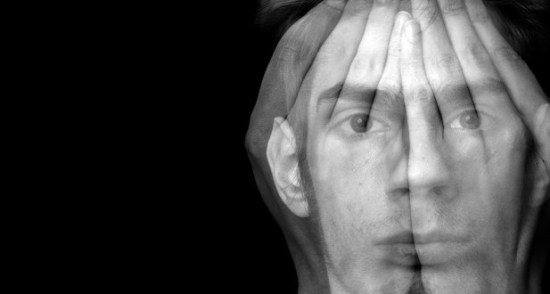
A woman who won’t drive long distances because she has panic attacks in the car. A man who has contamination fears so intense he cannot bring himself to use public bathrooms. A woman who can’t go to church because she fears enclosed spaces. All of these people have two things in common: they have an anxiety disorder. They’re also parents.

Read the rest of this page »

Scientists discover new system for human genome editing

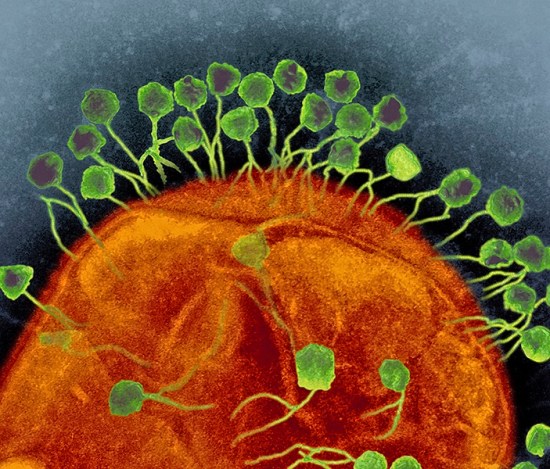
Bacteriophages attacking bacteria, TEM

CRISPR systems help bacteria defend against viral attack (shown here).
These systems have been adapted for use as genome editing tools in
human cells.
Image credit goes to: Ami Images/Science Photo Library.

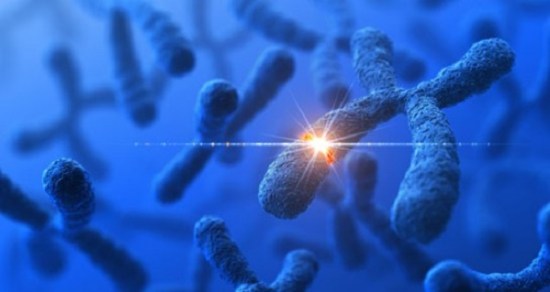
A team including the scientist who first harnessed the revolutionary CRISPR-Cas9 system for mammalian genome editing has now identified a different CRISPR system with the potential for even simpler and more precise genome engineering. In the study researchers describe the unexpected biological features of this new system and demonstrate that it can be engineered to edit the genomes of human cells.

Read the rest of this page »

It’s alive!! Study adds to evidence that viruses are alive

Study adds to evidence that viruses are alive

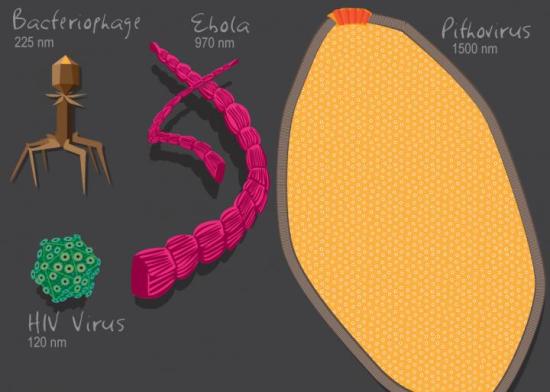
The diverse physical attributes, genome sizes and lifestyles of viruses make them difficult to classify. A new study uses protein folds as evidence that viruses are living entities that belong on their own branch of the tree of life.
Image credit goes to: Julie McMahon

Classifying something as living isn’t as easy as it sounds, after all we are all atoms, so when do atoms go from nonliving to living? Despite the complexities of viruses, we have historically deemed them nonliving. However, a new analysis supports the hypothesis that viruses are living entities that share a long evolutionary history with cells. The study offers the first reliable method for tracing viral evolution back to a time when neither viruses nor cells existed in the forms recognized today.

Read the rest of this page »

What motivates ‘Facebook stalking’ after a romantic breakup?

What motivates 'Facebook stalking' after a romantic breakup?

Social networking makes it easy to monitor the status and activities of a former romantic partner, an often unhealthy use of social media known as interpersonal electronic surveillance (IES) or, more commonly, “Facebook stalking.” Psychological and relationship factors and how individuals cope with the termination of a romantic relationship can help predict their use of online surveillance, according to a new study.

Read the rest of this page »

‘Delayed remembering’: Kids can remember tomorrow what they forgot today

'Delayed remembering': Kids can remember tomorrow what they forgot today

For adults, memories tend to fade with time. But a new study has shown that there are circumstances under which the opposite is true for small children: they can remember a piece of information better days later than they can on the day they first learned it. While playing a video game that asked them to remember associations between objects, 4- and 5-year-olds who re-played the game after a two-day delay scored more than 20 percent higher than kids who re-played it later the same day.

Read the rest of this page »

A barrier against brain stem cell aging

A barrier against brain stem cell aging

Neural stem cells generate new neurons throughout life in the mammalian brain. However, with advancing age the potential for regeneration in the brain dramatically declines. Scientists now identified a novel mechanism of how neural stem cells stay relatively free of aging-induced damage. A diffusion barrier regulates the sorting of damaged proteins during cell division.

Read the rest of this page »

Immune system may be pathway between nature and good health

Immune system may be pathway between nature and good health

Research has found evidence that spending time in nature provides protections against a startling range of diseases, including depression, diabetes, obesity, ADHD, cardiovascular disease, cancer, and many more. How this exposure to green space leads to better health has remained a mystery. After reviewing hundreds of studies examining nature’s effects on health, researchers believe the answer lies in nature’s ability to enhance the functioning of the body’s immune system.

Read the rest of this page »

Diet beverage drinkers compensate by eating unhealthy food

Diet beverage drinkers compensate by eating unhealthy food, study finds

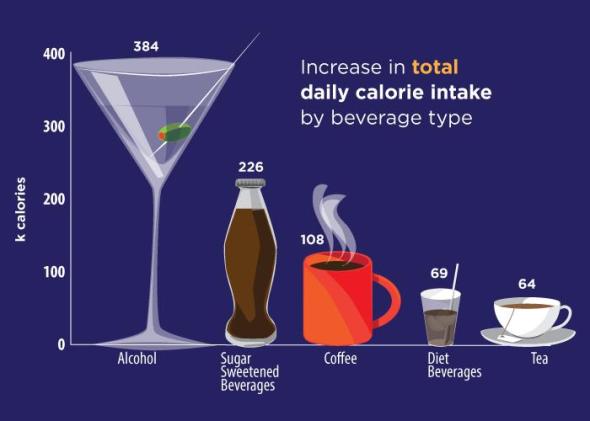
Alcoholic drinks and sugar-sweetened beverages are associated with higher overall daily intakes, although people who drink diet beverages consume a greater percentage of non-nutritious food.
Image credit goes to: Julie McMahon

Want fries with that diet soda? You aren’t alone, and you may not be “saving” as many calories as you think by consuming diet drinks. A new study that examined the dietary habits of more than 22,000 U.S. adults found that diet-beverage consumers may compensate for the absence of calories in their drinks by noshing on extra food that is loaded with sugar, sodium, fat and cholesterol.

Read the rest of this page »

Female mice sing for sex

Female mice sing for sex Researcher finds female mice sing during courtship

Using a sophisticated array of microphones and a sound chamber he developed, a University of Delaware researcher discovered the world is full of tiny furry Beyoncés. Studying all the Single Ladies’ communication provides insight into brain mechanics.
Image credit goes to: Jeff Chase, University of Delaware

They don’t use gondolas or croon like Sinatra. But scientists have known for a long time that male mice belt out something like love songs to females when the time seems right to them. What they didn’t know – until a University of Delaware researcher developed a sophisticated array of microphones and a sound analysis chamber – was that female mice were singing back.

Read the rest of this page »

Smart cells teach neurons damaged by Parkinson’s to heal themselves

UNC smart cells teach neurons damaged by Parkinson's to heal themselves

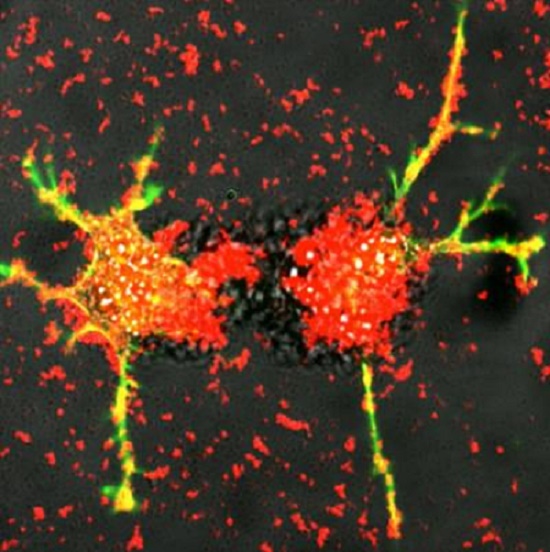
These are white blood cells reengineered by scientists at UNC-Chapel Hill deliver exosomes (red) loaded proteins that stimulate the growth of damaged nerve fibers (green and yellow). Researchers at the UNC Eshelman School of Pharmacy this technique can be developing into a potential treatment for Parkinson’s disease.

Image credit goes to: Elena Batrakova/UNC Eshelman School Of Pharmacy

As a potential treatment for Parkinson’s disease, scientists at the University of North Carolina at Chapel Hill have created smarter immune cells that produce and deliver a healing protein to the brain while also teaching neurons to begin making the protein for themselves.

Read the rest of this page »

An antibody that can attack HIV in new ways

An antibody that can attack HIV in new ways

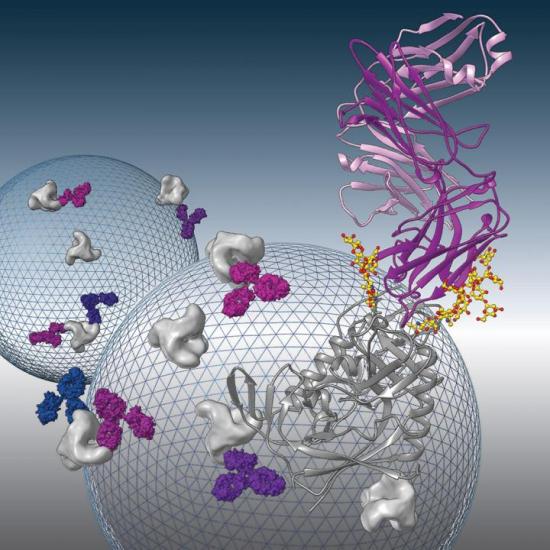
Broadly neutralizing antibodies to HIV-1 envelope glycoprotein are being evaluated as therapeutics to prevent or treat HIV-1 infection. Structural analysis of one such antibody, 8ANC195, revealed a new conformation of the envelope protein. The image shows the X-ray crystal structure of 8ANC195 in complex with the gp120 subunit of the envelope protein. The background shows schematic representations of HIV-1 virus particles studded with envelope proteins being recognized by 8ANC195 antibodies.
Image credit goes to: Louise Scharf/Caltech

Proteins called broadly neutralizing antibodies (bNAbs) are a promising key to the prevention of infection by HIV, the virus that causes AIDS. bNAbs have been found in blood samples from some HIV patients whose immune systems can naturally control the infection. These antibodies may protect a patient’s healthy cells by recognizing a protein called the envelope spike, present on the surface of all HIV strains and inhibiting, or neutralizing, the effects of the virus. Now Caltech researchers have discovered that one particular bNAb may be able to recognize this signature protein, even as it takes on different conformations during infection–making it easier to detect and neutralize the viruses in an infected patient.

Read the rest of this page »

Artificial ‘plants’ could fuel the future

Artificial 'plants' could fuel the future

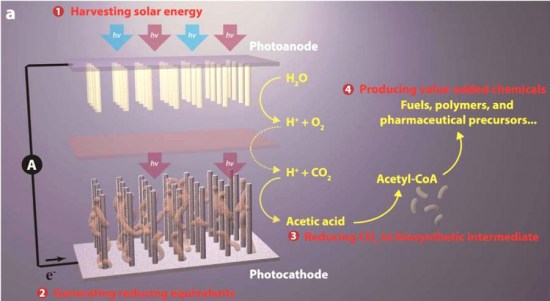
This schematic image of Chang’s artificial photosynthesis systems shows its four general components: (1) harvesting solar energy, (2) generating reducing equivalents, (3) reducing CO2 to biosynthetic intermediates and (4) producing value-added chemicals.
Image credit goes to: Berkeley Lab

Imagine creating artificial plants that make gasoline and natural gas using only sunlight. And imagine using those fuels to heat our homes or run our cars without adding any greenhouse gases to the atmosphere. By combining nanoscience and biology, researchers led by scientists at University of California, Berkeley, have taken a big step in that direction.

Read the rest of this page »

Tree of life study unveils inner workings of a cell

Tree of life study unveils inner workings of a cell

Scientists have uncovered tens of thousands of new protein interactions, accounting for about a quarter of all estimated protein contacts in a cell.
Image credit goes to: Jovana Drinkjakovic

A multinational team of scientists have sifted through cells of vastly different organisms, from amoebae to worms to mice to humans, to reveal how proteins fit together to build different cells and bodies. This tour de force of protein science, a result of a collaboration between seven research groups from three countries, led by Professor Andrew Emili from the University of Toronto’s Donnelly Centre, uncovered tens of thousands of new protein interactions, accounting for about a quarter of all estimated protein contacts in a cell.

Read the rest of this page »

The science of stereotyping: Challenging the validity of ‘gaydar’

The science of stereotyping: Challenging the validity of 'gaydar'

“Gaydar” — the purported ability to infer whether people are gay or straight based on their appearance — seemed to get a scientific boost from a 2008 study that concluded people could accurately guess someone’s sexual orientation based on photographs of their faces. In a new paper researchers at the University of Wisconsin-Madison challenge what they call “the gaydar myth.” William Cox, an assistant scientist in the Department of Psychology and the lead author, says gaydar isn’t accurate and is actually a harmful form of stereotyping.

Read the rest of this page »

Common antidepressant may change brain

Common antidepressant may change brain

A commonly prescribed antidepressant may alter brain structures in depressed and non-depressed individuals in very different ways, according to new research. The study – conducted in nonhuman primates with brain structures and functions similar to those of humans – found that the antidepressant sertraline, a selective serotonin reuptake inhibitor (SSRI) marketed as Zoloft, significantly increased the volume of one brain region in depressed subjects but decreased the volume of two brain areas in non-depressed subjects.

Read the rest of this page »

Feeling blue and seeing blue: Sadness may impair color perception

Feeling blue and seeing blue: Sadness may impair color perception

The world might seem a little grayer than usual when we’re down in the dumps and we often talk about “feeling blue” — new research suggests that the associations we make between emotion and color go beyond mere metaphor. The results of two studies indicate that feeling sadness may actually change how we perceive color. Specifically, researchers found that participants who were induced to feel sad were less accurate in identifying colors on the blue-yellow axis than those who were led to feel amused or emotionally neutral.

Read the rest of this page »

Researchers help identify neural basis of multitasking

Dynamic reconfiguration of frontal brain networks during executive cognition in humans

What makes someone better at switching between different tasks? Looking for the mechanisms behind cognitive flexibility, researchers have used brain scans to shed new light on this question. By studying networks of activity in the brain’s frontal cortex, a region associated with control over thoughts and actions, the researchers have shown that the degree to which these networks reconfigure themselves while switching from task to task predicts people’s cognitive flexibility.

Read the rest of this page »

Confidence in parenting could help break cycle of abuse

Confidence in parenting could help break cycle of abuse

To understand how confidence in parenting may predict parenting behaviors in women who were abused as children, psychologists have found that mothers who experienced more types of maltreatment as children are more critical of their ability to parent successfully. Intervention programs for moms at-risk, therefore, should focus on bolstering mothers’ self-confidence–not just teach parenting skills, the researchers said.

Read the rest of this page »

Fish oil-diet benefits may be mediated by gut microbes

Fish oil-diet benefits may be mediated by gut microbes

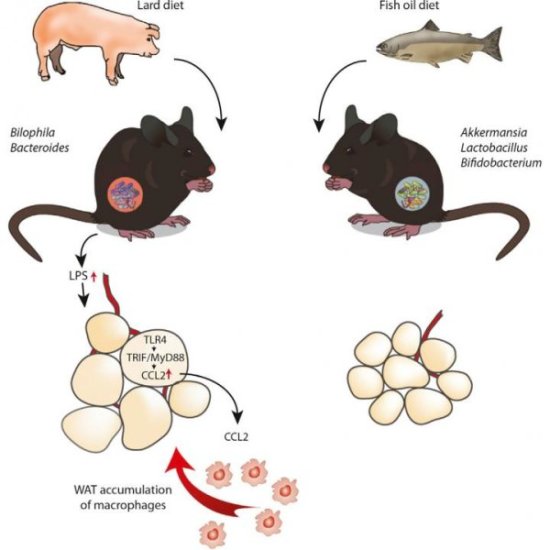
Diets rich in fish oil versus diets rich in lard produce very different bacteria in the guts of mice, reports a study from Sahlgrenska Academy published in Cell Metabolism. The researchers transferred these microbes into other mice to see how they affected health. The results suggest that gut bacteria share some of the responsibility for the beneficial effects of fish oil and the harmful effects of lard. Image credit goes to: University of Gothenburg

Diets rich in fish oil versus diets rich in lard produce very different bacteria in the guts of mice, reports a new study. The researchers transferred these microbes into other mice to see how they affected health. The results suggest that gut bacteria share some of the responsibility for the beneficial effects of fish oil and the harmful effects of lard.

Read the rest of this page »

How long have primates been infected with viruses related to HIV?

How long have primates been infected with viruses related to HIV?

Disease-causing viruses engage their hosts in ongoing arms races: positive selection for antiviral genes increases host fitness and survival, and viruses in turn select for mutations that counteract the antiviral host factors. Studying such adaptive mutations can provide insights into the distant history of host-virus interactions. A study of antiviral gene sequences in African monkeys suggests that lentiviruses closely related to HIV have infected primates in Africa as far back as 16 million years.

Read the rest of this page »

Happiness spreads, but depression isn’t contagious

Happiness spreads but depression doesn't

Having friends who suffer from depression doesn’t affect the mental health of others, according to research. The team found that having friends can help teenagers recover from depression or even avoid becoming depressed in the first instance. The findings are the result of a study of the way teenagers in a group of US high schools influenced each others’ mood. The academics used a mathematical model to establish if depression spreads from friend to friend.

Read the rest of this page »

Don’t I know that guy? Neuroscientists pinpoint part of the brain that deciphers memory from new experience

Don't I know that guy? Neuroscientists pinpoint part of the brain that deciphers memory from new experience

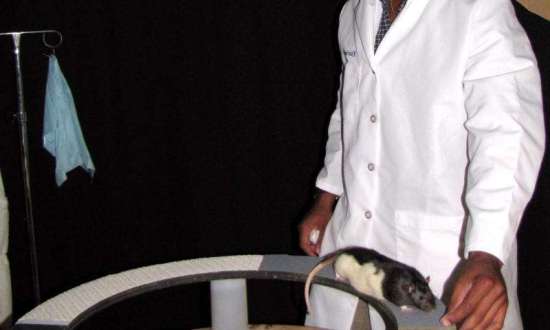
Research assistant Jeremy Johnson feeds a rat on the behavioral track used to determine where the brain decides what is new and what is familiar.
Image credit goes to: Johns Hopkins University

You see a man at the grocery store. Is that the fellow you went to college with or just a guy who looks like him? One tiny spot in the brain has the answer. Neuroscientists have identified the part of the hippocampus that creates and processes this type of memory, furthering our understanding of how the mind works, and what’s going wrong when it doesn’t.

Read the rest of this page »

Nicotine changes marijuana’s effect on the brain

Study finds nicotine changes marijuana's effect on the brain

How scientists study the effects of marijuana on the brain is changing. Until recently marijuana research largely excluded tobacco users from its participant pool, but scientists have found reason to abandon this practice, uncovering significant differences in the brains of individuals who use both tobacco and marijuana and the brains of those who only use marijuana.

Read the rest of this page »

How influential are peer reactions to posts on Facebook news channels?

They Came, They Liked, They Commented: Social Influence on Facebook News Channels

An experiment to determine the effects of positive and negative user comments to items posted by media organizations on Facebook news channels showed, surprisingly, that the influence of user comments varied depending on the type and number of user comments. Negative comments influenced the persuasiveness of a news article, while positive comments did not, and a high number of likes did not have the expected bandwagon effect.

Read the rest of this page »

The stomach is the way to a woman’s heart, too

The stomach is the way to a woman's heart, too

You’ve heard that romance starts in the kitchen and not in the bedroom. Well, researchers at Drexel University finally have the science to support that saying – but not the way you might think. Researchers found that women’s brains respond more to romantic cues on a full stomach than an empty one. The study explored brain circuitry in hungry versus satiated states among women who were past-dieters and those who had never dieted.

Read the rest of this page »