
Day 50: Intro to Two Random Variables

I was debating about not posting anything today. It’s been a bit rough for me these past few days. However, I’m going to write a little something today and tomorrow to introduce two random variables (so we don’t skip a day). This is going to be a lot like our single random variable examples, but (of course) more complex, let’s take a look at what I mean.*
Day 49: Functions of One Random Variable Example Part 5
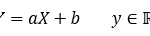
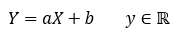
Let’s look at something a bit different today!
If you’ve been following along, we’ve been taking it easy the past few days. I’ve also been going over (relatively) simple examples, so today we’re going to take a more complicated example and work through solving it. I may go over a few more examples to be honest, only because this is important to what comes next, after we nail this down, we’re going to get into functions of two random variables and as you can imagine that’s a little more complicated (a lot more).*
Day 48: Functions of One Random Variable Example Part 4
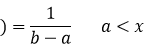
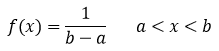
A simpler example than yesterday.
Still feeling under the weather, but the show must go on as they say. So today let’s look at another example of how to solve functions of one random variable. Today will be another shorter post, but as usual I’ll try to explain everything step by step and hopefully you’ll see the methodology behind solving these types of problems.*
Day 47: Functions of One Random Variable Example Part 3
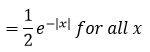
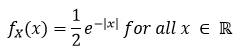
Let’s solve this guy.
Bad news readers, I’m feeling a bit under the weather. Today we’re going to go over a quick example. It’s not the one I had in mind, but it’s fairly straightforward and should help make some more sense of everything we are covering. When I start feeling better we can get into some of the newer concepts.*
Day 46: Functions of One Random Variable Example Part 2
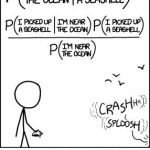
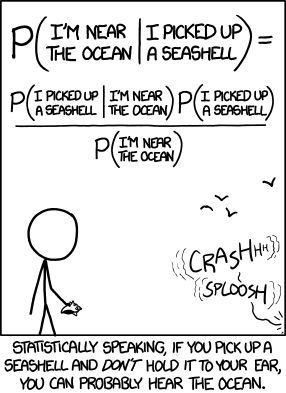
Another Joke by xkcd
As promised today we are going to look at another example of how to solve functions with one random variable. If you haven’t you may want to start with our first post on the subject here. For those of you who are caught up, let’s get started.*
Day 45: Moment Generating Functions
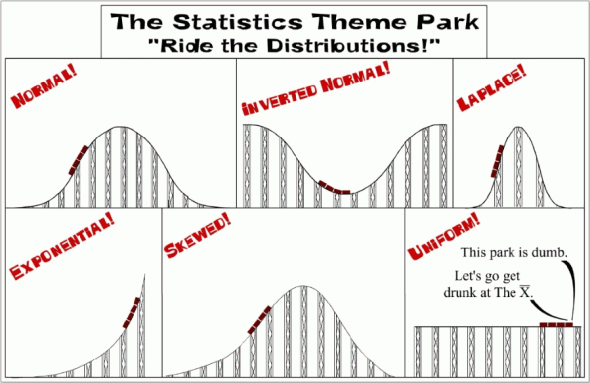
There wasn’t a good visual for what we are talking about today, so how about a joke instead?
Well from the views it looks like my function of a random variable example was a big hit. Hopefully we’re clearing a lot of the confusion up now that we are looking at some examples of how to solve these and we can get a better grasp of how this works. Today we’re going to introduce a new concept, this one is going to be a bit more complex than our last, so you may want to review our last post before we start.*
Day 44: Functions of One Random Variable Example Part 1
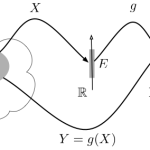
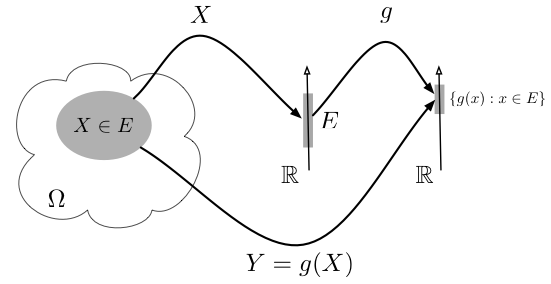
Really, this is all we are doing, but let’s make some sense of it.
Well maybe yesterday was confusing, maybe it wasn’t. In any case, today should clarify some things for you if you are confused and should make things more clear if you are not. Today we are going to go over a quick example of what a function involving one random variable looks like. Now you may notice I keep saying one, that’s because you can technically have as many variables as you want, but since this is fairy complex stuff, let’s just stick with the one for now.*
Day 43: Introduction to Functions of One Random Variable
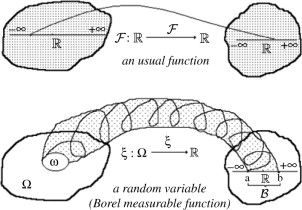
Yep we’re getting a little complicated, but let’s see if we can make sense of this.
Now that we’ve looked at conditional probabilities we can talk about other things we can do with random variables. If you’ve been keeping up with us so far, then this shouldn’t be too crazy of an idea, really all we are going to do today is take a random variable and transform it somehow. Interested? Let’s go!*
Day 42: Conditional Probability
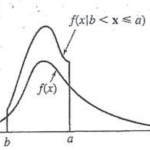
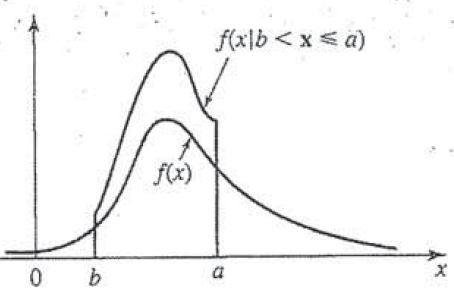
How does this not exist on the internet?! This is directly from my book, so it looks a little… well loved.
Up to now we’ve been dealing with single variable pdf and the corresponding CDF. We said that these probabilities relied on the fact that our variable of interest was independent. However, what if we knew some property that impacted our probability? Today we are talking conditional probability and that is the question we will be answering. It’s going to be a long, long post so plan accordingly.*
Day 41: Connecting the Concepts


Maybe we shouldn’t phrase it this way, since there is still quite a few days left of 365DoA, but you made it to the end! No, not THE end, but if you’ve been following along the past few posts we’ve introduced several seemingly disparate concepts and said, “don’t worry they are related,” without telling you how. Well today, like a magician showing you how to pull a rabbit from a hat, let’s connect the dots and explain why we introduced all those concepts!*
Day 40: The Normal Approximation (Poisson)
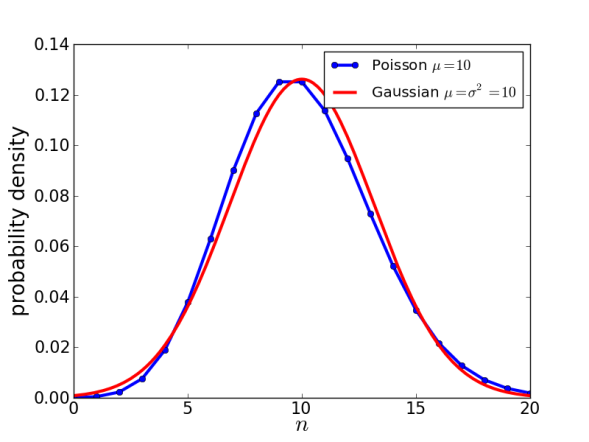
Poisson’s return!
Day 39: The Normal Approximation (De Moivre-Laplace)
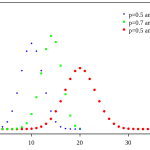
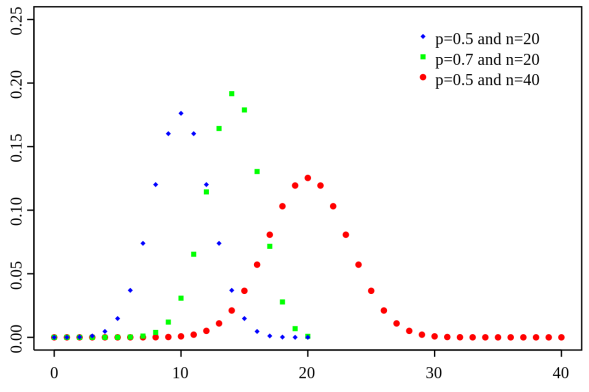
The binomial distribution, don’t worry we’ll get into it.
Day 38: The Poisson Distribution
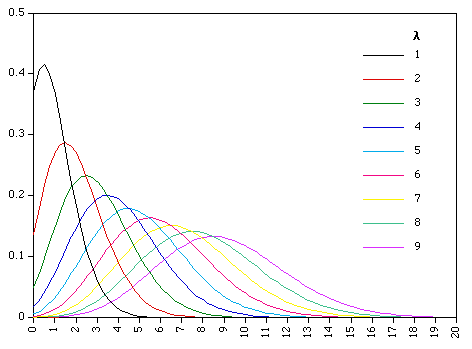
The Poisson distribution changes shape as λ changes
Day 37: Bayes’ Theorem
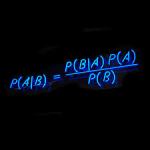
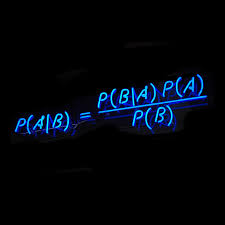
We’re talking Bayes for days.
Day 36: The uniform pdf
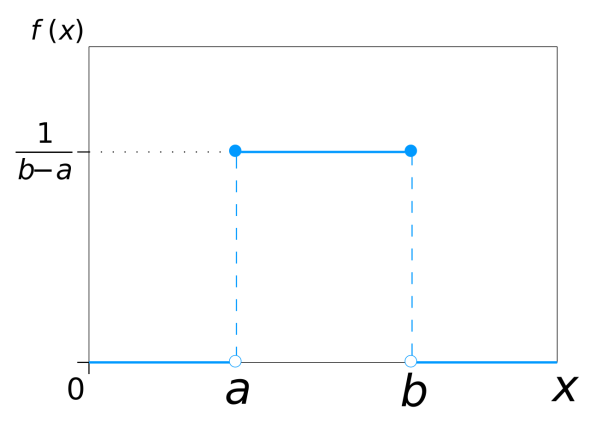
The uniform distribution, a very simple looking distribution indeed.
Day 35: Example of the Gaussian pdf
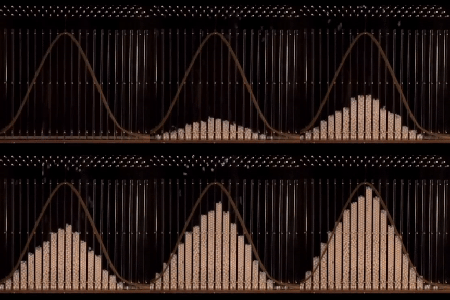
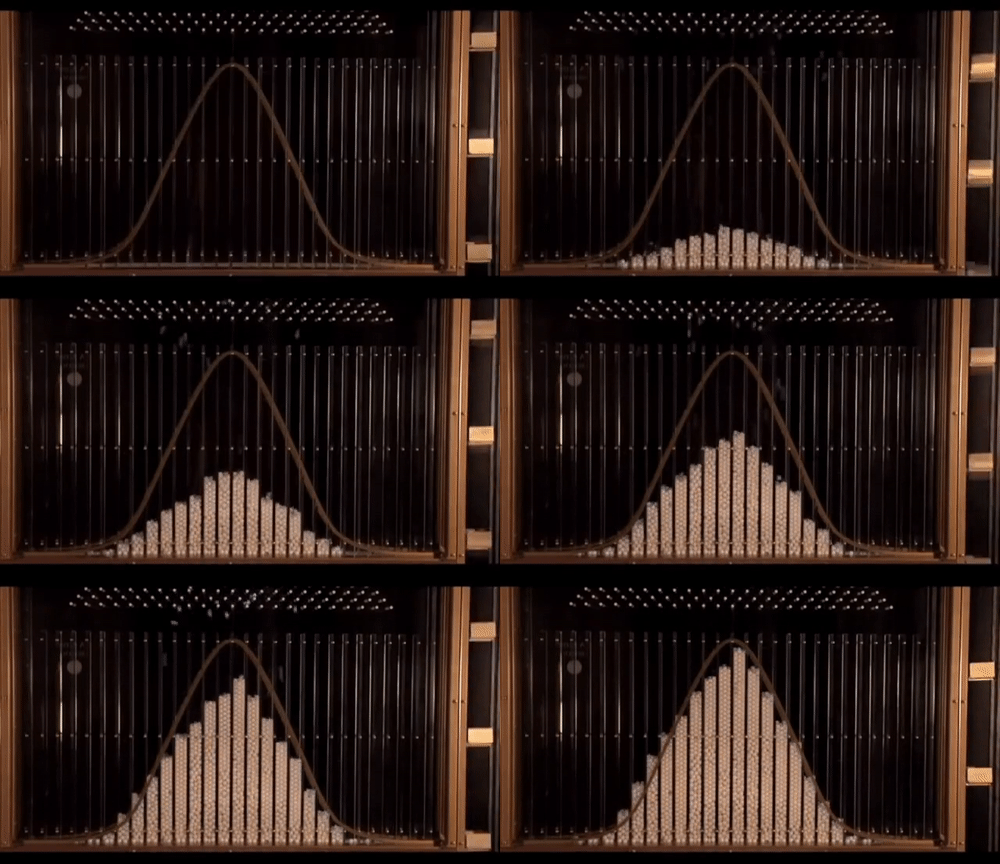
The gaussian (or normal) distribution demonstrated by plinko.
Day 34: Example of the Laplace pdf
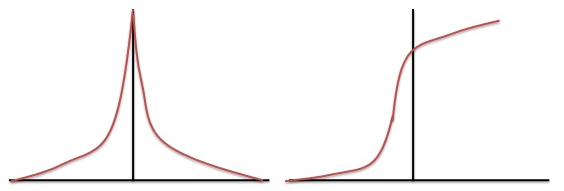
The Laplace pdf (left) and the associated Laplace CDF (right). Remember the CDF is just the area under the curve of the pdf.
Day 33: Example of the Exponential pdf
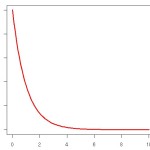
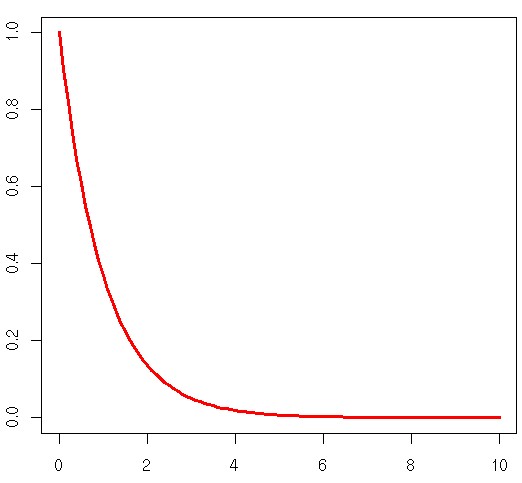
For those who need a refresher, this is a plot of the exponential pdf we are working with today.
Over the past couple of days, I’ve been talking about several different types of pdf and the associated C.D.F. Hopefully, we have a clear understanding of each of those concepts, for those of you scratching your head, I would recommend you start here at this other post. Otherwise, let’s (finally) look at a real life example using the exponential pdf!*
Day 32: The Laplace pdf
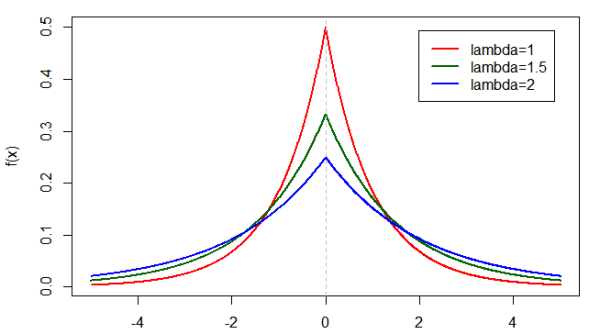
The laplace p.d.f with a θ = 0.
Well here we are again… maybe unless you’re new, in which case welcome. If you are just joining us we are talking p.d.f. no not the file format, the probability density function version. If you’re new, you may want to start back here(ish) If not, then let’s talk the strangely similar laplace distribution.*
Day 31: The Exponential pdf
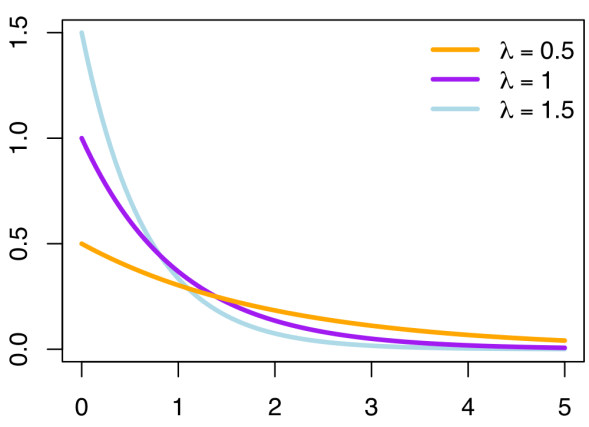
Today we are talking this guy! The exponential p.d.f and its C.D.F.
Well, it has been a week, don’t even get me started. But if you’re here you don’t want to hear me complain about my week, that isn’t why we come together! Well today let’s do a bit of a dive into the exponential p.d.f. I hope you’ve brushed up, because this is going to get interesting.*
Day 30: Confidence Interval
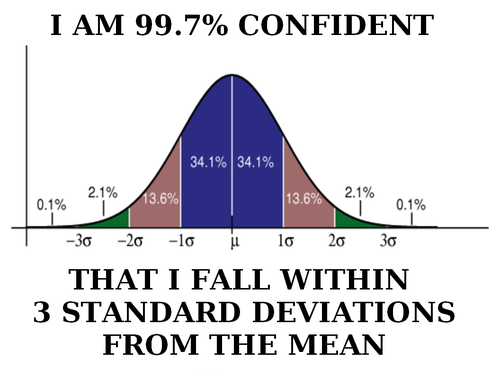
Yep, we’re talking confidence!
Day 30 already! Where does the time go? It feels like we just started this whole project and it probably wouldn’t be a good idea to look at the remaining time to completion, so let’s not and just enjoy the nice round 30. We will get back to our p.d.f another day, but today is going to be short. That’s what I usually say before typing out 10 pages worth of information so to avoid that, let’s touch on something important, but something I can do briefly. Today we’re talking about confidence intervals*
Day 29: Probability density functions, Part 3
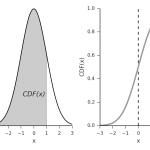
Don’t be scared, we’re going to tackle this guy today!
Well, apparently you guys really appreciated my probability density function posts. It’s good to see people interested in something a little less well-known (at least to me). So for those of you just joining us, you’ll want to start at part 1 here. For those of you who are keeping up with the posts, let’s review and then look at specific functions. Namely let’s start by going back to our gaussian distribution function and talk about what’s going on with that whole mess. It will be fun, so let’s do it!*
Day 28: Cumulative Distribution Functions
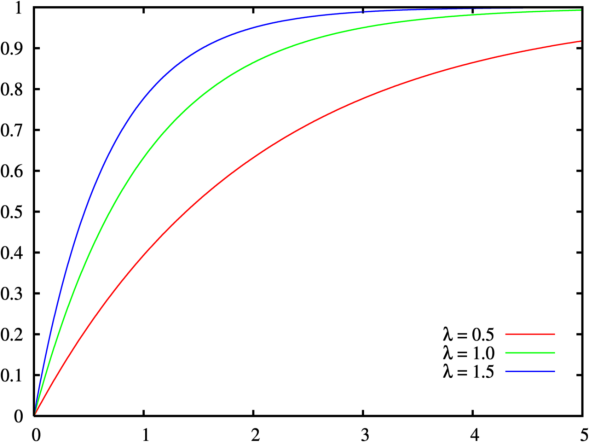
An example C.D.F. of an exponential distribution
Today we were going to do another deep dive into the p.d.f and C.D.F. relationship. Specifically today we were going to talk about specific p.d.f. functions and why we use them, however… I am not doing so hot today, so instead we are going to back track just a bit and talk about what how a C.D.F. differs from our p.d.f. even though we kind of covered it, it would be nice to be clear and I can do this in a (fairly) short post for the day. So that said, let’s get started and we will pick up our p.d.f. discussion next time (maybe).*
Day 27: Probability density functions, Part 2
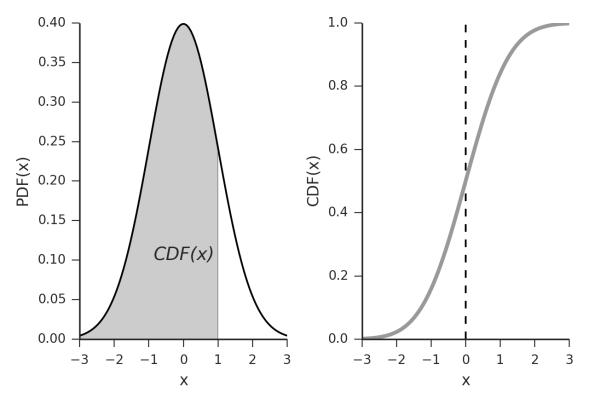
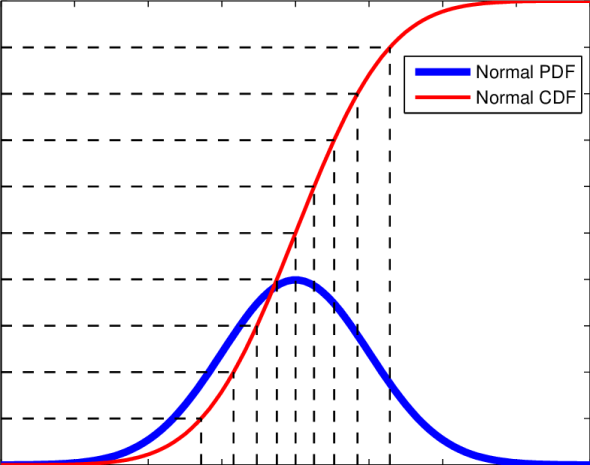
Today we are looking at our p.d.f. (yes this image has p.d.f. written as PDF, please don’t be confused!) and our C.D.F.’s let’s do this!
Oh hi didn’t see you there. Today is part 2 of the probability density functions notes (posts?), whatever we are calling these. You can read part 1 here as you should probably be familiar with the (super confusing) notation we use to describe our p.d.f. and our C.D.F. now that we’ve given that lovely disclaimer, let’s look once again at probability density functions!*
Day 26: Probability density functions, Part 1

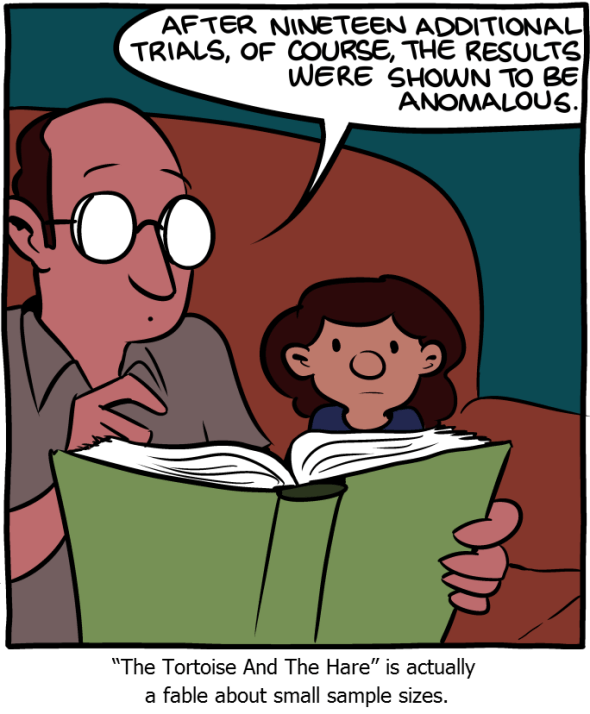
Dashing dreams one comic at a time, via Saturday Morning Breakfast Cereal
We are well on our way to wrapping up week 4, what a ride it’s been! It’s been a long day for me, so today might be short. However, I really, really, really want to break into probability density functions. This topic is going to be a bit more advanced than some of the things we’ve covered (IE more writing) so it will most definitely be broken up. Let’s look at why and discover the wonderful weirdness of probability density functions!*
Day 13: Significance, Part 1
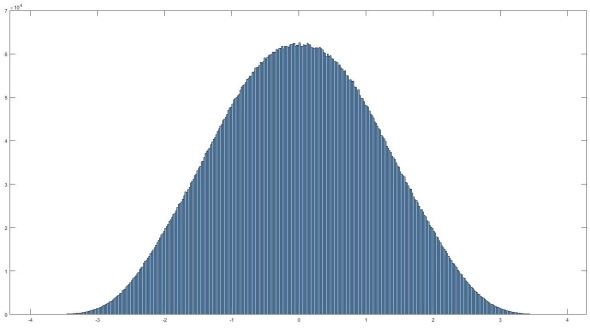
Histogram of normally distributed data. It looks very… nomal. No it really is normally distributed, read on to find out what that means and how we can use it.
If you’ve read my last post I hinted that today we would discuss filtering. Instead I think I want to take this a different direction. That isn’t to say we won’t go over filtering, we most definitely will. Today I want to cover something else though, significance. So you’ve recorded your signal, took an ensemble average, and now how do we tell if it actually means something, or if you are looking at an artificial or arbitrary separation in your data (IE two separate conditions lead to no difference in your data). Let’s look at significance.*
Day 12: Signal, cutting through the noise
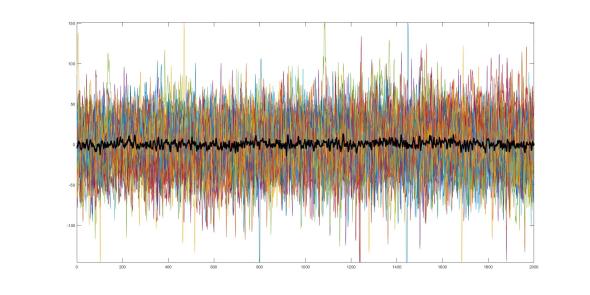
45 separate trials of very noisy data with the average of those trials (black). Believe it or not, this is actually very useful and very real data from something I am currently working on.
Noise, it can be troublesome. Whether you are studying and someone is being loud or you are trying to record something, noise is everywhere <stern look at people who talk during movies>. Interestingly enough the concept of noise in a signal recording sense isn’t all too different from dealing with talkative movie goers, so let’s talk noise!*
Day 11: Why even use the spectrogram?
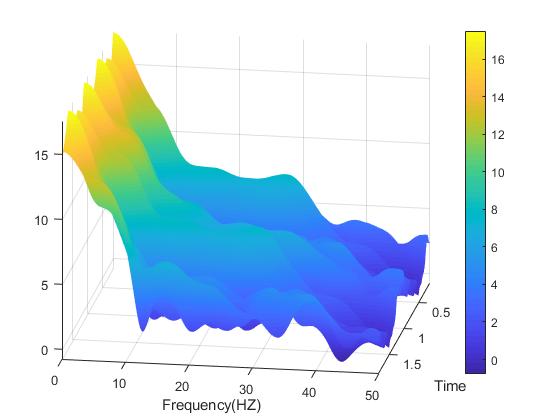
A spectrogram plot rotated so we can see all three dimensions.
So you wanna use a spectrogram… but why? What does a spectrogram do that we can’t do using some other methods for signal processing? As it turns out, there is a lot of reasons you may want to use the spectrogram and today we are going to cover some of those reasons and number four may shock you! (okay not really, what do you think this is a clickbait website?)*
Day 10: Spectrogram vs. the banana of uncertainty
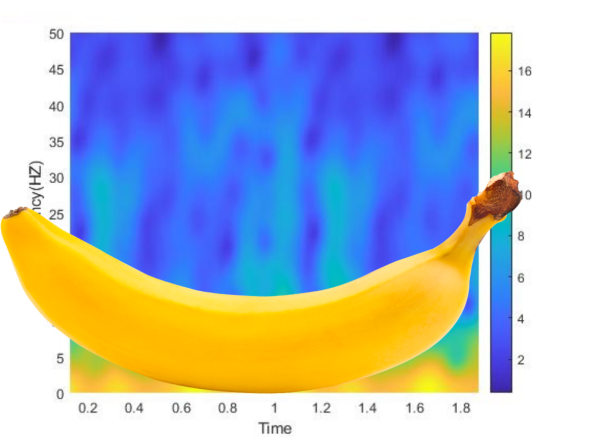
The banana of uncertainty (okay, it’s not a real banana)
Well ten days in and we’ve just introduced the idea of the spectrogram. While a lot of this information is just the broad strokes, I like to think that we’ve covered enough to give you a good idea about how to use these tools and what they are used for. However, we do need to discuss a limitation to the spectrogram, something called the banana of uncertainty, okay not quite the name, but you’ll see why I keep calling it that.*
Day 9: Reading a Spectrogram
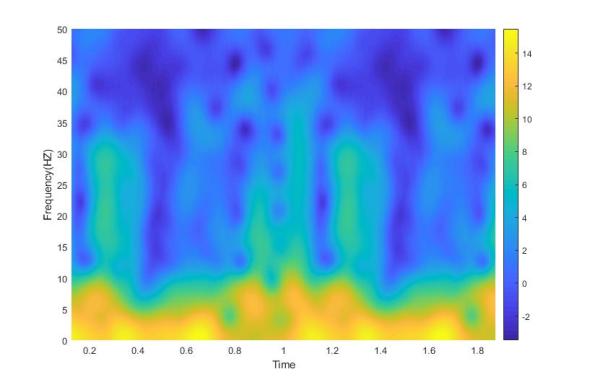
Definitely not the same spectrogram as yesterday, no really look. Now for the part where I tell you how to read this thing…
Last post we introduced a new tool in our arsenal of signal processing analysis, the spectrogram. Without knowing how to read it, it just looks sort of like a colored mess. Don’t get me wrong, it is an interesting looking colored mess, but a mess nonetheless. Well today we are going to talk about how to interpret the plot and why exactly we would ever use this seeming monstrosity.*
Day 8: The Spectrogram Function
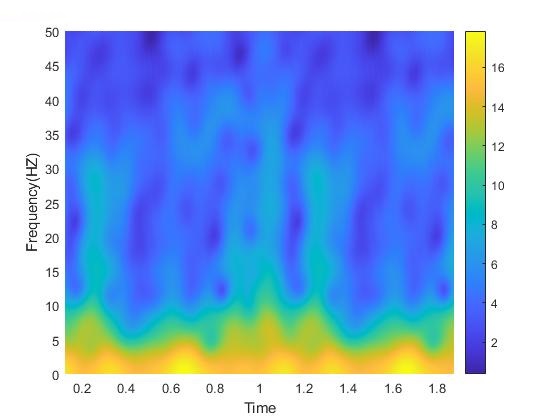
Example spectrogram from some data I had recently processed
To (somewhat) continue with our signal processing theme that we have going on at the moment, over the next few days, let’s look at something called the spectrogram. It’s three dimensions of fun!*
Day 7: Small waves, or wavelets!
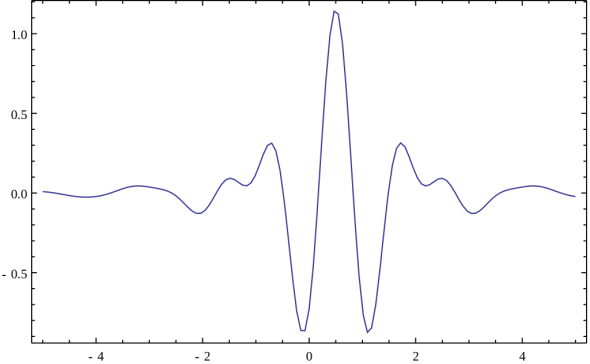
This is the Meyer wave, a representation of a so-called mother wavelet function to use for the wavelet transform. Notice that it is finite!
Waves! We’re officially one week through 365 Days of Academia! Woo! 1 week down, 51(.142…) weeks left! Let’s wrap up this weeks theme (there wasn’t originally a theme, but it kind of ended up that way) by talking about other ways we can get to the frequency domain. Specifically, let’s stop the wave puns and let’s talk wavelets!*
Day 6: The fast and the Fourier
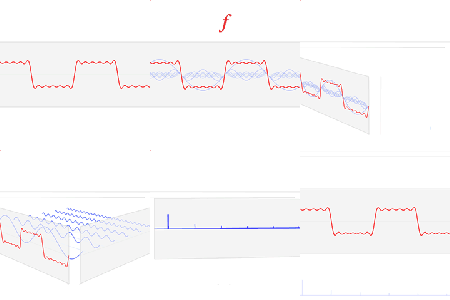
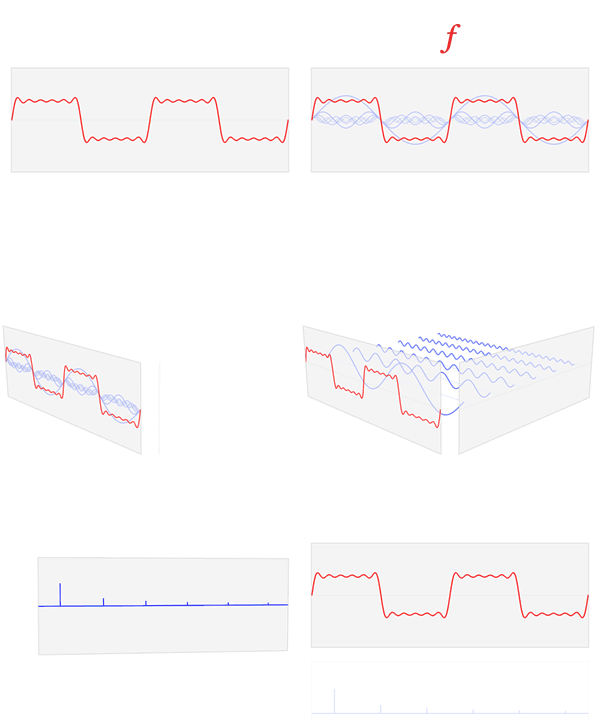
A good example of how the Fourier transform can approximate signals. The red signal is our input signal and the blue shows how the output of the Fourier transform.
Okay, if you’ve been keeping up with these posts, we know about Welch’s method, Thomson’s method, the things that make them different, and the things that make them similar. The thing that both of these transforms rely on is the Fourier transform. What is the Fourier transform? Well, something I probably should have covered first, but whatever this is my blog we do it in whatever order we feel like, so let’s dive in!*
Day 5: Whose window function is it anyway?


This is not how we use a window function on the computer…
One day someone looked at the windowed fourier transform and said, “Don’t be such a square!” and thus window functions were invented. If you believe that, then I have an island for sale, real cheap. But seriously, let’s do a dive into what a window function is and why the heck there are so many of them, because there ARE a LOT! So let’s get started!*
Day 4: Spectral leakage… embarrassing
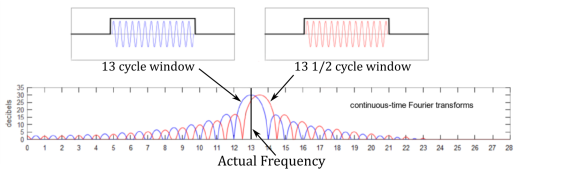
Look at that leakage!
Leakage, it’s never a good thing. For today’s post we’re going to cover a very important topic. Spectral leakage, it’s a big reason why spectral density estimation is well, an estimation. The other reason it is an estimation is because the fourier transform is an approximation of the original signal, but the Fourier transform is a whole other post on its own. So let’s talk leakage!*
Day 3: Power Spectral Density Overview
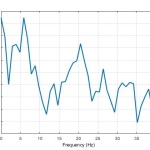


In our last post we introduced the two main characters in this story of spectrogram. On one end we have Welch’s method (pwelch) on the other end we have the Thomson multitaper method (pmtm). As promised here is a awful basic breakdown of why is more than one way to compute power spectral density (in fact there are several, far more than the two I’m talking about). So, let’s just dig right in!*
Day 2: Power Spectral Density (pmtm)
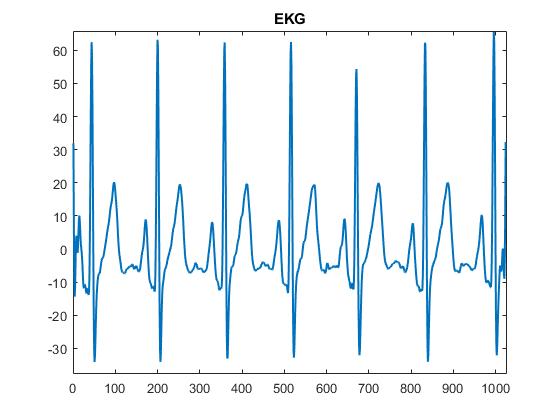
A example EKG signal
This is a (somewhat) continuation on what we were discussing in the previous post. We covered the pwelch MATLAB function, this time we will cover the PMTM function, this function uses the Thomson multitaper method to calculate power spectral density. We can do a deep dive into the differences between the two next time, but for now let’s talk about the command itself.*
Day 1: Power Spectral Density (pwelch)
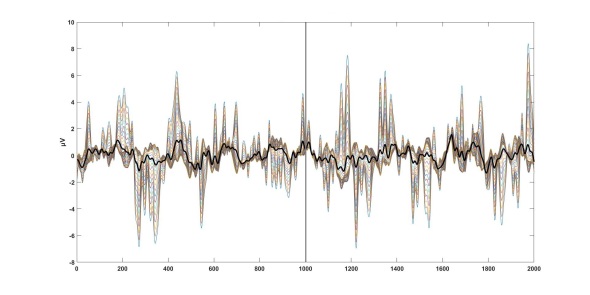
Some EEG data that I’ve aligned, processed, and made look nice and pretty.
Signal processing, it’s complex, there are a million ways to go about processing a signal, and like life, there is no best way to go about doing it. Trust me, it is as frustrating as it sounds. Today’s scratch pad note is on power spectral density or PSD for short. So let’s dive in.*
Parents’ math skills ‘rub off’ on their children


Parents who excel at math produce children who excel at math. This is according to a recently released study, which shows a distinct transfer of math skills from parent to child. The study specifically explored intergenerational transmission–the concept of parental influence on an offspring’s behavior or psychology–in mathematical capabilities.
Babies chew on subtle social, cultural cues at mealtime


At the dinner table, babies do a lot more than play with their sippy cups, new research suggests. Babies pay close attention to what food is being eaten around them – and especially who is eating it. The study adds evidence to a growing body of research suggesting even very young children think in sophisticated ways about subtle social cues.
Neuroscientists discover new learning rule for pattern completion

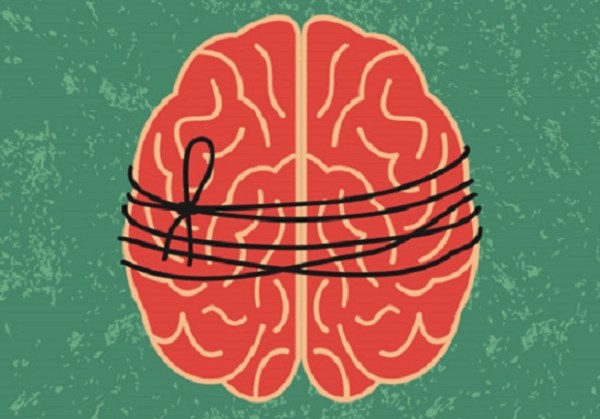
Recently, scientists discovered a new learning rule for a specific type of excitatory synaptic connection in the hippocampus. These synapses are located in the so-called CA3 region of the hippocampus, which plays a critical role for storage and recall of spatial information in the brain. One of its hallmark properties is that memory recall can even be triggered by incomplete cues. This enables the network to complete neuronal activity patterns, a phenomenon termed pattern completion.
The scientific brain: How the brain repurposes itself to learn scientific concepts


The human brain was initially used for basic survival tasks, such as staying safe and hunting and gathering. Yet, 200,000 years later, the same human brain is able to learn abstract concepts, like momentum, energy, and gravity, which have only been formally defined in the last few centuries. New research has now uncovered how the brain is able to acquire brand new types of ideas.
Strongest evidence yet of a link between breakfast and educational outcomes
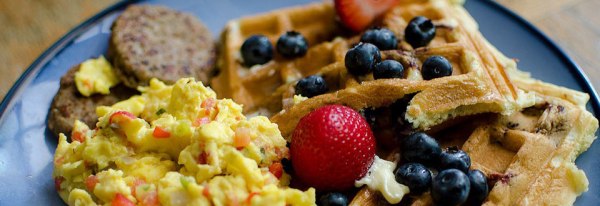
A direct and positive link between pupils’ breakfast quality and consumption, and their educational attainment, has for the first time been demonstrated in a ground-breaking new study carried out by public health experts at Cardiff University. The study of 5000 9-11 year-olds from more than 100 primary schools sought to examine the link between breakfast consumption and quality and subsequent attainment in Key Stage 2 Teacher Assessments* 6-18 months later.
How reward and daytime sleep boost learning

A new study suggests that receiving rewards as you learn can help cement new facts and skills in your memory, particularly when combined with a daytime nap. The findings from the University of Geneva reveal that memories associated with a reward are preferentially reinforced by sleep. Even a short nap after a period of learning is beneficial.
‘Delayed remembering’: Kids can remember tomorrow what they forgot today

For adults, memories tend to fade with time. But a new study has shown that there are circumstances under which the opposite is true for small children: they can remember a piece of information better days later than they can on the day they first learned it. While playing a video game that asked them to remember associations between objects, 4- and 5-year-olds who re-played the game after a two-day delay scored more than 20 percent higher than kids who re-played it later the same day.
On Wikipedia, politically controversial science topics vulnerable to information sabotage

Wikipedia reigns. It’s the world’s most popular online encyclopedia, the sixth most visited website in America, and a research source most U.S. students rely on. But Wikipedia entries on politically controversial scientific topics can be unreliable due to information sabotage.
How ‘science popularizers’ influence public opinion on religion

Two prominent scientists with drastically different views on the relationship of science and religion – Richard Dawkins and Francis Collins – have an equally different influence on these views among people who are unfamiliar with their work, according to new research from Rice University and West Virginia University.
What musical taste tells us about social class

Photo credit goes to: Hiroyuki Ito/Getty Images
Love the opera? Hungry for hip hop? It turns out that your musical likes and dislikes may say more about you than you think, according to UBC research. Even in 2015, social class continues to inform our cultural attitudes and the way we listen to music, according to the study.
Girls suck at science, and other depressing stereotypes
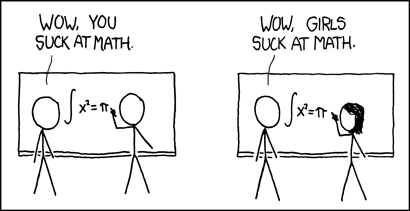
Image credit goes to: xkcd.com
The Netherlands had the strongest stereotypes associating science with men more than women, according to a new Northwestern University study that included data from nearly 350,000 people in 66 nations. These stereotypes are prevalent across the world — even in nations such as Argentina and Bulgaria where women are roughly half of science majors in colleges and universities and employed researchers, according to the study, the largest ever of its kind.
Kids with ADHD must squirm to learn

For decades, frustrated parents and teachers have barked at fidgety children with ADHD to “Sit still and concentrate!” But new research shows that if you want ADHD kids to learn, you have to let them squirm. The foot-tapping, leg-swinging and chair-scooting movements of children with attention-deficit/hyperactivity disorder are actually vital to how they remember information and work out complex cognitive tasks.


 Lunatic Laboratories