
Day 102: Finals ahead!


Well it’s that time of year again, finals! On one hand I’m excited at the prospect of being done with the term, on the other I’m a notoriously bad test taker. I deal with a lot of anxiety you see and even when I know how to solve the problem, come test day I end up drawing a blank or making very stupid mistakes. Standardized tests are the bane of my existence!!
Day 101: Holiday
Well today is thanksgiving, not a holiday I celebrate, but I’m happy to have the day off at least. I’ll be taking the day to get some work done and relax some. Deadlines are coming so I can’t take the whole day to myself, but at least it’s a low stress day.
Until next time, don’t stop learning!
Day 100: Graduating lab members

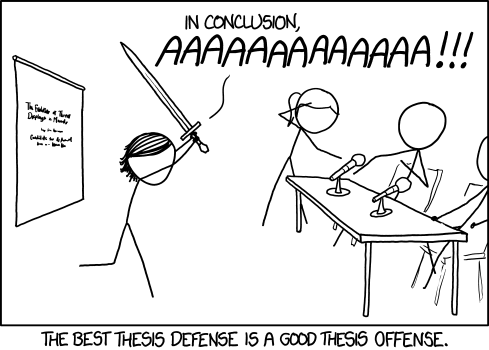
Image from: xkcd.com
Wow, time flies, we’re already on day 100. Still not half way done, but it certainly doesn’t feel like 100 days of writing. Today has been a busy day, which is why I’m writing so late. With the end of the term comes other projects that need to be addressed, namely my qualifying exam, final exams, and other lab members having their Ph.D defense. Yep, we have not one, not two, but three people defending their Ph.D this term.
Day 99: Data request, a update


Sometimes emails can still be exciting!
I’ve got news! In my last post on the subject I said that I wasn’t expecting a response from the lab I was requesting data from until Monday, if at all. Well would you believe I got a response! It wasn’t a “here’s the data response,” but it is progress. Let me explain why.
Day 97: Neural network models
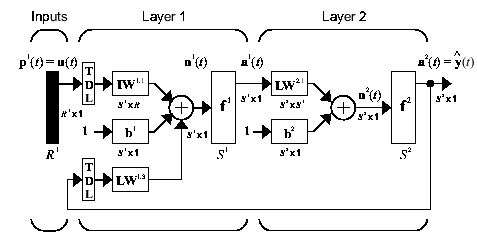
Today should be an interesting day for me. I plan to do a deep dive into the world of neural networks to better understand how they work and the best type to apply to my data. There are a few, quite a few in fact that I could use and really it depends on how I want to frame my problem, so let’s look at what I’ve got planned.
Day 96: The art of requesting data


I have some data. This shouldn’t be news, I’ve been talking about how I’m trying to train a model to predict an output using this data and all the woes that have come from the training process. Turns out I have a problem, well more like questions that need answers and for that I need help.
Day 95: Housework day

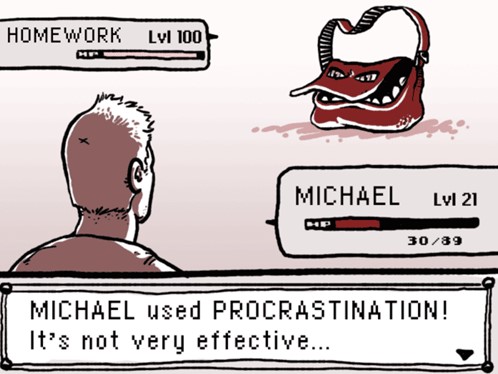
If only it was super effective!!!!!!
So far things have been non-stop and today is no exception. I have a lot of housework to do and balancing that work with my school work (all while still trying to find time to relax some) is difficult. Nevertheless today is housework day (mostly).
Day 94: Paper formatting

Ugh!! After over six weeks my paper was rejected becuase it didn’t fall in line with what the editor wanted. This is frustrating because each journal has different formatting requirements and you cannot submit to multiple journals at once so we need to sit and wait.
Day 93: QE date is set… again!


Exciting news!!!!! Well as you can tell from the title, my qualifying exam date is set. After some time emailing back and forth I finally just sent out a doodle poll to get everyone to vote on what time would work best for them. Last night, my last committee member added their availability to the poll and with that, I have a new time and date!
Day 92: Missed meetings…


As you may be aware, I am planning an experiment! Cue upbeat music Unfortunately record scratch I’m nowhere near ready. It’s been a process for sure and we are (maybe?) back on track to get started soon. Today I had a meeting scheduled with my PI to discuss the details, but…
Day 88: Experimental Headaches
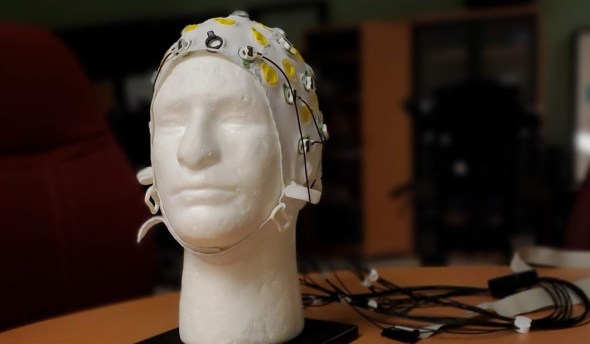
EEG cap
I’ve talked about my impending deadlines a lot lately. I also mentioned that I had an experiment that I needed to do to meet a deadline, well it looks like we may or may not meet this goal. Let’s talk about the latest headaches.
Day 87: Classifier progress
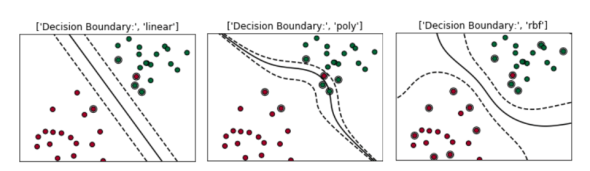
Well it’s been an interesting experience. I’ve been working hard to train a binary classifier to predict the two classes in my data. There has been a lot of ups and downs and more importantly, there has been some progress. It isn’t perfect, but it’s a start, so let’s look at what I’ve got so far and where I’m headed.
Day 86: Or maybe not…


Even my cat doesn’t like the news.
Last post I had triumphantly declared that I had scheduled my QE date…. wellllllll maybe not. I had a last minute email from one of my committee members saying they had another obligation that day that they had forgotten about. So today let’s talk about why that is okay, even though it isn’t really.
Day 85: My QE date is set
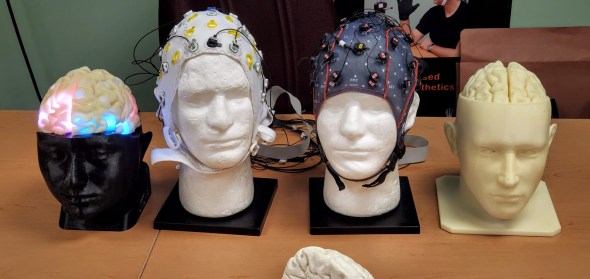
Sometimes you need to get… a head. See what I did there?
Well it happened, the date for my qualifying exam has been set. I’m nervous, I’m excited, I’m mostly just anxious to get it done. Quite frankly I’m exhausted, so it will be nice to get one thing off my to-do list. Let’s look at how I need to get ready.
Day 84: Model training progress
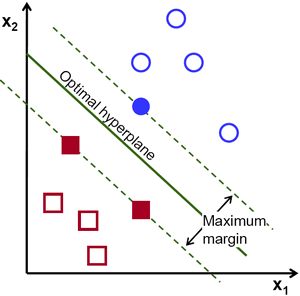
Two dimensional data is easier to visualize than 202 dimensional data.
I don’t normally leave my computer on 24 hours a day, but it has been hard a work, so it hasn’t been off in days. Training a model can take some time, as I am finding out and while I’ve made progress on the resulting model, it’s still not where I want it. Let’s talk about what has been going on.
Day 54: The Science Behind Real Zombies

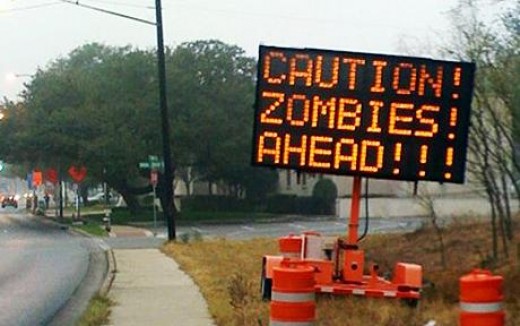
Time for a break from stochastic processes, at least for the moment. Every year here we update and post our favorite Halloween tradition! So today we bring you the science fact and fiction behind the undead. Zombies, those brain loving little things are everywhere. Sure, we are all familiar with the classic zombie, but did you know that we aren’t the only zombie lovers out there? It turns out that nature has its own special types of zombies, but this isn’t a science fiction movie, this is science fact! Sometimes fact can be scarier than fiction, so let’s dive in. Let’s talk zombies.
Day 20: Independent Events
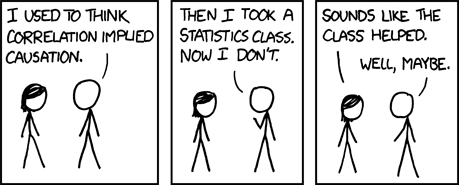
By: xkcd
Because we introduced the central limit theorem last post, it’s time to introduce another important concept. The idea of independent events, while this may seem intuitive, it is one of the assumptions we make in parametric statistics, another concept we will define, but for now let’s jump into independence.*
Day 19: The Central Limit theorem


Well here we are again, if you recall from our last post, we talked Bonferroni Correction. You may also recall that when the post concluded, there was no real topic for today. Well after some ruminating, before we jump into more statistics, we should talk about the central limit theorem. So let’s do a quick dive into what that is and why you should know it!*
Day 18: The Bonferroni Correction


By now we are masters of statistics… right? Okay, not really, but we are getting there. So far we’ve covered two types of errors, type 1 which you can read about here, and type 2 which you can read about here. Armed with this new knowledge we can break into a way to correct for type 1 errors that come about from multiple comparisons. Sound confusing? Well, not for long, let’s break it down and talk Bonferroni.*
Day 17: Type 2 errors


Last post we did a quick bit on type 1 errors. As with anything, there is more than one way to make an error. Today we are talking type 2 errors! They are related in the sense and we’ll go over what that means and compare the two right… now!*
Day 16: Type 1 errors


We did it, we cracked the coin conundrum! We managed the money mystery! We checked the change charade! We … well you get the idea. Last post we (finally) determined if our coin was bias or not. Don’t worry, I won’t spoil it for you if you haven’t read it yet. I actually enjoyed working through a completely made up problem, so if you haven’t read it, you really should. Today we’re going to talk dogs, you’ll see what I mean, so let’s dive in.*
Day 15: Significance, Part 3
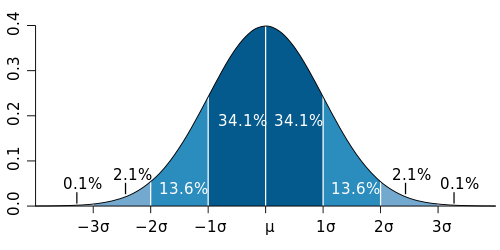
Where does our observation fall on the probability density function?
It looks like we’ve arrived at part 3 of what is now officially a trilogy of posts on statistical significance. There is so much more to say I don’t want to quite call this the conclusion. Instead, let’s give a quick review of where we left off and we can get back to determining if an observed value is significant.*
Day 14: Significance, Part 2


Z-score bar graph that I made just for all of you using some data I had laying around. If you’re new to statistics it may not make sense, but rest assured we will make sense of it all!
Well here we are two weeks into 365DoA, I was excited until I realized that puts us at 3.8356% of the way done. So if you remember from last post we’ve started our significance talk, as in what does it mean to have a value that is significant, what does that mean exactly, and how to do we find out? Today is the day I finally break, we’re going to have to do some math. Despite my best efforts I don’t think we can finish the significance discussion without it and still manage to make sense. With that, let’s just dive in.*
Day 13: Significance, Part 1
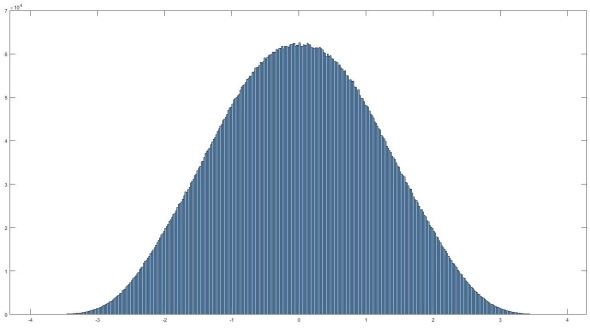
Histogram of normally distributed data. It looks very… nomal. No it really is normally distributed, read on to find out what that means and how we can use it.
If you’ve read my last post I hinted that today we would discuss filtering. Instead I think I want to take this a different direction. That isn’t to say we won’t go over filtering, we most definitely will. Today I want to cover something else though, significance. So you’ve recorded your signal, took an ensemble average, and now how do we tell if it actually means something, or if you are looking at an artificial or arbitrary separation in your data (IE two separate conditions lead to no difference in your data). Let’s look at significance.*
Day 12: Signal, cutting through the noise
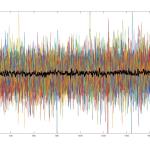
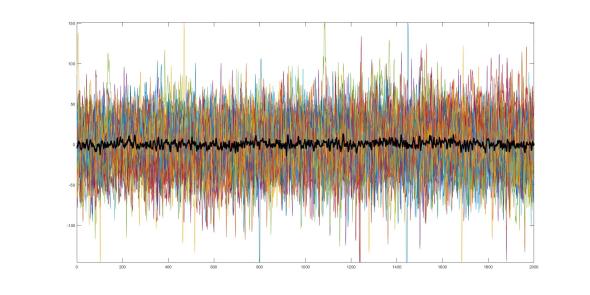
45 separate trials of very noisy data with the average of those trials (black). Believe it or not, this is actually very useful and very real data from something I am currently working on.
Noise, it can be troublesome. Whether you are studying and someone is being loud or you are trying to record something, noise is everywhere <stern look at people who talk during movies>. Interestingly enough the concept of noise in a signal recording sense isn’t all too different from dealing with talkative movie goers, so let’s talk noise!*
Day 11: Why even use the spectrogram?
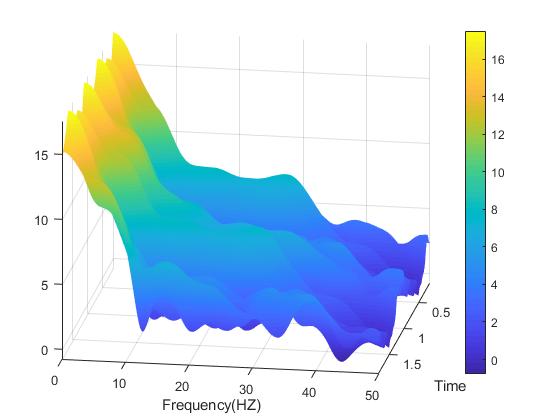
A spectrogram plot rotated so we can see all three dimensions.
So you wanna use a spectrogram… but why? What does a spectrogram do that we can’t do using some other methods for signal processing? As it turns out, there is a lot of reasons you may want to use the spectrogram and today we are going to cover some of those reasons and number four may shock you! (okay not really, what do you think this is a clickbait website?)*
Day 10: Spectrogram vs. the banana of uncertainty
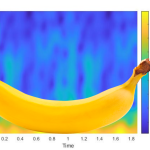
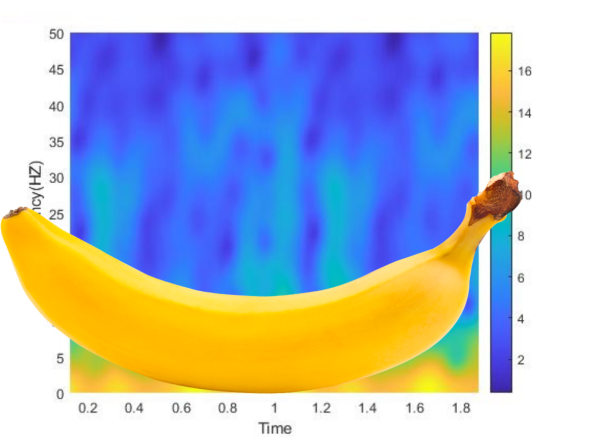
The banana of uncertainty (okay, it’s not a real banana)
Well ten days in and we’ve just introduced the idea of the spectrogram. While a lot of this information is just the broad strokes, I like to think that we’ve covered enough to give you a good idea about how to use these tools and what they are used for. However, we do need to discuss a limitation to the spectrogram, something called the banana of uncertainty, okay not quite the name, but you’ll see why I keep calling it that.*
Day 9: Reading a Spectrogram
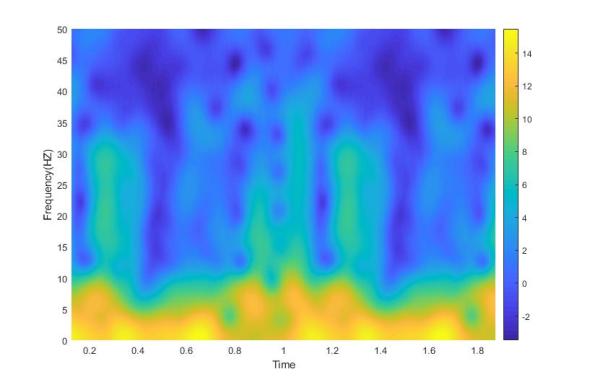
Definitely not the same spectrogram as yesterday, no really look. Now for the part where I tell you how to read this thing…
Last post we introduced a new tool in our arsenal of signal processing analysis, the spectrogram. Without knowing how to read it, it just looks sort of like a colored mess. Don’t get me wrong, it is an interesting looking colored mess, but a mess nonetheless. Well today we are going to talk about how to interpret the plot and why exactly we would ever use this seeming monstrosity.*
Day 8: The Spectrogram Function
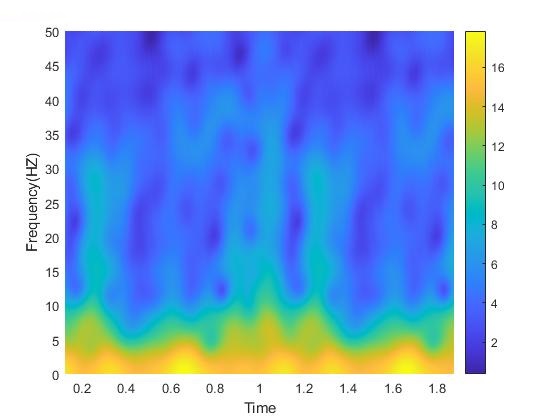
Example spectrogram from some data I had recently processed
To (somewhat) continue with our signal processing theme that we have going on at the moment, over the next few days, let’s look at something called the spectrogram. It’s three dimensions of fun!*
Day 7: Small waves, or wavelets!
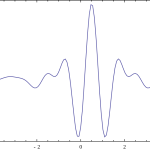
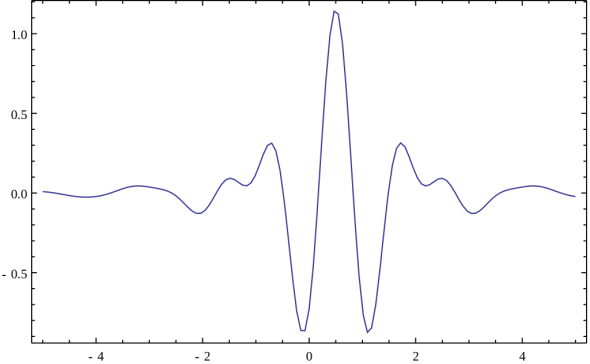
This is the Meyer wave, a representation of a so-called mother wavelet function to use for the wavelet transform. Notice that it is finite!
Waves! We’re officially one week through 365 Days of Academia! Woo! 1 week down, 51(.142…) weeks left! Let’s wrap up this weeks theme (there wasn’t originally a theme, but it kind of ended up that way) by talking about other ways we can get to the frequency domain. Specifically, let’s stop the wave puns and let’s talk wavelets!*
Day 6: The fast and the Fourier
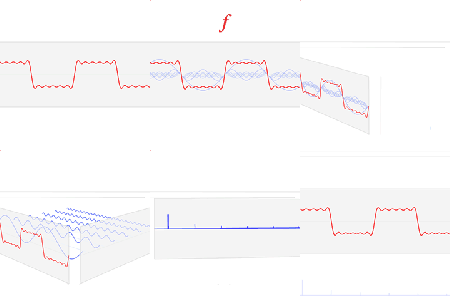
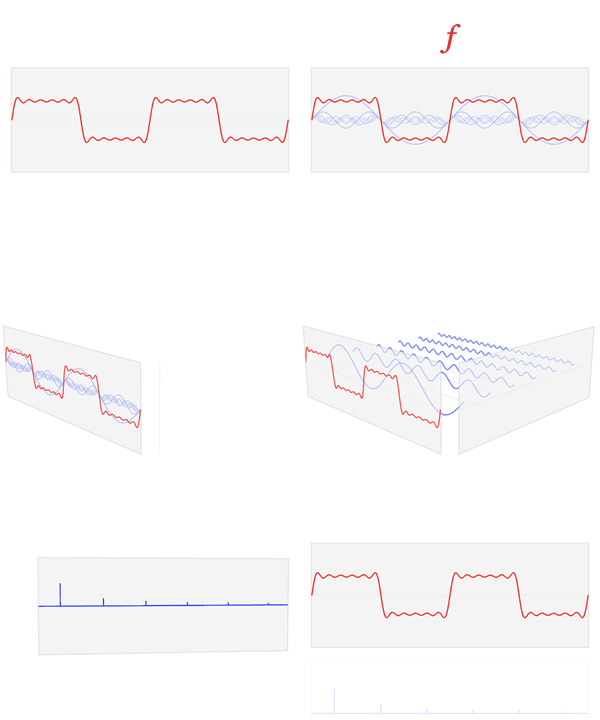
A good example of how the Fourier transform can approximate signals. The red signal is our input signal and the blue shows how the output of the Fourier transform.
Okay, if you’ve been keeping up with these posts, we know about Welch’s method, Thomson’s method, the things that make them different, and the things that make them similar. The thing that both of these transforms rely on is the Fourier transform. What is the Fourier transform? Well, something I probably should have covered first, but whatever this is my blog we do it in whatever order we feel like, so let’s dive in!*
Day 5: Whose window function is it anyway?


This is not how we use a window function on the computer…
One day someone looked at the windowed fourier transform and said, “Don’t be such a square!” and thus window functions were invented. If you believe that, then I have an island for sale, real cheap. But seriously, let’s do a dive into what a window function is and why the heck there are so many of them, because there ARE a LOT! So let’s get started!*
Day 4: Spectral leakage… embarrassing
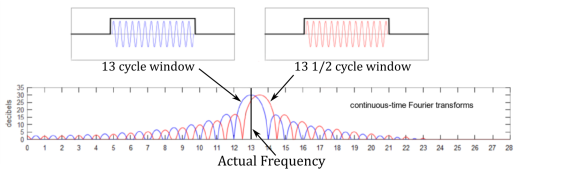
Look at that leakage!
Leakage, it’s never a good thing. For today’s post we’re going to cover a very important topic. Spectral leakage, it’s a big reason why spectral density estimation is well, an estimation. The other reason it is an estimation is because the fourier transform is an approximation of the original signal, but the Fourier transform is a whole other post on its own. So let’s talk leakage!*
Day 3: Power Spectral Density Overview


In our last post we introduced the two main characters in this story of spectrogram. On one end we have Welch’s method (pwelch) on the other end we have the Thomson multitaper method (pmtm). As promised here is a awful basic breakdown of why is more than one way to compute power spectral density (in fact there are several, far more than the two I’m talking about). So, let’s just dig right in!*
Day 2: Power Spectral Density (pmtm)
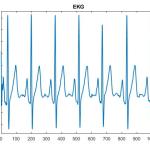
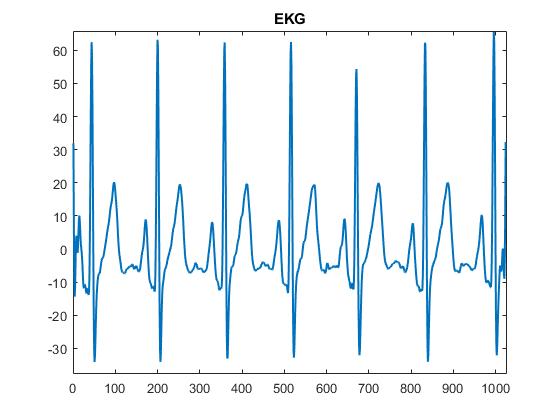
A example EKG signal
This is a (somewhat) continuation on what we were discussing in the previous post. We covered the pwelch MATLAB function, this time we will cover the PMTM function, this function uses the Thomson multitaper method to calculate power spectral density. We can do a deep dive into the differences between the two next time, but for now let’s talk about the command itself.*
Day 1: Power Spectral Density (pwelch)
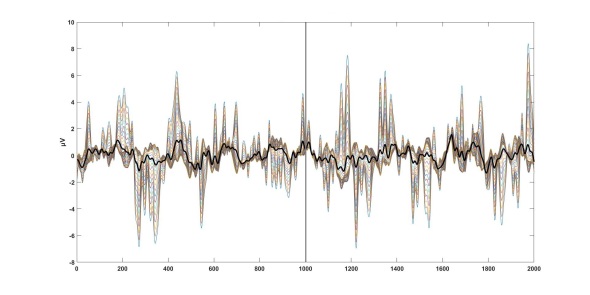
Some EEG data that I’ve aligned, processed, and made look nice and pretty.
Signal processing, it’s complex, there are a million ways to go about processing a signal, and like life, there is no best way to go about doing it. Trust me, it is as frustrating as it sounds. Today’s scratch pad note is on power spectral density or PSD for short. So let’s dive in.*
Starting age of marijuana use may have long-term effects on brain development


The age at which an adolescent begins using marijuana may affect typical brain development, according to researchers at the Center for BrainHealth at The University of Texas at Dallas. In a paper recently published, scientists describe how marijuana use, and the age at which use is initiated, may adversely alter brain structures that underlie higher order thinking.
Researchers find new clues in treating chronic pain
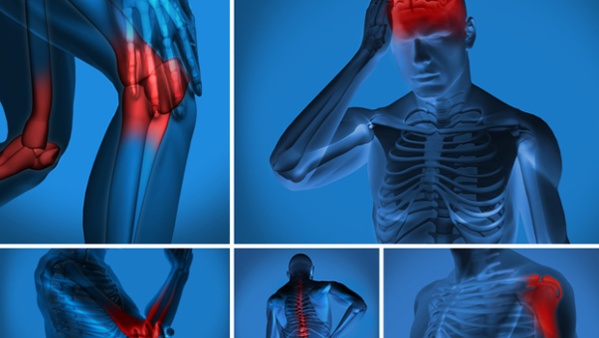
A chemical in the brain typically associated with cognition, movement and reward-motivation behavior — among others — may also play a role in promoting chronic pain, according to new research. The chemical, dopamine, sets the stage for many important brain functions, but the mechanisms that cause it to contribute to chronic pain are less well understood.
Mind reading: Researchers observe moment a mind is changed

Researchers studying how the brain makes decisions have, for the first time, recorded the moment-by-moment fluctuations in brain signals that occur when a monkey making free choices has a change of mind. The findings result from experiments led by electrical engineering Professor Krishna Shenoy, whose Stanford lab focuses on movement control and neural prostheses – such as artificial arms – controlled by the user’s brain.


 Lunatic Laboratories